The fragile ceasefire agreement in the Middle East was on the brink of collapse on Monday as the United States and Iran wrestled for control of the Strait of Hormuz. In an attempt to break the deadlock, Donald Trump launched an audacious bid to reopen the vital thoroughfare with the might of the US Navy, dubbing it "Project Freedom" in a post on Truth Social on Sunday. However, less than 24 hours later, several merchant ships in the Gulf reported explosions or fires, an oil port in the UAE was set ablaze by Iranian missiles, and the US said it had destroyed six Iranian small boats to allow two ships to pass with a US escort.
What is Project Freedom?
Trump announced Project Freedom on Sunday on his social media platform Truth Social, a plan he vowed would guide foreign ships out of the Strait of Hormuz and safeguard international trade. The strait is a vital waterway for global supplies of oil, fertiliser, and other commodities that has been virtually closed since the US and Israel attacked Iran on 28 February, causing price rises around the world. Trump said the operation was a "humanitarian effort to rescue ships running low on essentials after more than two months trapped in the Persian Gulf." He stated the mission would begin on Monday morning and warned that any interference would "have to be dealt with forcefully."
How has Iran responded?
That boundary was tested on Monday as Iran claimed to have fired warning shots at a US warship approaching the Strait of Hormuz. South Korea also reported that one of its merchant ships, HMM Namu, had suffered an explosion and a fire in its engine room. A government spokesperson said it was unclear whether the fire was caused by an attack. An official said on Tuesday that Seoul was reviewing whether to join Trump's effort to restore safe transit. The British maritime security agency UKMTO reported separately that two ships had been hit off the coast of the UAE, and Emirati oil company ADNOC said one of its tankers had been hit by Iranian drones. Military officials also claimed drone and missile attacks on the UAE in response to "US military's adventurism," according to Iranian state television. One caused a fire at the important oil port of Fujairah, prompting authorities to say the country reserved the right to respond. Iranian foreign minister Abbas Araqchi said Monday's events showed there was no military solution, adding that peace talks were progressing with Pakistan's mediation and warning the US and UAE against being drawn into a "quagmire."

Are ships passing through the Strait of Hormuz?
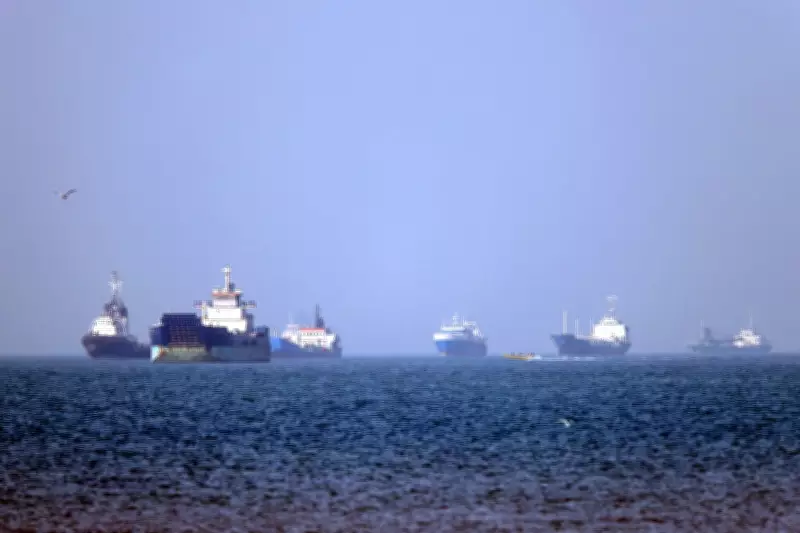
Trump's push to reopen the Strait did not result in an immediate large-scale movement of ships. More than 850 ships are estimated to have been trapped in the Gulf near the Strait since the end of February. A handful had escaped before Monday, when the US military said two American merchant ships had made it through with support from US Navy guided-missile destroyers. Iran denied any crossings had taken place, though shipping company Maersk said the Alliance Fairfax, a US-flagged ship, exited the Gulf under US military escort on Monday. With the ceasefire agreement in peril, Iranian authorities released a map of an expanded maritime area under Iranian control, stretching beyond the Strait to include sections of the UAE coastline. If Iran could enforce control over access to those ports, it would amount to a near-total maritime siege of the Gulf Arab state. The US meanwhile continues to uphold its blockade of Iranian ports and shipping to cripple the economy. On Sunday, US Centcom said 49 commercial vessels had been redirected by the blockade since it came into effect.

Could the operation push us closer to war?
Experts have suggested that Trump's move could escalate tensions and threaten the ceasefire. Nitya Labh, a fellow on the International Security Programme at London's Chatham House, said the US operation was "extremely risky." "I think what's happening is quite escalatory, it suggests the US isn't willing to negotiate over the terms of reopening the Strait," she told the BBC. "The US has accepted that the only way to continue to move shipping is under the threat of force or strikes from Iran." International markets were hesitant to embrace Trump's plan, with stocks in Asia falling and oil prices holding well above $100 a barrel on Tuesday morning. Experts suggest the strategy could backfire and lead to a resumption of hostilities.