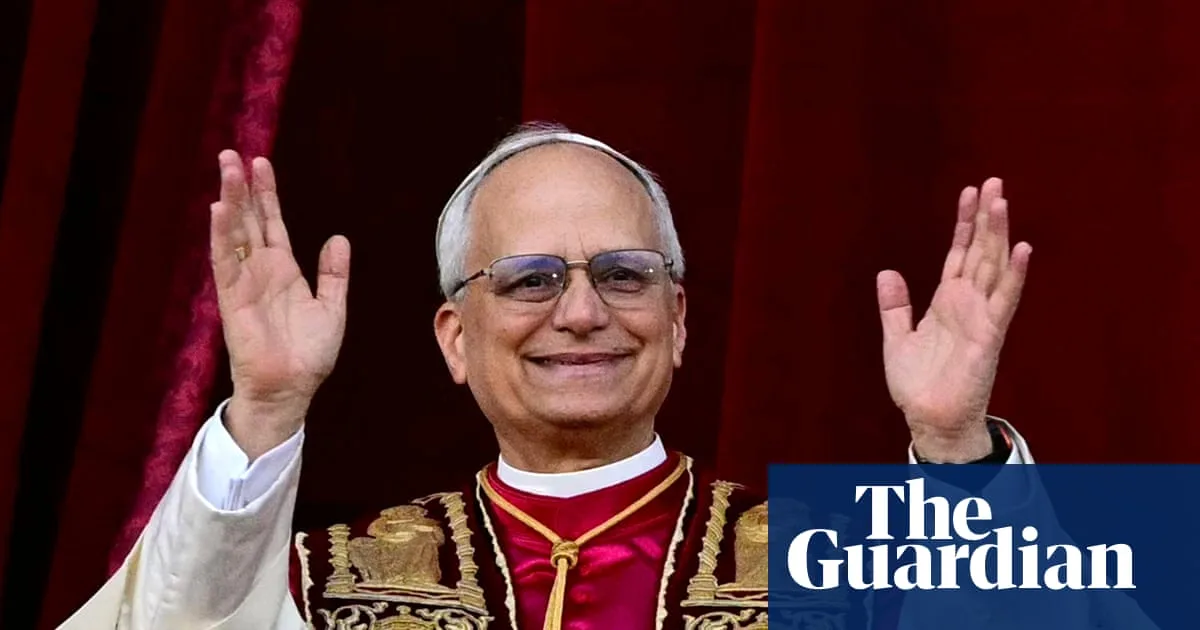
Pope Leo's Diplomatic Shift Sparks Confrontation with U.S. President
Pope Leo XIV has dramatically shifted his diplomatic approach after ten relatively quiet months as pontiff, adopting a notably more assertive speaking style that has provoked repeated criticism from U.S. President Donald Trump. During his current four-nation tour of Africa, the first American pope has delivered sharp denunciations of war and global inequality, marking a significant departure from traditional Vatican neutrality in international conflicts.
Escalating Tensions Between Papacy and Presidency
President Trump first attacked Pope Leo as "terrible" on Sunday, apparently responding to the pontiff's earlier criticisms of the U.S.-Israeli military campaign against Iran. The president escalated his rhetoric on Thursday, implying the Pope lacked understanding of foreign policy matters. This exchange represents the most public confrontation between a sitting pope and U.S. president in recent memory.
Speaking in Cameroon, Pope Leo declared the world was "being ravaged by a handful of tyrants" without naming specific individuals. His carefully chosen words nevertheless represented a clear challenge to global power structures and marked a significant evolution from his previously cautious approach to international politics.
From Quiet Diplomacy to Moral Confrontation
John Thavis, a retired Vatican correspondent who covered three papacies, observed: "Normally, popes and the Vatican are cautious when it comes to international politics, preferring diplomacy to public censure. Leo seems convinced that the world needs to hear explicit condemnation of injustice and aggression, and he seems aware that he is one of the very few people who have a global pulpit."
The pontiff, known for his measured communication style, mostly avoided commentary about U.S. policy until March, when he emerged as an outspoken critic of the Iran conflict. He first mentioned President Trump by name publicly only at the beginning of April, suggesting the president find an "off-ramp" to end the war.
African Tour Provides Moral Platform
During his African visit, Pope Leo has intensified his rhetoric significantly. In speeches delivered in Algeria and Cameroon this week, he warned that the whims of the world's wealthiest nations threaten global peace and decried violations of international law by what he termed "neocolonial" global powers.
Bishop John Stowe of Lexington, Kentucky, president of a U.S. Catholic peace organization, told Reuters: "Pope Leo is establishing himself as a moral leader for the global scale. His recent messages carry more weight by being given during a visit to Africa, delivered face-to-face with the people who have lived with war, violence, famine and chronic poverty."
Historical Precedents and Contemporary Pressures
Massimo Faggioli, a papacy expert and professor at Trinity College Dublin, pointed to historical context: "There's always the ghost of Pius XII hanging there. I don't think he wants the Vatican to be accused of being soft on Trumpism because he's an American." Pope Pius XII directed clandestine networks to shelter Jews during the Holocaust but faced criticism for not speaking more forcefully about the ongoing genocide.
Popes have traditionally served as moral voices on the global stage while striving to maintain Church neutrality in world conflicts, allowing the Vatican to potentially act as a mediator when requested. This delicate balance has become increasingly difficult to maintain in today's polarized political climate.
Personal Experience Shapes Papal Perspective
Pope Leo, formerly Cardinal Robert Prevost, brings unique personal experience to his role. He spent decades as a missionary and bishop in Peru during intense internal conflict between the government and Maoist guerrilla group Shining Path, when tens of thousands perished in bloody warfare.
Natalia Imperatori-Lee, an academic at Fordham University, explained: "In rural Peru, Prevost was immersed in what poverty, corruption, globalization of indifference, climate catastrophe, and governmental violence does to people. He's uniquely qualified to speak about the dangers of political corruption and violence."
Comparing Papal Approaches to Global Conflict
Pope Francis, Leo's Argentine predecessor, was also known for forceful denunciations of conflict and similarly clashed with President Trump, who once called Francis "disgraceful." However, Vatican observers note that Leo's recent comments may represent an even more direct challenge to powerful nations than his predecessor's statements.
John Thavis added: "Other popes, including John Paul II and Francis, have spoken about the dangers of ideological tyrannies and neocolonialism. But when Leo says the world is 'ravaged by a handful of tyrants,' that strikes me as a much more direct challenge to the leaders of powerful nations."
The pontiff's evolving approach reflects growing concern about global leadership directions and represents a calculated risk in Vatican diplomacy. As geopolitical tensions escalate, Pope Leo appears determined to use his global platform for explicit moral condemnation rather than traditional diplomatic caution.






