
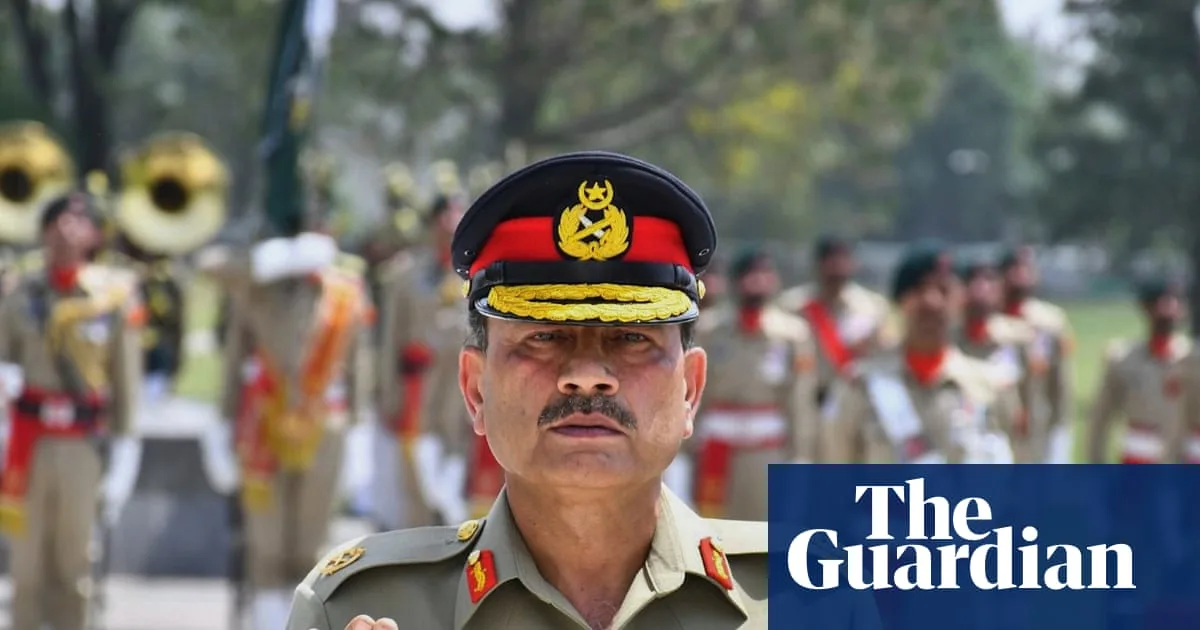
Pakistan’s efforts to host peace talks between Iran and the United States are under mounting pressure as Israel intensifies bombing of civilian targets in Iran and the US builds up its military forces in the Gulf. Islamabad, which has positioned itself as a neutral mediator with good relations with both sides, fears that Israeli actions could derail any chance of successful negotiations.
Pakistan’s de facto leader, Field Marshal Asim Munir, has direct access to the US president, and ties with Tehran have improved in recent years. Both sides have expressed willingness in principle to talk, according to Pakistani officials. However, the conflict is widening, trust is low, and the stated positions of Iran and the US remain far apart. Pakistani officials believe Israel is the biggest potential spoiler.
Israel recently bombed two of Iran’s largest steel plants and civilian nuclear sites, actions that Iran’s foreign minister, Abbas Araghchi, said contradict President Donald Trump’s announcement of a pause in attacks on civilian infrastructure. Iran also reported that two universities were hit. Such strikes on non-military targets are precisely the kind that could derail talks, according to Pakistani officials.
Former Pakistani ambassador to the US, Maleeha Lodhi, noted that Iran’s core concern is ensuring an end to the war and guarantees against future attacks. “The toughest part is believing Trump’s word. He is not a rational player. He’s completely whimsical,” she said. Trump has insisted Iran wants a deal, but Tehran says he is “negotiating with himself”.
Pakistan has been shuttling proposals between the two sides, but hardline positions remain. One possible compromise discussed is joint US-Iranian administration of the Strait of Hormuz, though US Secretary of State Marco Rubio described the idea as unacceptable. Pakistan’s diplomatic efforts intensified on Saturday, with Prime Minister Shehbaz Sharif calling the Iranian president and announcing talks in Islamabad between the foreign ministers of Turkey, Egypt, Saudi Arabia and Pakistan.
Meanwhile, a US troop buildup in the region raises questions about Washington’s commitment to peace. The Wall Street Journal reported that the Pentagon is considering sending 10,000 more soldiers, in addition to 7,000 ground troops already en route. To build confidence, Pakistan suggested that US Vice-President JD Vance represent Washington, an idea taken up by Iran, as Tehran does not trust previous interlocutors Steve Witkoff and Jared Kushner.




