Pakistan's Diplomatic Masterstroke: Flattery as Foreign Policy Forges US-Iran Ceasefire
The sudden cessation of hostilities between the United States and Iran late Tuesday marked a dramatic turning point in a conflict that had threatened global stability, with Pakistan emerging as an improbable but effective peacemaker. This hastily arranged two-week ceasefire, announced just 90 minutes before Donald Trump's deadline for devastating military action, represents one of Pakistan's most significant diplomatic achievements in recent memory.
The Brinkmanship That Brought Pakistan to Center Stage
Six weeks of intense fighting between US-Israeli forces and Iran had resulted in approximately 5,000 casualties across a dozen nations, including over 1,600 civilian deaths within Iran itself. The conflict had battered the global economy through energy disruptions and brought the world to the brink of worst-case scenarios. Both Washington and Tehran claimed victory following Pakistan's mediation, setting the stage for what Prime Minister Shehbaz Sharif termed the "Islamabad Talks" - potential face-to-face negotiations for a permanent peace agreement beginning as early as Friday.
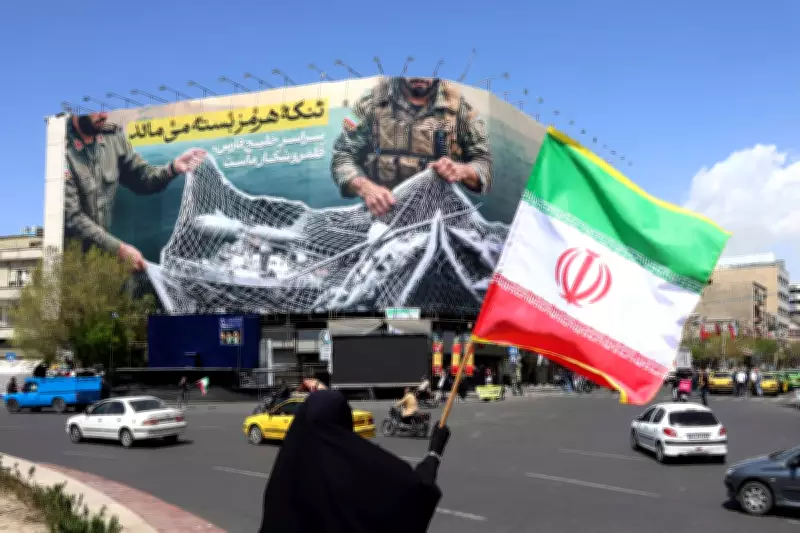
Trump's announcement on Truth Social was swiftly followed by Sharif's confirmation that Washington and Tehran had "agreed to an immediate ceasefire," including in Lebanon where Hezbollah was resisting Israeli invasion. The truce allows for the strategic Strait of Hormuz to reopen, a vital waterway responsible for transporting approximately one-fifth of global oil supplies that had been largely closed during hostilities.

The Personal Relationships Behind the Diplomacy
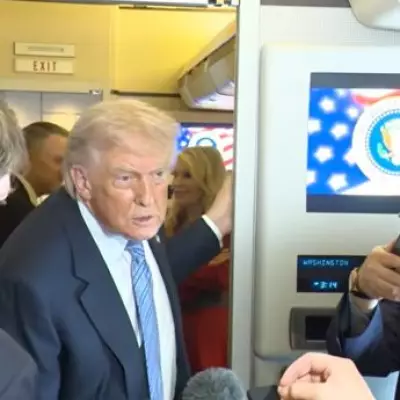
Analysts point to the crucial personal relationship between Donald Trump and Pakistan's powerful military chief, Asim Munir, as a key factor in Islamabad's successful mediation. Trump has hosted General Munir at the White House more frequently than Pakistan's actual prime minister, praising him as a "great fighter" and his "favourite field marshal." According to Swaran Singh, professor of international relations at Jawaharlal Nehru University, Trump "appears most comfortable with the field marshal" among regional leaders and therefore chose to connect through him.
Minutes before announcing the truce, Trump made two critical phone calls - one to Munir and another to Israeli Prime Minister Benjamin Netanyahu, according to anonymous US officials speaking to the New York Times. Munir's close ties with both the American leadership and Iranian military establishment positioned Pakistan uniquely to bridge the divide.
Flattery as Strategic Foreign Policy
Aqil Shah, a political science professor at McDaniel College, describes Pakistan's approach as "flattery as foreign policy." This strategy achieved unexpected success by cleverly tapping into Trump's well-documented desire for adulation and praise. The approach became evident during the four-day India-Pakistan war in 2025, when Islamabad enthusiastically embraced Trump's mediation efforts and even nominated him for the Nobel Peace Prize, thereby earning his favor.
"Pakistan has always seen itself as a sort of leader of the Muslim world," Shah explained. "And so it has used this opportunity, because of its relationship with Trump or privileged access to Trump, and the fact that it borders Iran and is also fifteen to twenty per cent Shia, to try this balancing act."
Regional Reactions and Self-Interest Factors
Pakistan's diplomatic triumph has been welcomed throughout the region, including among commentators in normally rival India, where oil and gas shortages had been keenly felt. Ajay Bisaria, former Indian high commissioner to Pakistan, noted that "Pakistan's role in constructing an off-ramp for the US and Iran in a dangerous war has been constructive and it should be welcomed by the world, including by India."
Pakistan's involvement was at least partly driven by self-interest. The South Asian nation depends heavily on energy imports and had faced severe fuel shortages due to the conflict, along with disruptions to remittances from its substantial population working in Middle Eastern nations.

The Fragile Path Forward
Despite the diplomatic achievement, significant challenges remain. The situation remains complex with Israel, a party to the war, apparently excluded from ceasefire negotiations. Analysts warn that a deep trust deficit between the US and Iran will complicate efforts to build on the temporary truce, noting that two previous rounds of talks had collapsed into open conflict.
In the United States, Trump faces criticism for the deal's terms, particularly regarding Iranian control over the Strait of Hormuz during the ceasefire period. Senator Chris Murphy of the Democratic Party criticized what he called "stunning and heartbreaking incompetence" in effectively handing Iran control over the strategic waterway.
Iran's foreign minister, Abbas Araghchi, stated that safe passage during the two-week ceasefire would be coordinated with Iranian armed forces, with Tehran and Oman permitted to charge transit fees intended for reconstruction efforts.
A Diplomatic Watershed Moment
Michael Kugelman, senior fellow for South Asia at the Atlantic Council, describes this as one of Pakistan's "biggest diplomatic wins in years," noting that Islamabad "defied many sceptics and naysayers who didn't think it had the capacity to pull off such a complex, high-stakes feat."
While China may have quietly assisted in the diplomatic process as Iran's largest trading partner, Pakistan's visible role in pulling the Middle East back from the brink marks a significant elevation of its international standing. However, as Singh cautions, "It's a good sign but there are lots of fault-lines and hiccups that still continue to exist. It's going to be fairly complicated to take it from this level to full-fledged negotiations."
The coming days will determine whether this fragile ceasefire can be converted into lasting peace, or whether it represents merely a temporary pause in a conflict that has already reshaped global geopolitics and economic stability.