Fears of a global nuclear conflict are intensifying as the war between the United States, Israel, and Iran draws in more nations, raising the spectre of World War III. Nuclear-armed Russia has reportedly begun assisting Iran by sharing intelligence on the positions of US forces in the Middle East, a move that analysts warn could be the final spark igniting a catastrophic confrontation.
Escalating Crisis and Presidential Stance
As the crisis deepens, President Trump has vowed there will be no negotiations until Iran unconditionally surrenders, heightening concerns among Americans about the possibility of a nuclear strike on US soil. A recent investigative report has explored this worst-case scenario, painting a grim picture of the devastation that would unfold across the entire country.
Immediate Impact: Millions Perish in Minutes
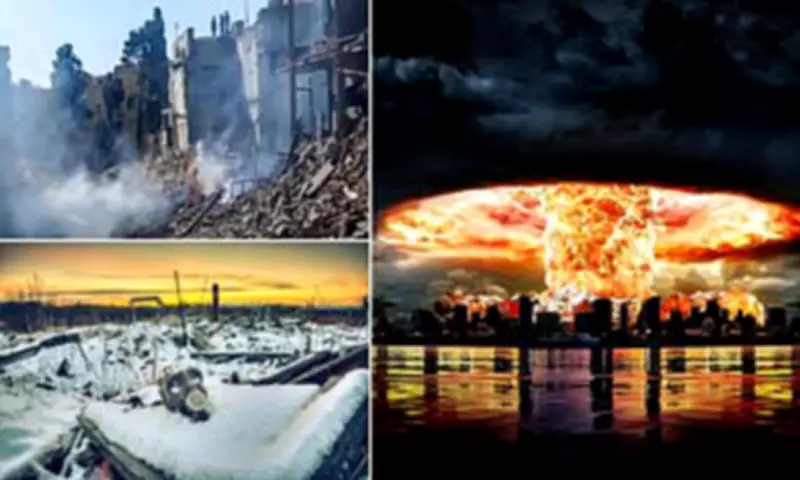
The projections are chilling: tens of millions could perish within minutes as nuclear warheads strike major metropolitan areas such as New York, Washington, Chicago, and Los Angeles. The immediate aftermath would bring massive fireballs capable of vaporizing entire city blocks, crippling infrastructure, contaminating water sources, and plunging survivors into a toxic, ash-covered landscape.

Experts have warned that the global death toll could rise into the billions by the end of the first week, triggering a nuclear winter that would drastically cool the planet. Agriculture would collapse, ecosystems would be disrupted, and the world could regress into a pre-industrial state marked by famine, radiation sickness, and the collapse of modern civilization.
Investigative Timeline of Nuclear Aftermath
As the risk of nuclear war grows with each passing day, investigative journalist Annie Jacobsen, in her book Nuclear War: A Scenario, lays out a horrific timeline based on exclusive interviews with world-leading scientists and experts on nuclear winter.
Minutes After Launch: The US Crippled
Jacobsen describes a fictitious scenario where North Korea fires intercontinental ballistic missiles (ICBMs) at the US. After detecting the launch, the US responds by initiating its nuclear attack, sending missiles over Russia and into North Korea. Russia, an ally of North Korea, then orders a nuclear attack on the US and allied nations.
Thousands of huge fireballs erupt in American cities and towns, with buildings and monuments collapsing as asphalt melts. Cities are obliterated, power grids and nuclear plants melt down, cutting off electricity and energy, and releasing radioactive materials into the air. Tens of millions die almost instantly, leaving the US crippled.
Hours After Impact: Raging Fires and Toxins
Wildfires break out across the northern hemisphere, with nearly everything burning in America, including cities, crops, and forests. Rings of fire stretch from 100 to 200 miles from the 'ground zero' of each nuclear impact. Buildings set aflame release airborne toxins like cyanides, vinyl chloride, dioxins, and furans, damaging organs and the nervous system, leading to cancer and death.
Forest fires rage in Western states, with radioactive fallout killing conifers and creating fuel for future blazes. With the water supply compromised, there is nothing to fight the flames, leaving them to burn freely across America.
Days After Attacks: Radiation Poisoning
Radioactive products from mushroom clouds, including Strontium-90, iodine-131, tritium, cesium-137, and plutonium-239, poison the environment. These toxic particles damage DNA and are linked to cancers, retinal and skin chemical burns, bleeding, coma, and death.
Survivors of the initial fallout begin to die from acute radiation sickness, causing nausea, vomiting, fever, dizziness, disorientation, bloody vomit and diarrhea, internal bleeding, and infections. High radiation levels cause internal liquefaction as blood vessel lining decays. Few survivors suffer chromosomal damage, blindness, and sterility.

Weeks After War: Soot Blankets the Atmosphere
In the weeks following ICBM launches, supplies of natural gas, coal, and peat bogs burn uncontrollably. As cities and forests are engulfed in flames globally, approximately 330 billion pounds of soot are released into the upper troposphere and stratosphere. The heavy soot blocks the sun's rays, drastically lowering the planet's temperature and setting Earth up for a nuclear winter.
Months After Impact: Nuclear Winter Descends
Climatologist Alan Robock notes that soot density would reduce global temperatures by roughly 27 degrees Fahrenheit, with a drop of 40 degrees Fahrenheit in America. The sun's warming rays could be reduced by up to 70 percent. In the Central US, temperatures would not rise above freezing for years, killing most vegetation and animal life due to lack of sunlight.
Decades After Fallout: Hunter-Gatherer Regression
Prolonged freezing temperatures and reduced rainfall by 50 percent kill off crops worldwide. Surviving humans return to a hunter-gatherer state, with millions starving and survivors killing each other for limited food. Years later, as the world unfreezes, thawing corpses poison water supplies, and radiation kills off shellfish, making them inedible.
Soot eventually settles, but only after the ozone layer loses 75 percent of its shielding power, leading to deadly sunburns. A 2021 study predicts UV-B levels become 'hazardous to life,' forcing survivors to live in caves. Insects multiply, spreading diseases among the tiny human population left without antibiotics.
Thousands of Years Later: Civilization Erased
As Albert Einstein famously said, 'I know not with what weapons World War III will be fought, but World War IV will be fought with sticks and stones.' Even as temperatures return to pre-war conditions, any surviving humans may never know about past civilizations, with all knowledge lost in disintegrated cities.
Current Conflict and Global Warnings
After the killing of Iran's Supreme Leader, Ayatollah Ali Khamenei, Trump warned that 'the big wave hasn’t even happened. The big one is coming soon.' So far, US and Israeli forces have conducted a devastating campaign against Iran's Islamic Revolutionary Guard Corps using conventional weapons, but neither nation has deployed a nuclear weapon.
Both China and Russia, Iran's allies, warned during an emergency UN Security Council meeting that America's continued strikes could lead to nuclear escalation. Moscow has called for an end to the war, branding it an 'unprovoked act of armed aggression.'
According to the Federation of American Scientists, Russia, the US, and China have the three largest arsenals of nuclear warheads ready to launch, with combined stockpiles of over 8,600 weapons representing nearly 90 percent of all deployed weapons of mass destruction. This ensures that a war between these nations would devastate the planet, underscoring the urgent need for de-escalation.