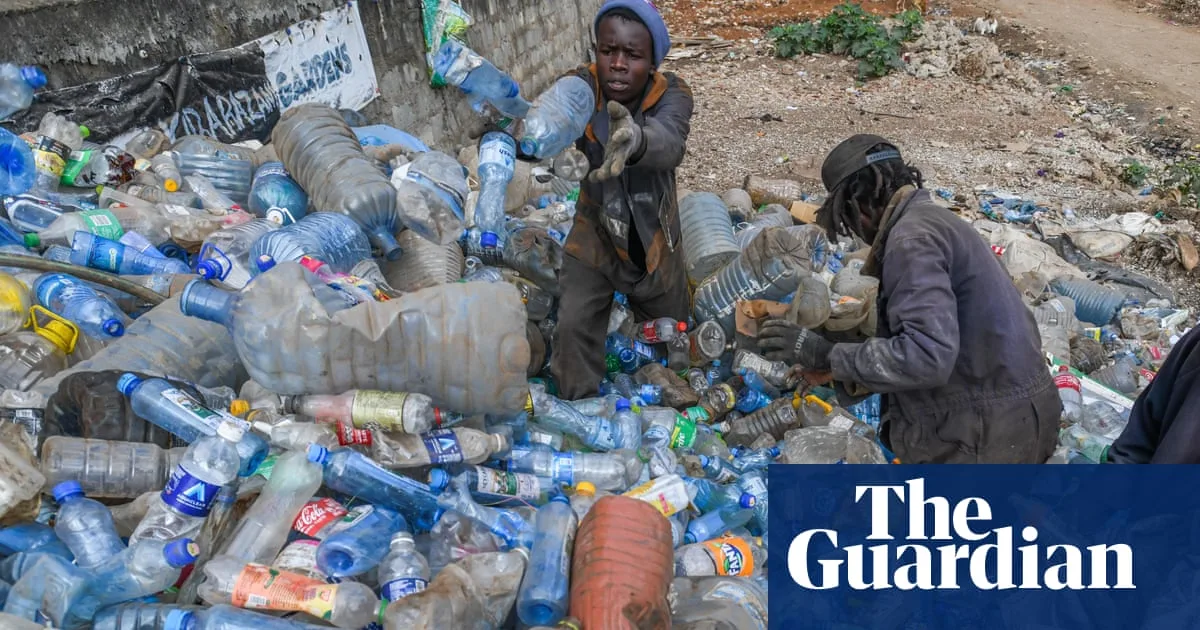
Norway Halts UN Environment Funding, Threatening Plastics Treaty Talks
Norway Halts UNEP Funding, Risking Plastics Treaty

Norway, the largest donor to the United Nations Environment Programme (UNEP), has paused funding to the body ahead of its revised budget on 12 May, sparking concern among member states and non-governmental organisations. This development could have significant implications for the already troubled plastic treaty negotiations being overseen by UNEP.

Background of the Plastics Treaty Talks

Since 2022, countries have been struggling to reach an agreement on how to address the global production and use of plastics, widely regarded as one of the most pressing environmental issues of our time. Despite six rounds of negotiations, no consensus has been achieved. The talks have been mired in disagreement, particularly between nations advocating for ambitious action and petrostates resisting caps on plastic production.

Norway's Funding Pause

According to sources, UNEP Executive Director Inger Andersen met with the Director General of the Norwegian Agency for Development Cooperation (Norad) recently and was informed that all funding agreements are on hold pending budget decisions. Norway has been UNEP's largest overall donor in recent years, contributing approximately $12 million (£9 million) annually over the three years to 2025. Additionally, Norway provided $19 million in 2025 to the Planetary Fund and another $7.8 million in earmarked funds. This pause introduces significant uncertainty for UNEP's future functioning, especially as the wider UN faces severe financial pressure.

Wide Pickt banner — collaborative shopping lists app for Telegram, phone mockup with grocery list

Furthermore, the Guardian obtained an email sent by Norad to NGOs, stating that a funding call for projects combating plastic pollution in developing countries had been postponed. The programme is valued at £4 million to £6 million per year and is intended to support countries in the plastic treaty process.

Reactions from Environmental Groups

Christina Dixon, ocean campaign leader at the Environmental Investigation Agency, expressed concern: "Any risk to funding could not come at a worse time for the negotiations. Sustained funding would reinforce Norway's longstanding leadership toward an ambitious plastics treaty." Norway co-leads the high-ambition coalition at the plastic treaty negotiations with Rwanda, advocating for a legally binding instrument covering the full life cycle of plastics. This stance contrasts with a small group of petrostates blocking efforts to cap plastic production.

Last year, the chair of the process resigned suddenly, leaving talks in disarray, following a previous round that collapsed with little progress after three years of negotiations. A new chair was elected this year, with negotiations expected to resume in early 2027.

Karen Landmark, managing director at GRID-Arendal, a Norwegian environmental foundation working closely with UNEP, warned that the funding pause could "give other countries an excuse to lower their level of ambition." She added: "For years, Norway has played a clear and constructive leadership role in pushing for a strong global plastics treaty. When a country in that position signals hesitation or withdraws support, the consequences can extend far beyond its own borders."

Domestic and Political Context

Oil and gas remain Norway's largest sector, with petroleum revenues amounting to £52 billion in 2025 alone. Last week, the government faced criticism for approving plans to reopen three North Sea gasfields to fill energy gaps caused by the Middle East war. Frøya Skjold Sjursæther of the Norwegian Green party called the potential funding cut a "complete scandal," noting that Norwegian oil contributes to millions of tonnes of plastic annually.

Norway's reassessment of UNEP funding occurs amid shifting domestic political and economic debates over climate and environmental spending. The country is governed by a centre-left Labour party minority administration, led by Jonas Gahr Støre, which relies on agreements with other parties to pass budget measures.

Pickt after-article banner — collaborative shopping lists app with family illustration

Per Fredrik Pharo, head of Norad's department for climate and nature, stated that several funding agreements exist. The main one ended last year, while another is under assessment, with a decision expected by mid-2026. A third stream has been postponed but will resume "in the near future." This has caused confusion among NGOs, especially after a Norad minister recently told the Norwegian parliament that Norway would continue funding to combat plastic pollution in developing countries, with an ambition to spend 1 billion kroner (£79 million) between 2025 and 2028.

Eirik Lindebjerg, conservation director of WWF Norway, expressed concern over the "vague" language, questioning why such uncertainty is being created if funding is to continue. Åsmund Aukrust, Norway's minister of international development, cited an "unpredictable economic situation" and said every krone in the budget must be carefully considered.

A UNEP spokesperson expressed confidence that Norway will continue its strong environmental leadership.




