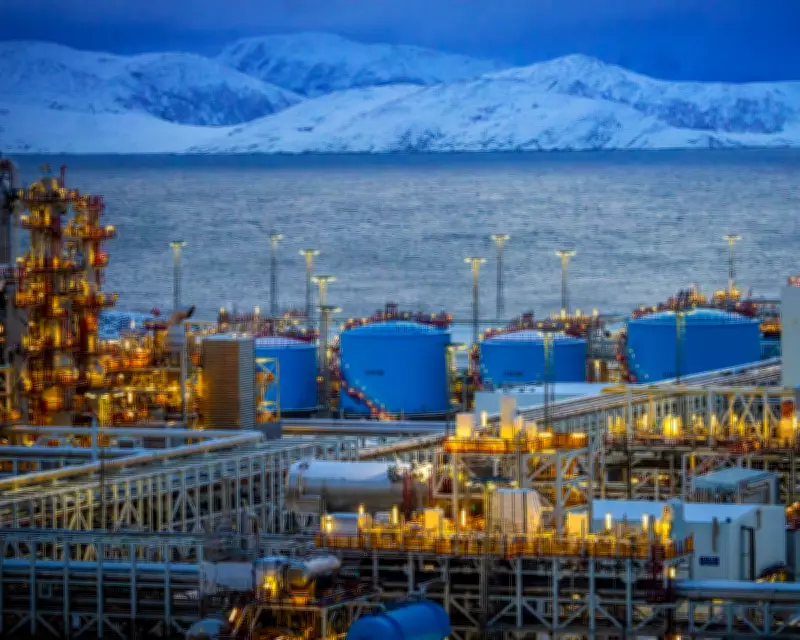
Norway's energy minister, Terje Aasland, has reaffirmed the country's commitment to maintaining and expanding its offshore oil and gas production, stating, 'We will develop, not dismantle, activity on our continental shelf.' This week, despite criticism from environmental campaigners, he announced the reopening of three gasfields off Norway's southern coast by the end of 2028, nearly three decades after they were closed. The decision aims to address shortfalls caused by the war in Ukraine and disruptions to supplies from the Middle East.
Production Levels and New Frontiers
The move will help keep oil and gas production at approximately 2025 levels, which have been stable for nearly 20 years, and maintain them for the rest of the decade. Norway currently has 97 offshore oilfields, with three coming on stream last year. The Norwegian Offshore Directorate expects '100 and beyond' within the next two years, still producing at least the current 2 million barrels of oil daily. The Barents Sea in the high north represents a new frontier, with potential for seabed mineral mining between northern Norway and Greenland, though this remains a distant prospect after initial surveys.
Energy Security for Europe
'Norwegian offshore production plays an important role in ensuring energy security in Europe,' Aasland said. 'The world, and Europe, will have a need for oil and gas for decades to come, and it is crucial that Norway continues to develop its continental shelf to remain a reliable and long-term supplier.' The sector generates vast wealth for Norway, but the reopening of the Albuskjell, Vest Ekofisk, and Tommeliten Gamma gasfields, closed in 1998, has drawn heavy criticism. It contradicts advice from the country's environment agency, and the Socialist Left party accused the government of 'greenwashing.'

Lars Haltbrekken, deputy leader and environment spokesperson for the Socialist Left, said: 'It shows that the government is once again blatantly ignoring environmental advice from its own experts. All the talk about responsible oil extraction is nothing but nonsense. It's greenwashing through and through, with vulnerable and important natural areas being put at risk with full awareness.'
Equinor's Commitment
Equinor, the Norwegian energy company in which the state owns 67%, says it is making a 'big effort' to maintain its 2020 production levels of 1.2 million barrels daily up to 2035. The state holding should yield about £2 billion in dividends this year. Ola Morten Aanestad of Equinor emphasised the importance of keeping production higher than in 2001, stating the company is committed to investing $6 billion annually up to 2035 for more drilling, new development, and pipelines.
Responsibility and Job Security
Aasland, Norway's longest-serving oil minister and a former electrician and trade union leader, stressed Norway's 'responsibility' in providing energy security for Europe. 'In Europe, before the war in Ukraine, there was much talk of how to get rid of oil and gas on our continental shelf. Now they ask me every day, 'Can you deliver more oil and gas?' We are talking about energy security for Europe, and we have to increase investment. Our focus is very clear.' He also highlighted job security for the 210,000 people employed by the energy industry in Norway.
Taxation and Sovereign Wealth Fund
Norway's consistent 78% tax rate on oil and gas firms, in place since the 1970s, has made it attractive to investors. Aanestad noted that investors know what to expect, calling it predictable. This tax is a mainstay of Norway's £1.5 trillion sovereign wealth fund, which helps the country run a sizeable surplus. Norway's approach contrasts with the UK, its North Sea neighbour, where the government has ruled out new oil and gas exploration licences.
Terje Sørenes, chief economist at the Norwegian Offshore Directorate, said the aim is to prolong production as long as possible and increase output, which currently provides gas for a third of Europe's consumption. Europe's energy superpower is prioritising ever more drilling and offshore production well into the 2030s and beyond.