Mexican President Visits Jalisco to Address Security Fears Before FIFA World Cup
Mexican President Claudia Sheinbaum made a significant visit to the western state of Jalisco on Friday, aiming to alleviate mounting security concerns ahead of the upcoming FIFA World Cup. This move comes in response to a recent surge of violence that has cast doubts on the safety of hosting the international sporting event in the region.
Wave of Violence Sparks International Alarm
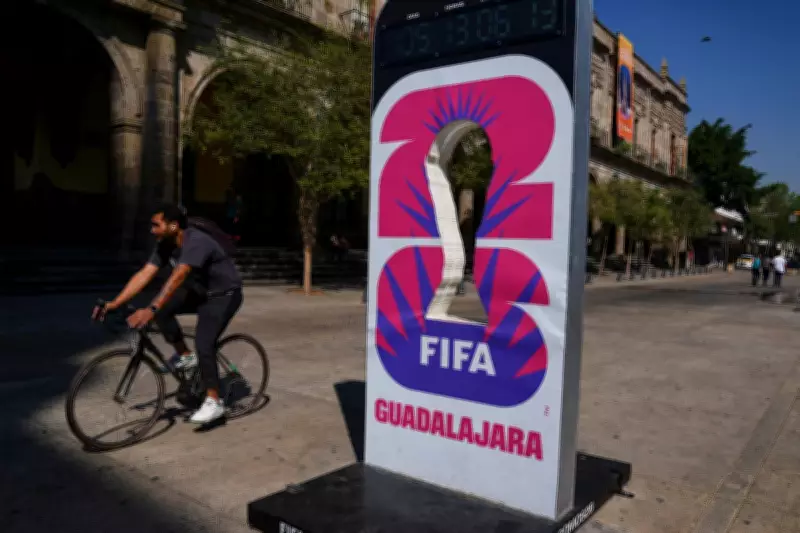
The unrest was ignited by the killing of Nemesio Oseguera Cervantes, widely known as "El Mencho," Mexico's most powerful drug lord, by the country's army last month. In the aftermath, clashes between cartel gunmen and incidents such as car burnings erupted across Mexico, with Jalisco and its capital, Guadalajara, experiencing the most intense violence. Guadalajara is one of Mexico's three host cities for the World Cup, heightening fears over the event's viability.
This wave of violence resulted in more than 70 fatalities, including 25 members of the National Guard, sowing significant doubts both within Mexico and internationally about the city's ability to safely accommodate thousands of visitors during the tournament.

High-Level Security Briefing and Reassurances
Accompanied by her Security Cabinet and senior military commanders, President Sheinbaum held her morning news briefing from military headquarters in the municipality where "El Mencho" was recently buried under heavy guard. This location is also near the stadium set to host World Cup matches. During the briefing, Sheinbaum emphasized unity and commitment to peace, stating, "We are here ... to tell everyone in Jalisco, all the people of Jalisco, that we are together, that we are working for peace, security and the well-being of the inhabitants of this beautiful state."
With fewer than 100 days remaining until the World Cup, Sheinbaum and security officials outlined a comprehensive security plan for the summer event. This plan involves coordination across more than 20 federal government agencies, including the Army and Navy, as well as local authorities, to ensure robust protection measures are in place.
International Collaboration and Detailed Security Measures
Mexican Security Secretary Omar García Harfuch, who leads Mexico's offensive against cartels, highlighted that Mexico has been working closely with authorities from the United States, Canada, and FIFA to enhance planning and risk response strategies. He detailed that the security plan will include:
- Specialized training for officials to handle potential threats effectively.
- Planning and operational exercises to simulate real-world scenarios.
- Early warning systems to detect and respond to security breaches promptly.
- Security deployments around key locations such as stadiums, airports, roadways, and lodging centers.
- Protection schemes for delegations and attendees to ensure their safety throughout the event.
Projecting Confidence Amidst Doubts
In an effort to project confidence, President Sheinbaum engaged in a phone call with FIFA President Gianni Infantino shortly after the violence erupted in late February. Infantino expressed his "full confidence" that Mexico would successfully host part of the World Cup. Earlier in the week, Sheinbaum further demonstrated her commitment by wrapping a FIFA scarf around her neck and posing next to the World Cup trophy, symbolizing her support for the event.
On Friday, General Román Villalvazo, who oversees security coordination for the 2026 FIFA World Cup, announced the creation of three joint task forces in the host cities of Mexico City, Guadalajara, and Monterrey. He underscored the significance of the event, stating, "The 2026 FIFA World Cup organized by Mexico, the United States and Canada represents an unprecedented event. For Mexico, it entails two challenges: to present a reliable and secure country before the international community, and to have the capacity to confront any threats that undermine national security."
This visit and the detailed security plans aim to restore trust and ensure that the FIFA World Cup proceeds safely, despite the recent challenges posed by cartel violence in the region.