
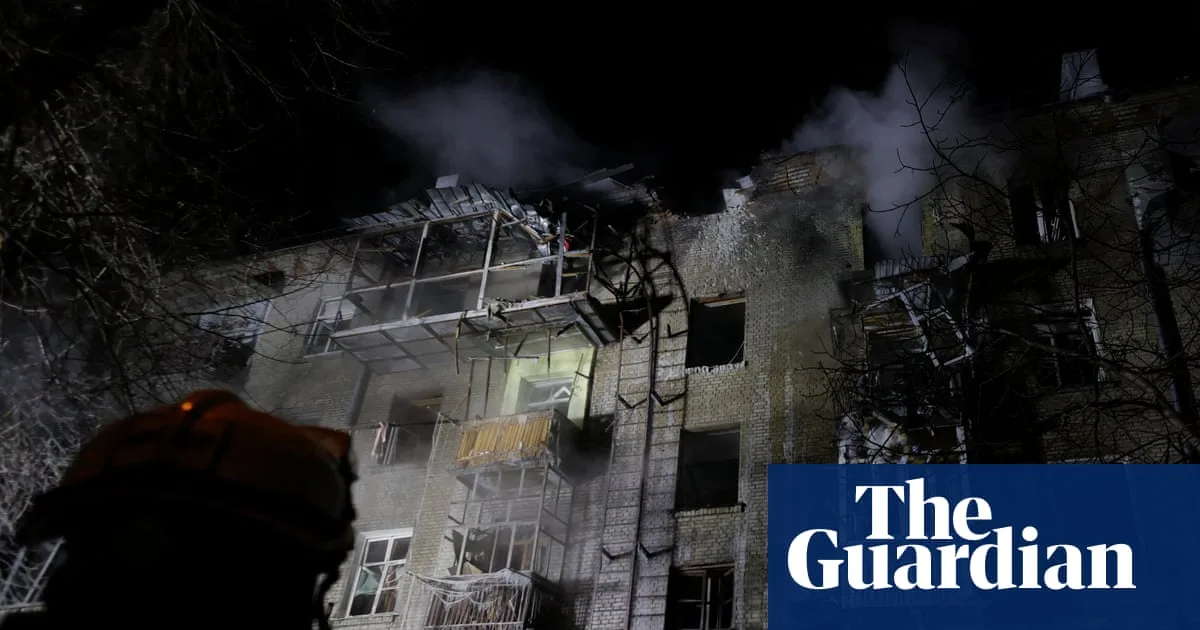
One person was killed and at least 15 injured in Russian airstrikes on Kyiv and Kharkiv overnight, as Ukraine's energy situation worsened significantly, triggering emergency power outages across most regions. Kyiv mayor Vitali Klitschko confirmed one death and four injuries in the capital, with strikes causing fires on both sides of the Dnipro River and disrupting heating and water supplies in eastern districts.
Ukraine's grid operator reported that recent Russian air attacks had severely damaged energy infrastructure, leaving many without power and heating during a subzero cold snap. Maxim Timchenko, CEO of Ukraine's largest private energy firm, described the situation as 'close to a humanitarian catastrophe' and urged that any peace deal must include a halt to attacks on energy facilities.
Meanwhile, peace talks between Ukraine, Russia, and the US resumed in Abu Dhabi on Friday, with Russia sending a delegation led by GRU intelligence chief Admiral Igor Kostyukov. The talks are the highest-level known summit since the war began, but Russia has reiterated its demand for Ukraine to withdraw from Donbas before negotiations proceed. Ukrainian President Volodymyr Zelenskyy confirmed the meeting at 'negotiator level'.
In other developments, Russia has deployed a new high-speed drone, the Geran-5, which experts say could challenge Ukraine's air defences. The EU has pledged 447 emergency generators to Ukraine, with Commissioner Hadja Lahbib stating that 'the EU will not let Russia freeze Ukraine into submission'.




