A leading Kremlin analyst has demanded "massive strikes" against European diplomatic compounds in Kyiv, placing British and Western embassy staff directly in the firing line as world war tensions spiral. The warning came during a broadcast of the NTV political talk show The Meeting Place (Mesto Vstrechi), where Ivan Pyatibratov, an analyst at the Centre for Political Information, declared that Moscow must climb to a "new rung of escalation" and punish European nations for backing Ukraine.
Broadcast call for escalation
The segment, translated and shared by the Russian Media Monitor, began with host Ivan Trushkin mocking EU foreign policy chief Kaja Kallas after she announced plans to summon Russia's ambassador over recent damage to the Dutch and Austrian diplomatic missions in the Ukrainian capital. Dismissing the complaints as "theatrical wailing", Trushkin claimed Moscow had repeatedly warned Brussels since May that Kyiv was no longer safe for foreign envoys.
Pyatibratov then urged the Kremlin to follow through on Putin's recent vow to retaliate against the West, demanding devastating attacks on both Ukrainian command centres and European diplomatic sites. He said: "We need to move to some new rung of escalation; we need to strike even harder, because it is obvious that we are not using all of our capabilities. If you remember, even Donald Trump - and Vladimir Putin didn't even hint; he said directly that we will respond in such a way that it hurts them more than what they have done now."
Diplomatic hubs named as targets
Pressed by host Trushkin on what moving "from words to deeds" should look like in practice, Pyatibratov named European diplomatic hubs as legitimate targets. "What they should see is what representatives of European diplomacy have only just begun to see now," he warned. "These should be massive strikes specifically on decision-making centres, on the locations where European diplomats are stationed on the territory of Ukraine. We warned you - it is time to leave."
When another panellist interjected to point out that deliberately bombing foreign diplomats constitutes a war crime - suggesting Russia could instead strike nearby warehouses - Pyatibratov doubled down on his threat. "I didn't say 'deliberately'," he snapped back. "I said that they must experience for themselves all the 'delights' of what they are bringing upon Ukraine and upon themselves. Moreover, we can ensure this."
Pointing to shattered glass at European embassies in Kyiv from recent overnight barrages, he added ominously: "These cracked windows are only the first swallows. For now, we are still telling them: 'Guys, there is still a chance to talk to us.' Later, there won't be."
UK embassy presence in Kyiv
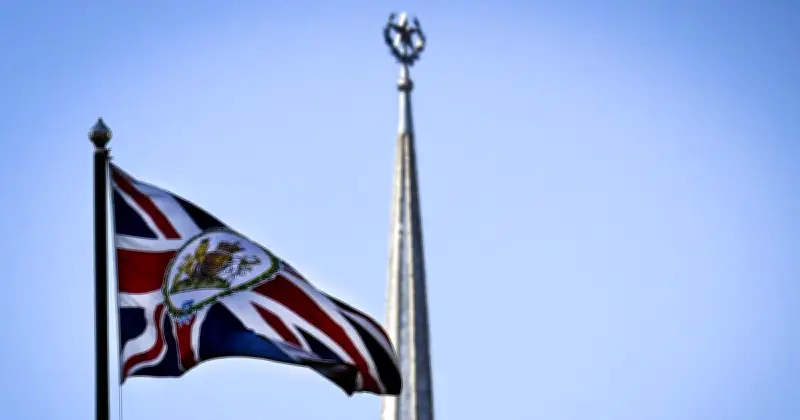
Although the UK was not named individually during the tirade, Britain maintains an active embassy in Kyiv, with some 100 to 200 staff, and routinely appears alongside EU states in Kremlin state-media rhetoric as a primary Western enemy. Trushkin then turned to military observer Andrey Soyustov, asking how Moscow could escalate without crossing its own red lines.
Soyustov dismissed the reported damage to the Austrian and Dutch embassies, claiming without evidence that 90% of it was caused by Ukrainian air defences or staged for cameras. He went on to argue that diplomacy with Kyiv and European leaders was completely dead, insisting Moscow's sole objective must be the total military defeat of Ukraine.
"Is the Ukrainian side capable of reaching an agreement? Definitely not," Soyustov said. "Is the so-called community of European states capable of reaching an agreement right now? Definitely not. Therefore, you can negotiate with them, [but] you won't reach an agreement. Hence, the only sane outcome the Russian side must strive for is, sooner or later, to achieve the collapse of the front."
UK diplomats briefly relocated from Kyiv to the western city of Lviv in February 2022, just days before Russia launched its full-scale invasion. Then-Prime Minister Boris Johnson announced the reopening of the Embassy in the Ukrainian capital in April 2022 alongside more than a dozen other nations, keeping British personnel stationed in the city.