
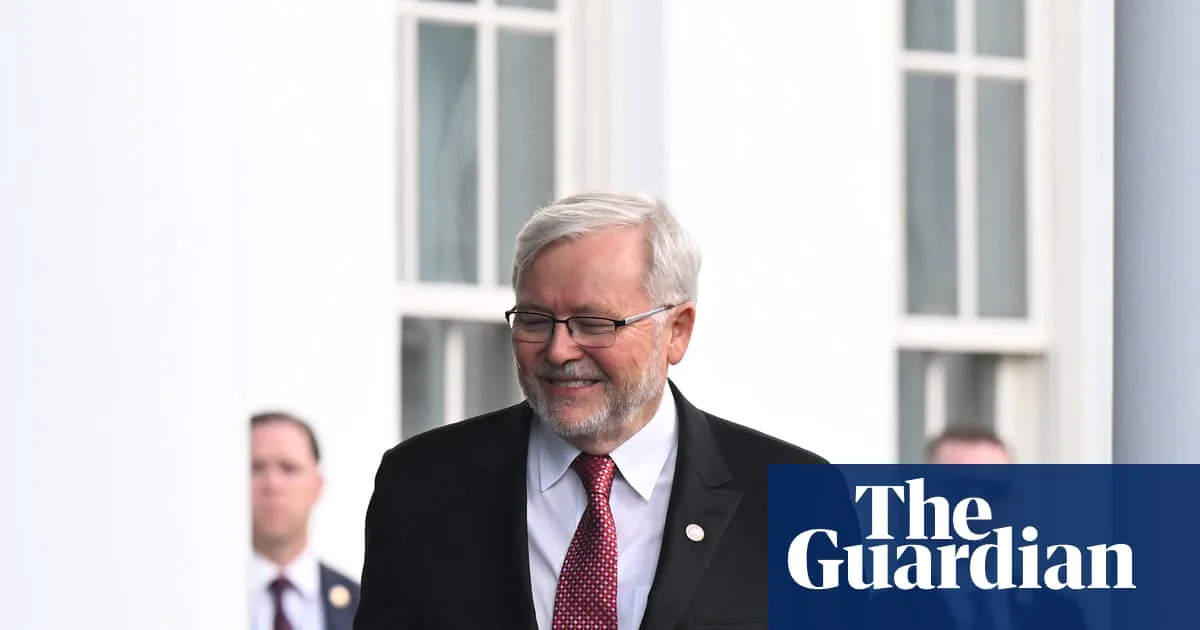
Kevin Rudd will step down as Australia's ambassador to the United States at the end of March, Prime Minister Anthony Albanese announced on Tuesday. The former prime minister and foreign affairs minister will leave the post a year early to take up the role of global president of the Asia Society thinktank, where he will also head its Center for China Analysis.
Rudd was appointed envoy to Washington in December 2022. During his tenure, he secured ongoing US support for the Aukus nuclear submarine agreement, helped negotiate the release of WikiLeaks founder Julian Assange, and finalised agreements on critical minerals and artificial intelligence.
A controversial figure within the Labor Party due to lingering tensions from his leadership battles with Julia Gillard, Rudd's appointment was not without controversy. His past social media comments about Donald Trump, including calling him "the most destructive president in history," caused a diplomatic awkwardness during Albanese's first face-to-face meeting with Trump in October.
Albanese said the decision to leave was Rudd's alone, praising his service under both Trump and Joe Biden. "He applied his relentless effort, his experience, intellect and determination to advance Australia's interests in Washington, and Kevin Rudd has served the nation well," Albanese said. The government is expected to announce a successor in the coming weeks, with former ministers Joel Fitzgibbon and Stephen Conroy and ex-Western Australian premier Mark McGowan among possible candidates.
Foreign Affairs Minister Penny Wong credited Rudd and his wife, Thérèse Rein, with helping unlock billions in new investment in sectors such as AI datacentres and quantum computing. Rudd said he would remain in the US, working between New York and Washington on the future of US-China relations. Influential US congressman Joe Courtney, co-chair of the cross-party Friends of Australia Caucus, called Rudd "a force of nature."




