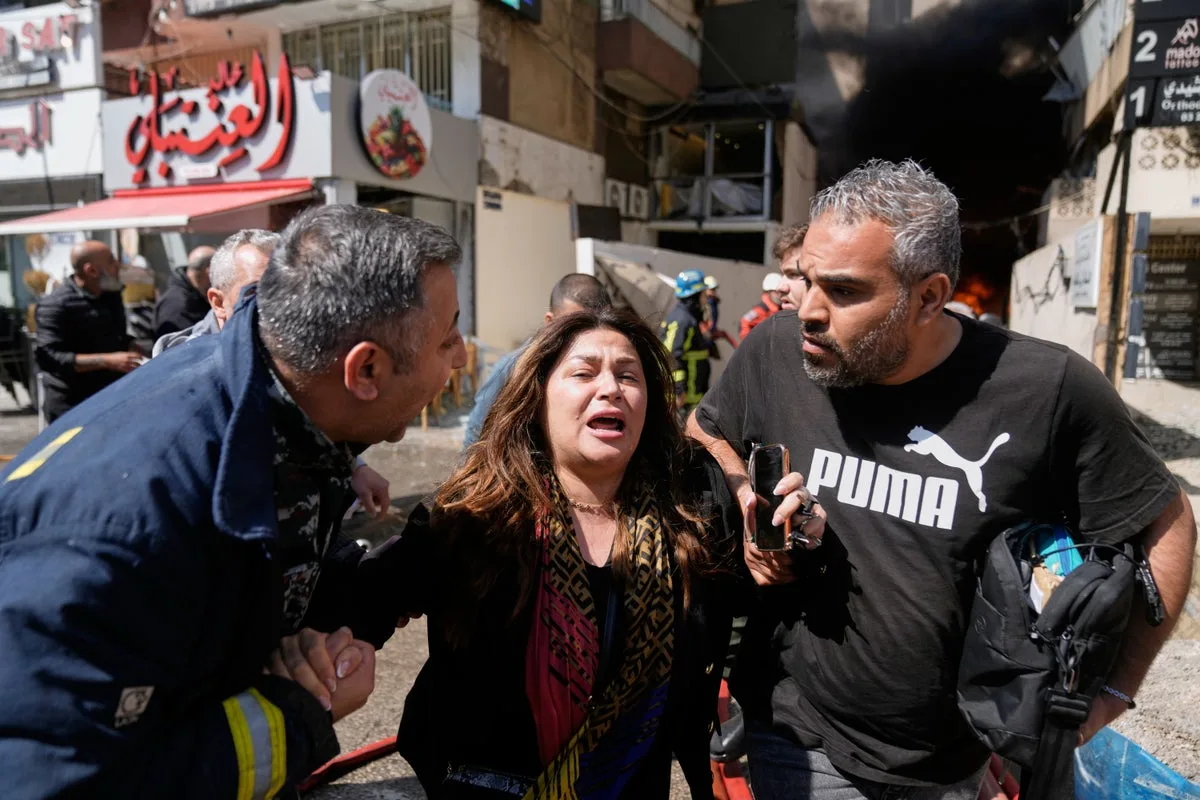
Israeli airstrikes struck several dense commercial and residential areas in central Beirut on Wednesday afternoon without warning, hours after a ceasefire was announced in the US-led war with Iran. Israel has said the agreement does not extend to its conflict with the Iran-backed Hezbollah in Lebanon, though mediator Pakistan claimed it does.
The Israeli military described the operation as the largest coordinated strike in the current war, targeting more than 100 Hezbollah positions within ten minutes across Beirut, southern Lebanon, and the eastern Bekaa valley. Black smoke rose over the capital as explosions interrupted traffic, and ambulances rushed to scenes of burning buildings. At least one apartment block was hit, and emergency responders searched charred vehicles.
There was no immediate confirmation of casualties, but several strikes occurred in busy commercial districts, causing panic. Israel said it had struck missile launchers, command centres, and intelligence infrastructure, accusing Hezbollah of using civilians as human shields. The military urged Lebanon's government to reject Hezbollah's entrenchment in civilian areas.
Israel has rarely targeted central Beirut since the latest war began on March 2, instead focusing on southern and eastern Lebanon and the capital's southern suburbs. Before the new strikes, a Hezbollah official, speaking anonymously, said the group was giving mediators a chance to secure a ceasefire but had not committed to it because Israel was not adhering. He warned that Hezbollah would not accept a return to the pre-war status quo, when Israeli strikes continued despite a nominal truce.
The conflict escalated after Hezbollah fired missiles across the border following US and Israeli attacks on Iran. Israeli bombardments have killed over 1,530 people in Lebanon, including more than 100 women and 130 children, while more than a million have been displaced. Early Wednesday, many displaced people began packing to return home after the Iran ceasefire, but Israeli Prime Minister Benjamin Netanyahu's pledge to press on in Lebanon left them stranded and despairing.
Fadi Zaydan, 35, sheltering at a Beirut waterfront camp, said: 'We can’t take this anymore, sleeping in a tent, not showering, the uncertainty. We’ll be targeted if we go home.' His family had planned to return to the southern city of Nabatieh but stopped after Netanyahu's comments, deciding to wait in Sidon instead.