
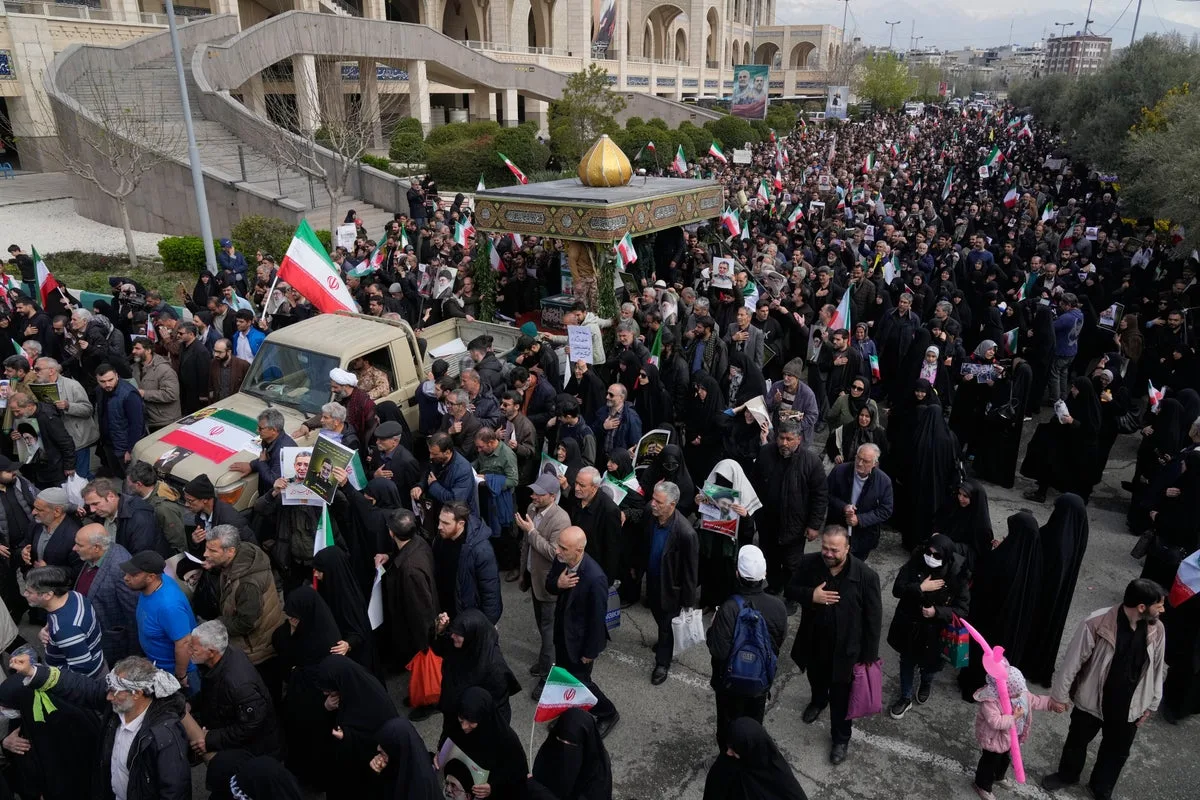
Israel launched a new wave of attacks early Monday against Tehran, as Iran renewed strikes on its Gulf neighbours and threatened to target their power plants. The Israeli military said it had begun a wide-scale wave of strikes on infrastructure targets in the Iranian capital, without providing further details.
Iran's paramilitary Revolutionary Guard responded by warning that if the United States attacked Iranian power plants, Iran would hit power plants in all areas supplying electricity to American bases, as well as economic and energy infrastructure in which Americans have shares. The Guard's statement was read on Iranian state television.
United States Central Command chief Adm. Brad Cooper advised Iranian civilians to remain in shelters for the foreseeable future, claiming Iran was launching missiles and drones from populated areas. Air defences in the United Arab Emirates intercepted a ballistic missile near Al Dhafra Air Base, injuring one person with shrapnel. Warning sirens sounded in Bahrain and Kuwait, while Saudi Arabia intercepted a missile targeting Riyadh and destroyed drones over its Eastern Province.
Oil prices remained high, with Brent crude at around $112 a barrel, up nearly 55% since the conflict began on 28 February. The war has caused wild fluctuations in global stock markets amid concerns over a world energy crisis. Iran has tightened its grip on the Strait of Hormuz, through which a fifth of the world's oil is shipped, insisting it remains open—but not to the US, Israel, or their allies.
Adm. Cooper said the campaign against Iran was ahead or on plan, targeting infrastructure and manufacturing facilities to destroy Iran's ability to rebuild its military. He suggested Iran could end the war by ceasing attacks, though did not specify whether that would stop US and Israeli operations before all infrastructure targets were destroyed.




