
Lebanon and Israel have held their first direct diplomatic discussions in decades, meeting in Washington on Tuesday amid ongoing conflict between Israel and the Iran-backed militant group Hezbollah. US Secretary of State Marco Rubio described the talks as a 'historic opportunity' but cautioned that no immediate breakthrough was expected.
Israel's Ambassador to the US, Yechiel Leiter, called the two-hour exchange 'wonderful' and noted a 'convergence of opinion' regarding the removal of Hezbollah's influence from Lebanon. 'The Lebanese government made it very clear that they will no longer be occupied by Hezbollah,' he said, adding that Iran and Hezbollah have been weakened.
Hezbollah, which was not represented at the talks, opposed the direct engagement and intensified its attacks on northern Israel as discussions began. The Lebanese delegation, led by Ambassador Nada Hamadeh Moawad, made no immediate comment. Despite Hezbollah's rejection, the talks mark a significant step for two countries that have been officially at war since Israel's inception in 1948.
Rubio said the Trump administration was 'very happy' to facilitate the dialogue but acknowledged the challenges. 'We understand we're working against decades of history and complexities,' he said, expressing hope for a framework that could lead to a permanent solution for both peoples.
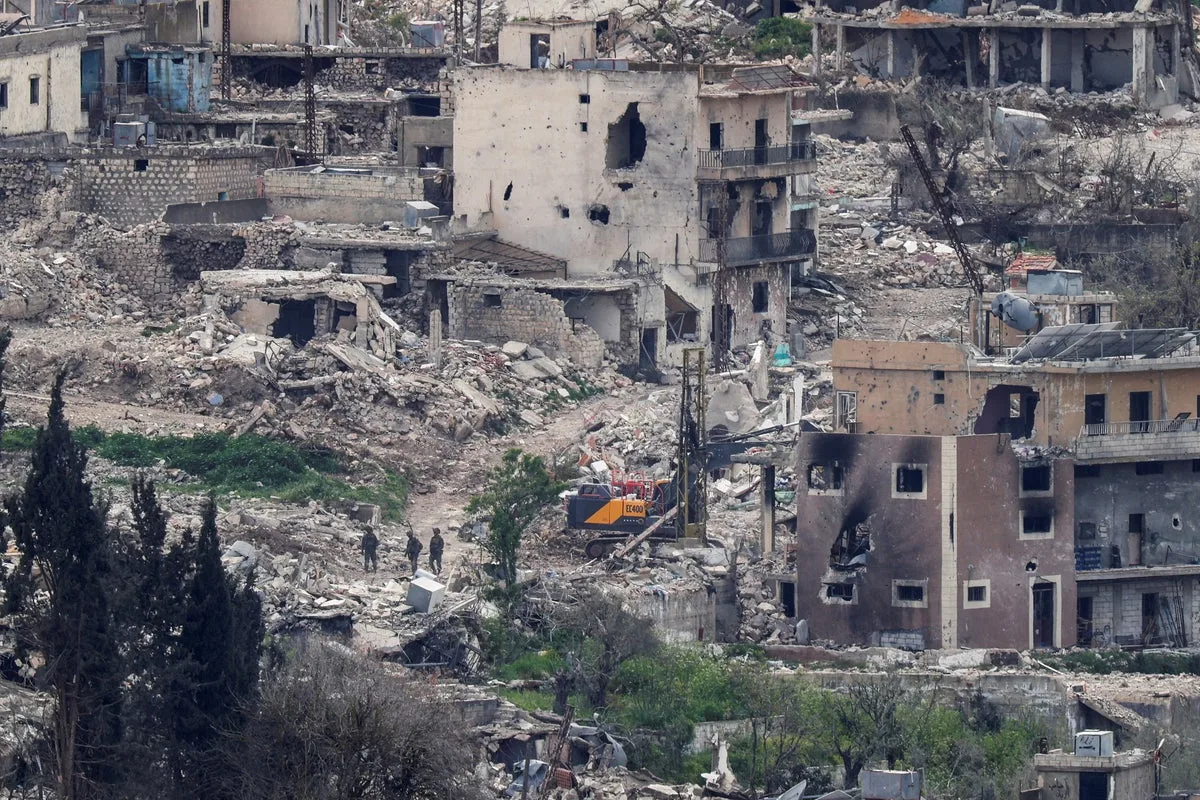
The latest round of fighting began on March 2 when Hezbollah fired rockets into northern Israel. Since then, over 2,100 people have been killed in Israeli strikes in Lebanon, and more than 1 million displaced. Israel has also launched a ground invasion of southern Lebanon, aiming to create a security zone up to the Litani River.
Hezbollah, though weakened after its war with Israel ended in November 2024, continues to launch daily attacks. The group's political council member Wafiq Safa said it would not abide by any agreements from the talks. Lebanon's top political authorities have been critical of Hezbollah's decision to enter the war, and the talks are the first direct ones between the two countries since 1993.




