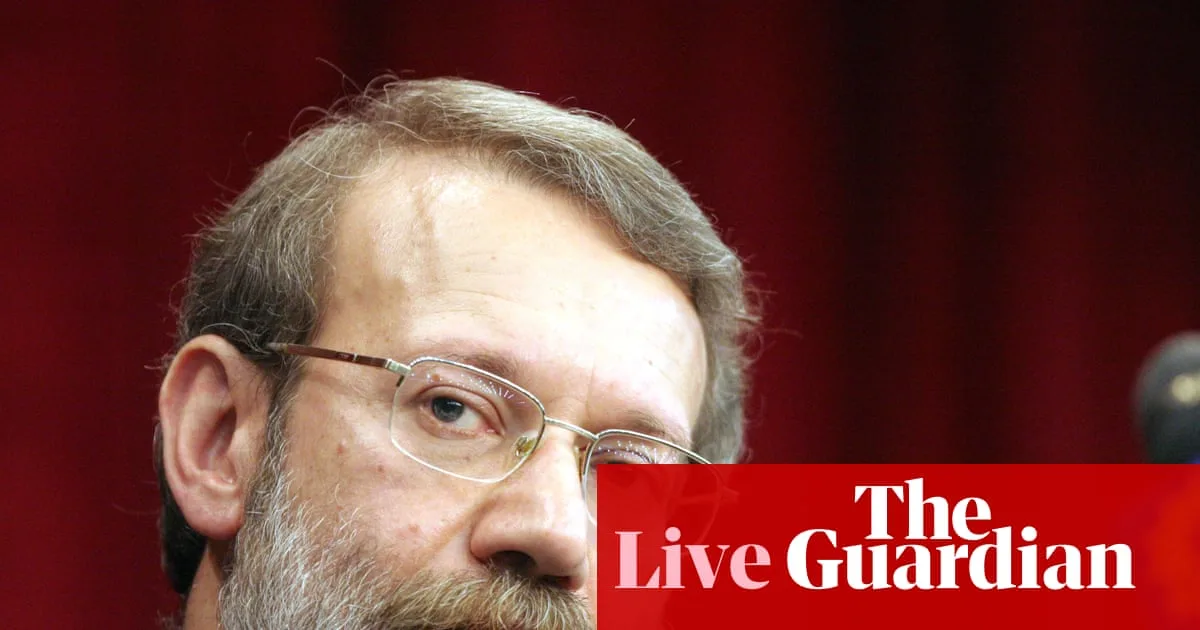
Iranian army chief Amir Hatami has threatened a “decisive and regrettable” retaliation for the killing of security chief Ali Larijani in an Israeli air strike. In a statement, Hatami said Iran’s response to the assassination of the secretary of the Supreme National Security Council would be decisive and regrettable.
The Revolutionary Guards, Iran’s powerful military force, said it launched missiles at central Israel “in revenge for the blood of martyr Dr Ali Larijani and his companions”. Iran also confirmed the death of Basij militia commander Gholamreza Soleimani, the highest-level assassination since joint US-Israeli strikes killed former supreme leader Ali Khamenei on 28 February.
In Lebanon, the Israeli military called on residents of a central Beirut neighbourhood to evacuate, warning of an imminent attack targeting Hezbollah. The Lebanese health ministry reported at least 912 killed, including 111 children, and 2,221 wounded, with over a million displaced. The UN human rights office said Israeli attacks on civilian infrastructure may amount to war crimes.
US President Donald Trump criticised Nato allies, claiming “we don’t need” their help in the Iran war but saying they “should’ve been there”. The US military targeted sites near the Strait of Hormuz, using 5,000-pound deep penetrator munitions. Trump’s former counterterrorism director Joe Kent resigned, accusing Israeli officials and media of a misinformation campaign to encourage war with Iran.
A projectile hit Iran’s Bushehr nuclear power plant on Tuesday night, but no damage or injuries were reported. Middle East crude oil benchmarks surged to all-time highs amid airstrikes and the effective closure of the Strait of Hormuz, which handles one-fifth of the world’s oil. Prices remain well above pre-war levels, pushing up costs for Asian buyers.