
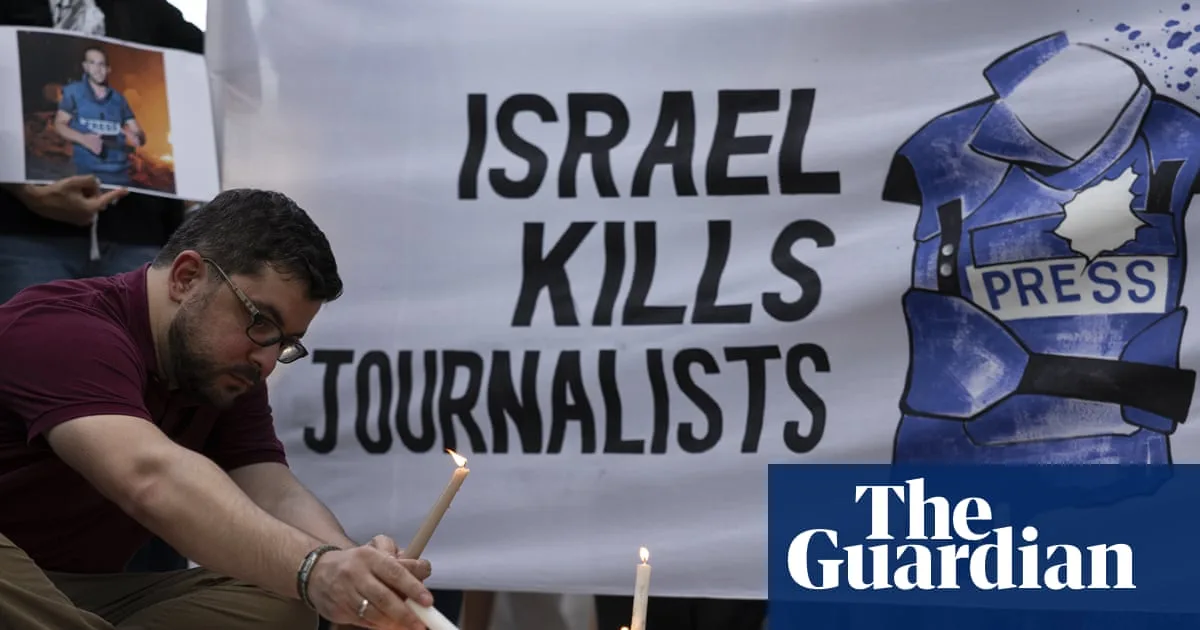
A special unit in Israel's military was tasked with identifying journalists it could smear as undercover Hamas fighters, to justify targeting them and to blunt international outrage over the killing of media workers, according to an investigation by the Israeli-Palestinian +972 Magazine and Hebrew-language Local Call.
Set up after the 7 October 2023 Hamas attack, the so-called 'legitimisation cell' aimed to gather information that could bolster Israel's image and shore up diplomatic and military support from key allies, the report said, citing three intelligence sources. In at least one case, the unit misrepresented information to falsely describe a journalist as a militant, a label that in Gaza is effectively a death sentence; the designation was reversed before the man was attacked.
The report comes after Israel killed Al Jazeera journalist Anas al-Sharif and three colleagues earlier this week, claiming Sharif was a Hamas commander. Press freedom groups had warned that such accusations were designed to 'manufacture consent to kill'. Since the war began, more than 180 Palestinian journalists have been killed, according to the Committee to Protect Journalists, which said Israel carried out 26 targeted killings of journalists.
Intelligence sources told +972 that the unit worked to undermine journalists' protected status under international law. Officers were eager to find a media worker they could link to Hamas, convinced that Gaza-based journalists were 'smearing Israel's name in front of the world'. One source recalled a case where officers were 'excited' to label a reporter as a terrorist, but later realised he was genuinely a journalist and removed him from the target list.
The primary motive of the cell was public relations, not national security, the sources said. When media criticism intensified, the cell would seek intelligence that could be declassified to counter the narrative. Some officers expressed concern about publishing classified material for PR reasons rather than military objectives.




