
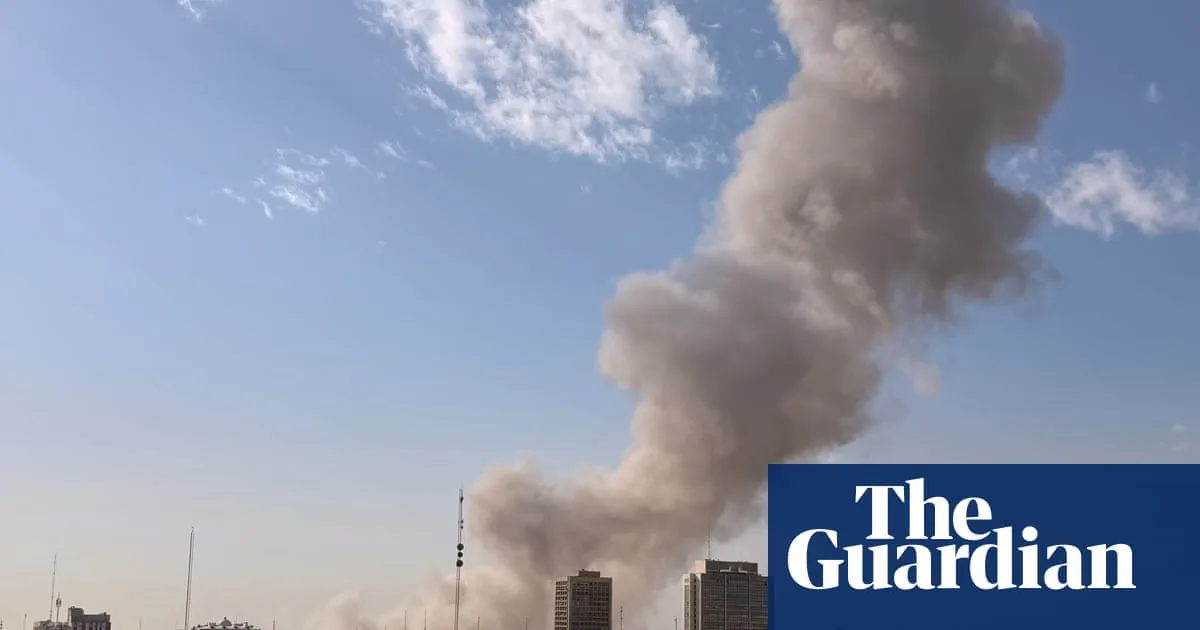
Iran has launched extensive retaliatory strikes against Israel and US air bases following a joint US-Israeli offensive that targeted senior Iranian officials and air defence systems. The conflict, which began on Saturday, has seen explosions reported across Israel, Bahrain, Syria, Iraq, the United Arab Emirates, Kuwait and Saudi Arabia.
Israeli Prime Minister Benjamin Netanyahu indicated in a televised address that the strikes may have killed Iran's supreme leader, Ayatollah Ali Khamenei, saying there are 'many signs' he is no longer alive. Khamenei has not been heard from since the strikes began, and satellite imagery shows his secure compound was heavily damaged. Netanyahu also claimed that 'several leaders' involved in Iran's nuclear programme had been killed.
Iranian officials said they were not surprised by the attacks and warned of 'long-lasting and extensive' consequences. The Revolutionary Guards threatened all US bases and interests in the region, vowing retaliation until 'the enemy is decisively defeated'. Iran's foreign minister, Abbas Araghchi, earlier told NBC News that Khamenei and President Masoud Pezeshkian were alive 'as far as I know'.
The UN Security Council called an emergency meeting on Saturday to address the situation. French President Emmanuel Macron said the escalation was 'dangerous for everyone' and must stop. Dozens of countries have called for immediate de-escalation. Analysts warn the conflict could destabilise the region and rattle global markets, particularly if Iran disrupts traffic through the Strait of Hormuz.




