Iran Escalates Regional Conflict with Coordinated Retaliatory Strikes
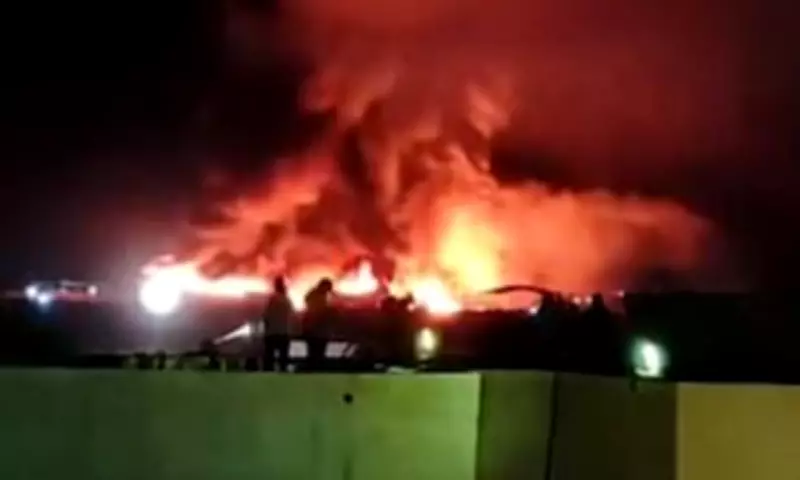
Iran has unleashed a furious wave of retaliatory strikes across the Middle East, targeting Iraq, Qatar, Saudi Arabia, and Israel in a dramatic escalation of regional hostilities. The attacks have left multiple nations on high alert as flames and smoke rise from critical infrastructure sites.
Multiple Fronts in Regional Conflict
Drones struck oil facilities and airports in Iraq today as US-led forces intercepted several potential attacks over the Kurdish city of Erbil. Security warnings had been issued about possible attacks on hotels in the region. The Islamic Resistance in Iraq, a network of Iranian-backed Shia factions, claimed responsibility for an attack on a US military base near Baghdad Airport, calling it retribution for the death of Iranian Supreme Leader Ali Khamenei, who was killed last Saturday.
Meanwhile, Israel and Iran continued their exchange of fire, with the Israel Defense Forces confirming fresh attacks against what they described as terror targets in Beirut's Dahiyeh District. Iran fired its twenty-third round of strikes, according to the Tasmin news agency, which is linked to the Islamic Revolutionary Guard Corps. The IDF reported detecting missiles coming from the region toward Israel.

Attacks on Critical Infrastructure
In Tehran, flames and smoke were visible after airstrikes hit Mehrabad International Airport in the early hours of this morning, marking a new wave of attacks on the Iranian capital. Qatar's Ministry of Defence reported that nine out of ten drone attacks toward their country were intercepted, with the tenth striking an uninhabited area and causing no injuries.
Saudi Arabian officials confirmed that four drones heading toward the Shaybah oil field were intercepted and destroyed over the Empty Quarter desert. Prime Minister Sir Keir Starmer stated that Britain stands ready to defend its ally, promising Saudi Arabia's Crown Prince Mohammed bin Salman that the UK would support the defence of his country.
US Military Buildup and Diplomatic Tensions
The conflict intensified as US Air Force bombers capable of delivering up to 34 tonnes of explosives arrived at RAF Fairford in Gloucestershire. This deployment suggests that what was previously dubbed the big one by Donald Trump may be imminent. The US President demanded Iran's unconditional surrender, explaining in a phone interview with Axios that surrender could occur when Iran announces it or when they cannot fight any longer.
The 79-year-old president, who has vowed to Make Iran Great Again if the regime admits defeat, faces increasing pressure to end the regional conflict due to soaring oil prices. US Secretary of War Pete Hesgeth warned that missile attacks on Iran would ramp up dramatically, while Deputy Prime Minister David Lammy suggested British RAF jets could legitimately target Iranian missile sites.
Economic and Security Implications
Oil prices soared as Qatar warned the war could bring down the world's economies. Russia was accused of sharing intelligence to help Tehran attack allied warships and aircraft across the Middle East. Meanwhile, Scotland Yard began a long-running investigation after the activities of a suspected Iranian cell aroused suspicion, with a member of the Jewish community tipping off police.
UK's Response and International Criticism
Britain faced stern criticism from allies over its response to the ongoing crisis, particularly regarding its defence of Cyprus, where a UK base was hit by a drone earlier this week. The UK government faced further backlash as HMS Dragon is not expected to be deployed until next week, while French and Greek military forces have already been sent to defend the island.
A former diplomat, Ameer Kotecha, claimed British ministers were told weeks in advance that a US-Israel attack on Iran was highly likely. Trump mocked Sir Keir for being no Winston Churchill in an extraordinary attack, declaring he was unhappy with the Prime Minister for failing to back US and Israeli strikes on Iran.

Sir Keir has defended his decision not to allow the US to use British bases for attacks on Tehran, arguing the government must keep a cool head and suggesting the attacks may have been unlawful. However, on Sunday, the Prime Minister agreed to allow the US to launch defensive attacks on Iran from Fairford and Diego Garcia, a critical UK-US military base in the Indian Ocean.
Additional Attacks and Regional Developments
Fresh strikes blamed on Iran targeted Iranian Kurdish opposition groups in the northern Kurdistan region amid reports militants were attempting to cross the border. Baghdad International Airport, which houses the US military base Camp Victoria, came under a series of attacks from both drones and missiles, according to security officials.
In the southern province of Basra, an oil facility housing foreign energy companies was targeted twice, with both drones shot down over the Burjesia oil complex. However, a third struck the site, with another oil field and Basra's airport also hit. Explosions were heard near the airport in Erbil, where US and Israeli forces shot down drones.
Kurdish security forces reported that international coalition forces downed four explosive-laden drones over Erbil, with debris from one falling near a hotel but causing no casualties. An oil field operated by US firm HKN Energy paused production after an attack in Dohuk province, believed to have been launched from Iraq using two drones.
Diplomatic and Humanitarian Concerns
Iran threatened to target all facilities in the region if Kurdish Iranian militants were allowed to enter Iran. Meanwhile, Israel has been attacking parts of western Iran in an attempt to help Iranian Kurdish groups take control of border towns, according to unnamed officials speaking to Reuters.
More than 160,000 people in the region have registered their presence with the Foreign Office as the crisis deepens. A second Government charter flight carrying British citizens from Oman landed at Gatwick Airport, with more flights expected. Qatar Airways announced a limited relief corridor with flights from Doha to several European cities, while Etihad Airways resumed a limited commercial flight schedule.
Security Threats and Casualty Reports
An alleged Iranian spy ring was dismantled by British police amid warnings that many more cells may be preparing potentially violent operations in Britain. Counter-terrorism officers arrested four men with Iranian and dual British-Iranian citizenship on suspicion of spying on synagogues and prominent individuals in the Jewish community.
Iran's ambassador to the UN, Amir Saeid Irvani, reported that 1,332 civilians have been killed in Iran in US-Israeli strikes since last Saturday, with women and children among the deceased according to the Iranian Red Crescent Society. He claimed thousands more have been injured, with schools, hospitals, and civilian buildings deliberately attacked.
The US denied targeting civilian infrastructure but is probing a strike on a girls' school in Iran. Israel has claimed Iran has targeted civilians. Iran's ambassador also stated that Donald Trump's remarks about choosing the country's next leader breach the principle of non-interference, asserting that Iran is a sovereign and independent state that will never allow foreign interference.
International Diplomacy and Military Capabilities
Vladimir Putin spoke with Iran's leader Masoud Pezehkian, voicing condolences over the death of Iran's supreme leader and other officials and civilians. The Russian leader emphasized that the conflict must end immediately through diplomatic resolution. Both nations agreed to continue communicating.
The B-1 Lancer bomber that arrived at RAF Fairford has a wingspan of 137 feet, weighs 86 tonnes, and is the fastest bomber in the US Air Force, capable of hitting speeds exceeding 900 mph. The aircraft can carry up to 34 tonnes of weapons and equipment, with advanced radar and GPS systems for precision targeting.
Experts believe America could drop the Mother of All Bombs on Iran, a 10-tonne explosive that can create a 1,000-foot crater when it explodes. This weapon, officially called the Massive Ordnance Air Burst, was previously used in Afghanistan in 2017 and vaporizes anyone at the blast site.
Trump reiterated on social media that there would be no deal with Iran except unconditional surrender, promising that after surrender and the selection of acceptable leaders, the US and allies would work to make Iran economically bigger, better, and stronger than ever before.