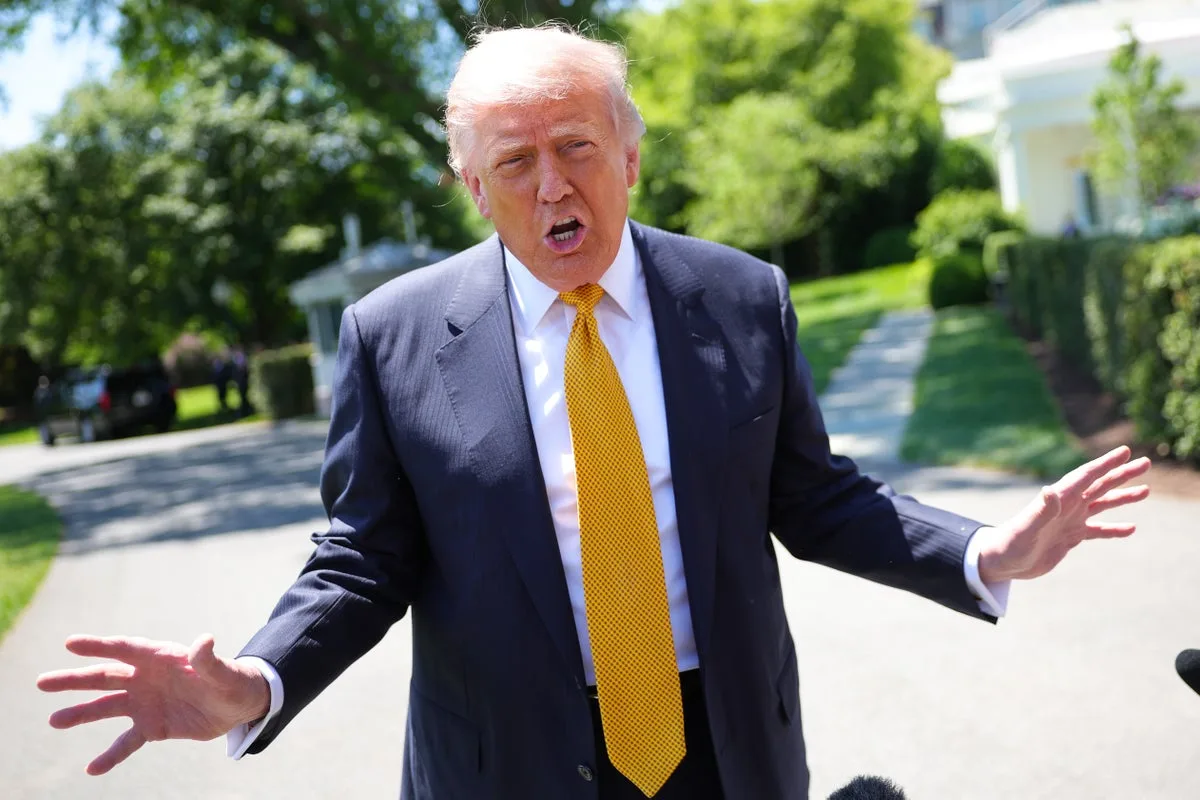
Iran Ignores Trump's Flip-Flops as Strait of Hormuz Control Holds
Iran Ignores Trump's Flip-Flops as Strait Control Holds

Analysis suggests that Iran has grown accustomed to President Donald Trump's oscillating approach, which veers between issuing threats and extending deadlines for peace talks. According to Andrew Feinberg, Tehran has realized that Trump's bluster and social media tirades carry little weight as long as they maintain control over the Strait of Hormuz.

Trump's Latest Reversal

Nearly three months after launching an air war against Iran, Trump continues to struggle with a coherent strategy. He was scheduled to convene top advisers in the White House Situation Room to discuss resuming the bombing campaign, which he has repeatedly claimed as a "total victory." However, on Monday, he announced on Truth Social that he would postpone renewed attacks at the request of Qatari, Saudi, and Emirati leaders, who he claimed are engaged in "serious negotiations" toward a deal acceptable to the United States and other nations.

"Based on my respect for the above mentioned Leaders, I have instructed Secretary of War, Pete Hegseth, The Chairman of The Joint Chiefs of Staff, General Daniel Caine, and The United States Military, that we will NOT be doing the scheduled attack of Iran tomorrow, but have further instructed them to be prepared to go forward with a full, large scale assault of Iran, on a moment's notice, in the event that an acceptable Deal is not reached," Trump wrote.

Wide Pickt banner — collaborative shopping lists app for Telegram, phone mockup with grocery list

Mixed Messages and Threats

This eleventh-hour reversal came after Trump told Axios he believed Iranian leaders still wanted an agreement, warning that Tehran would "get hit much harder" if they did not capitulate. He also cautioned that "there won't be anything left of them" if they fail to rush through a deal, writing on Truth Social that "the clock is ticking" for Iran. Meanwhile, Trump remains fixated on criticizing news coverage of the war, lashing out at outlets like the New York Times and CNN for reporting on the depletion of US munitions stockpiles and Iran's intact capabilities.

Iran's Defiant Stance

Tehran continues to ignore Trump's rhetoric, focusing instead on inflicting economic pain by closing the Strait of Hormuz, which has caused global gas prices to spike. On Monday, Iranian officials launched an X account for the "Persian Gulf Strait Authority," described as the legal entity for managing passage through the strait. This move was seen as a defiant gesture ahead of Trump's reported war council session.

Iranian foreign ministry spokesman Esmaeil Baqaei warned that his country is "fully prepared for every scenario" and "will not be subdued by contradictory behavior and threats" from the US. "In the event of any reckless action we will respond with full strength, and I assure you that our armed forces will definitely have new 'surprises' for the enemy," he said.

Lessons from the Past

Trump's Twitter tantrums once yielded some results, such as threats of "fire and fury" against North Korea that led to a lull in provocations. However, Iranian leaders now see Trump's appetite for war declining alongside his approval ratings and rising gas prices. They know he has not ordered the US Navy to reopen the international waterway or clear mines, and because he has alienated allies, they effectively control the strait.

Iranian leaders also read the same polls showing the American public opposes the war and disapproves of Trump's handling of the situation. By hiding missile infrastructure underground, they maintain a defense that makes Trump's boasts of "total victory" seem increasingly hollow. As long as they hold the strait, they believe they "hold all the cards."

Pickt after-article banner — collaborative shopping lists app with family illustration




