
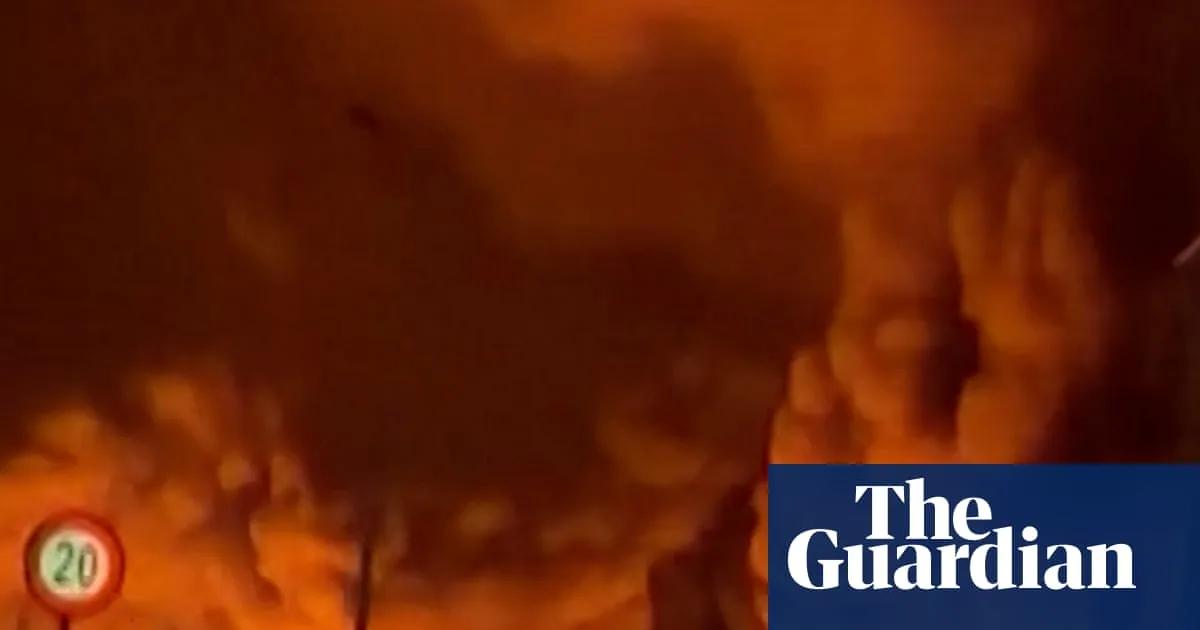
Iran has threatened to attack oil facilities in neighbouring countries after Israel struck at least five energy sites in and around Tehran, smothering the city in black smoke and escalating fears of significant disruption to the world economy. 'If you can tolerate oil at more than $200 per barrel, continue this game,' said a spokesperson for Iran’s Revolutionary Guards on Sunday.
The US sought to calm markets as oil prices surged by pledging not to target Iran’s energy infrastructure. However, fireballs and thick plumes of smoke rose over Tehran after Israeli airstrikes hit four storage facilities. Iran’s oil distribution company said four employees were killed, as a dark haze hung over the city and the smell of burning oil lingered in the air.
A spokesperson for the IRGC said Iran would retaliate if the strikes on energy infrastructure continue, accusing the US and Israel of targeting civilians and fuel facilities. State media quoted the spokesperson saying Gulf states should press them to stop or 'similar actions will be taken in the region'. The US energy secretary, Chris Wright, suggested the strikes were carried out by Israel and that Washington would not target Iran’s energy infrastructure, claiming disruptions would be brief.
The tensions came as Mojtaba Khamenei, the second son of the late Iranian supreme leader Ayatollah Ali Khamenei, was chosen as his successor. Members of the clerical body responsible for selecting Iran’s highest authority announced the decision on Sunday night, calling on Iranians to rally behind him and preserve national unity. The move marks the first time since the 1979 Islamic revolution that Iran’s supreme leadership has passed from father to son.
Earlier, Donald Trump said Iran’s next supreme leader was 'not going to last long' if Tehran did not get his approval first. The Israeli military said it would continue pursuing every successor of Ali Khamenei. A fresh wave of Iranian strikes hit the Gulf on Sunday, with Saudi Arabia, the United Arab Emirates, Qatar, Bahrain and Kuwait all reporting attacks. Saudi Arabia said it intercepted 15 drones, while strikes in Bahrain caused 'material damage' to an important desalination plant. Two people were killed in Saudi Arabia.
On Sunday evening the US military said a US service member had died of injuries sustained during an Iranian attack on US troops in Saudi Arabia, bringing the US death toll from the war to seven. According to US media, Russia has been providing Iran with intelligence that could help it target US military assets in the region.




