
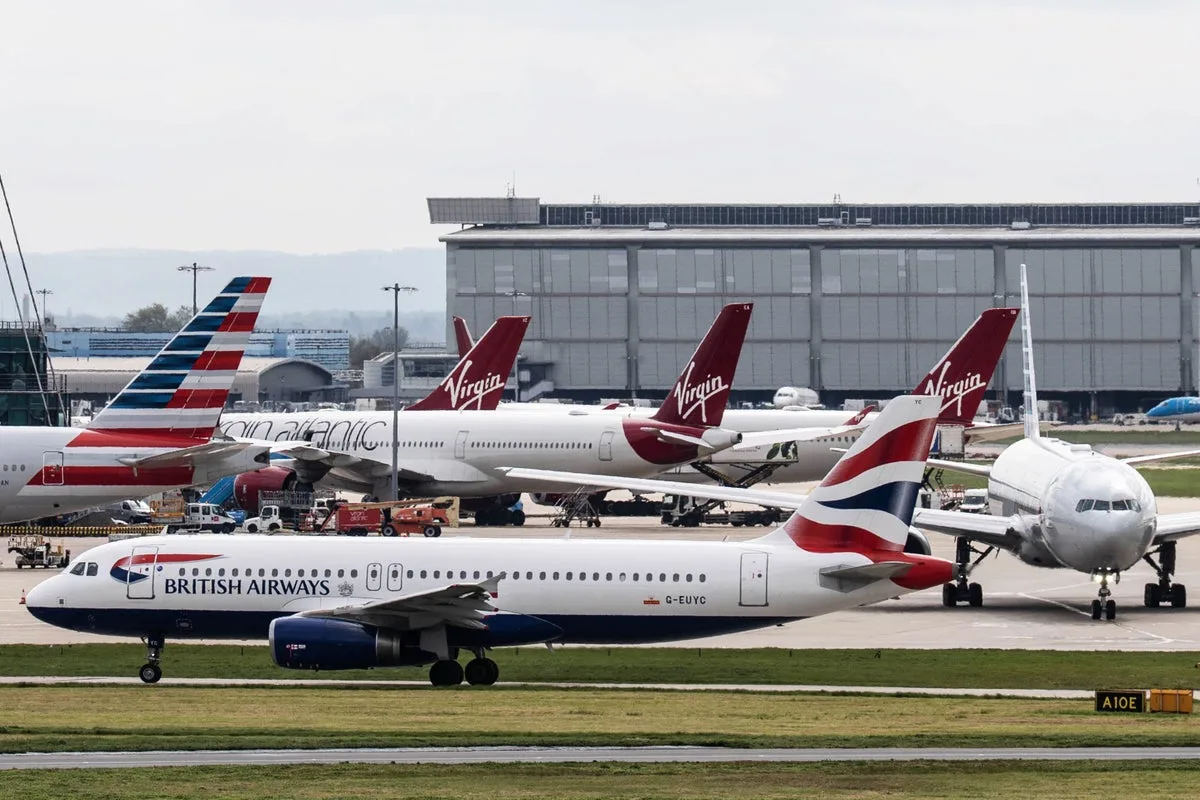
Heathrow airport has reported a 5.3% drop in passenger numbers for April, attributing the decline to the ongoing conflict in the Middle East. The west London hub said 6.7 million passengers passed through its four terminals last month, down from 7.1 million in April last year.
The airport stated that the reduction reflects “the ongoing impact of the Middle East conflict on some markets and short-term adjustments to travel plans”. Despite the dip, April was still Heathrow’s busiest month so far this year.
Chief executive Thomas Woldbye said: “We know passengers want certainty when planning their hard-earned summer holidays, so we are supporting Government and airlines as they work through their plans to get passengers on their journeys. While we have seen some short‑term disruption linked to the Middle East conflict, demand for travel remains strong with current fuel supplies stable.”
Heathrow noted that underlying demand remains resilient, with transfer passenger numbers up 10% compared with April last year. This was driven by an increase in passengers connecting through Heathrow to Asia and Oceania, as many travellers avoid Middle Eastern hubs due to the conflict.
The airport plans to update its 2026 passenger forecast in June “in light of the Middle East conflict”.




