
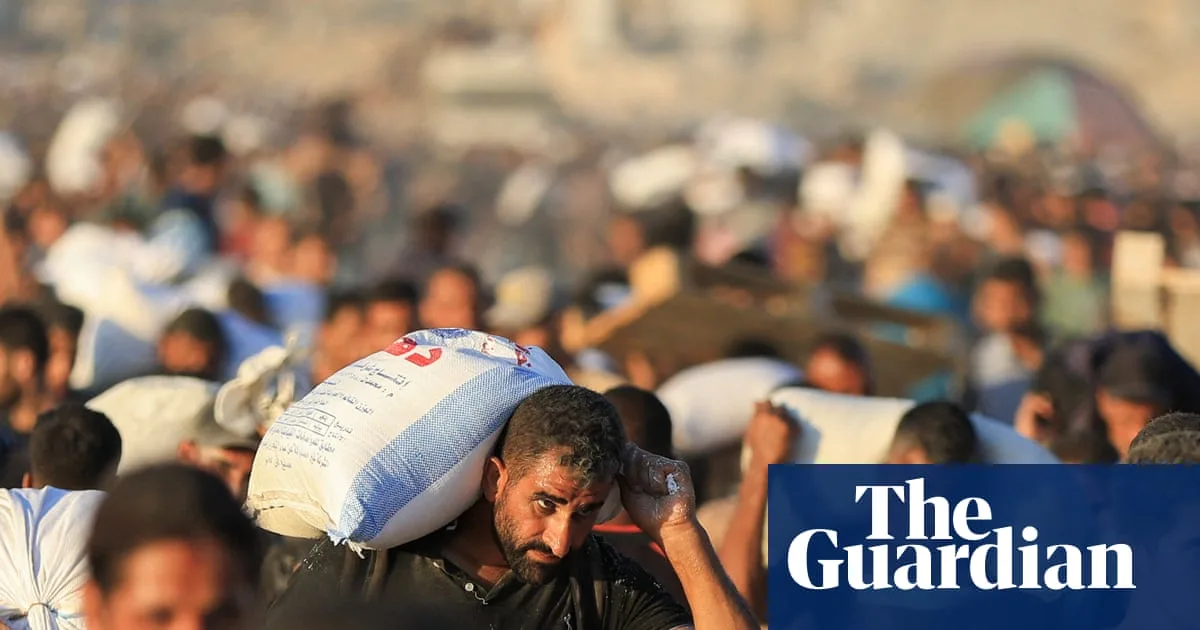
Aid workers have criticised Israel's new humanitarian measures in Gaza as inadequate, stating they fail to address the escalating starvation crisis. The measures, including daily pauses and aid corridors, were announced amid international pressure but have been dismissed as token gestures.
According to humanitarian organisations, the blockade of humanitarian aid remains the primary cause of the crisis, with 151 Palestinians dying from hunger since the conflict began. Over half of these deaths occurred in the past month alone. On Wednesday, at least 48 people seeking aid were killed by Israeli forces, according to Gaza's health ministry.
Bushra Khalidi, policy lead at Oxfam, described the measures as "theatrics" designed to deflect scrutiny, adding that aid workers face constant delays and blockages. Most crossings into Gaza remain closed, and the daily average of 70 aid trucks entering since May falls far short of the 500-600 trucks the UN deems necessary. Some agencies now estimate needs exceed 600 trucks due to the deepening famine.
Dr Nouraldin Alamassi of Project Hope reported no improvement on the ground, with malnourished children still seeking food at his clinic. He noted that his patient load has doubled and that stocks of therapeutic biscuits are exhausted. Meanwhile, new bureaucratic hurdles, including a registration process for international NGOs requiring staff identification, have delayed aid imports, with organisations fearing for staff safety if they comply.
The UN continues to call for a full ceasefire and unimpeded humanitarian access. Aid workers stress that piecemeal fixes cannot solve the crisis, and systemic changes are urgently needed to prevent further loss of life.




