France and Greece: EU Defense Push Not a NATO Alternative
France and Greece: EU Defense Not a NATO Alternative

Leaders of France and Greece have stated that the European Union's increased defense spending is not intended to create an alternative to the NATO alliance. Instead, they argue it responds to longstanding U.S. calls for Europe to take greater responsibility for its own security.

Macron's Stance on EU Defense

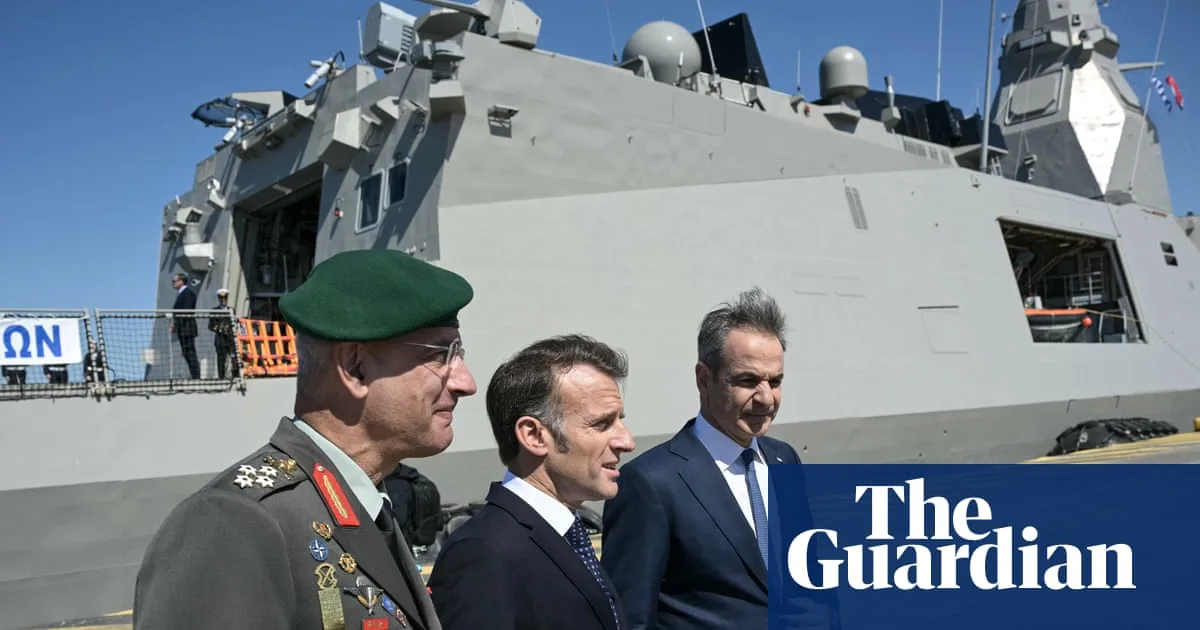
French President Emmanuel Macron emphasized that Europe should not act to weaken NATO, which connects the continent with its American ally. Speaking after talks with Greek Prime Minister Kyriakos Mitsotakis in Athens, Macron said Europeans are now stepping up to meet Washington's demand, made over the past decade 'sometimes nicely, sometimes less nicely,' to manage their own security. 'The lesson we must draw is, let us no longer be dependent,' Macron declared. 'We Europeans must strengthen this European pillar of NATO, we must strengthen this Europe of defense — not against anyone, not as an alternative to anything.'

Greek Support and Mutual Defense

Mitsotakis echoed Macron, noting that the United States should be pleased that the EU is taking self-reliance seriously and investing more in its defense, calling the American demand to spend more 'justified.' The two leaders renewed a 2021 defense partnership that includes a mutual assistance clause in case of an armed attack. 'This mutual assurance and assistance clause is inviolable, and it is not up for debate between us,' Macron said. 'So there are no question marks, no doubts to be entertained — and all our potential, or real, enemies need to be very clear about that.'

Wide Pickt banner — collaborative shopping lists app for Telegram, phone mockup with grocery list

Defense Procurement and Cooperation

The 3-billion-euro agreement included the purchase of 24 Rafale fighter jets and four state-of-the-art frigates, including the Kimon, which Macron and Mitsotakis visited. Greece, which has long had troubled relations with Turkey, has been overhauling its military capabilities, with much of its defense procurement coming from France, such as the French MICA anti-air-missile system. Both leaders hailed the agreement as an example for other EU partners to follow, boosting the bloc's competitiveness. Mitsotakis encouraged EU leaders to drop 'national egotism' that protects domestic industry and pursue more mergers for economies of scale.

Innovation and Consumer Focus

Macron underscored the need for European industry to innovate and win back consumers with better products to finance defense goals. 'All of us Europeans — the Franco-Greek relationship is a prime example — need to buy more European products, produce more European goods, and innovate more within Europe,' he said.

EU Mutual Defense Clause and Global Issues

Both leaders referred to Article 42.7, the EU's mutual defense clause, which Macron said is not 'just empty words.' He cited both countries' assistance to Cyprus by dispatching warships in March after a drone struck a British base during the Iran war. Macron warned against panic over fuel shortages from the Strait of Hormuz closure, stating the fuel supply remains 'under control' and that Europe is focused on reopening the strait, though it will take time. Mitsotakis said Greece, as a global shipping power, wants a diplomatic solution ensuring 'non-negotiable' freedom of navigation without tolls, as before the Iran war.

Pickt after-article banner — collaborative shopping lists app with family illustration




