New Four-Nation Bloc Emerges in Middle East to Broker Ceasefire and Curb Iranian and Israeli Dominance
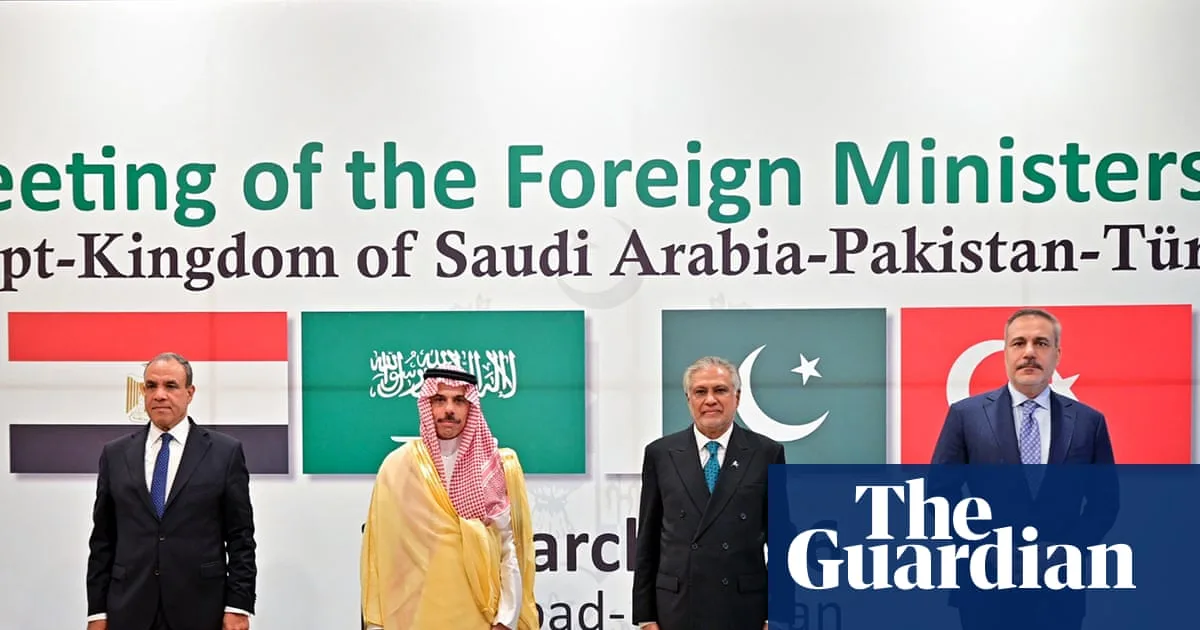
A significant diplomatic gathering in Islamabad has marked the emergence of a new four-nation bloc in the Middle East, comprising Egypt, Pakistan, Saudi Arabia, and Turkey. The meeting of foreign ministers on Sunday represented a concerted effort to broker a ceasefire in the ongoing regional conflicts and curb the dominance of Iran and Israel, signaling a potential shift in the geopolitical landscape.
Diplomatic Initiative Gains Momentum
The one-day meeting in Islamabad, attended by Egypt’s Badr Abdelatty, Saudi Arabia’s Faisal bin Farhan, Pakistan's Ishaq Dar, and Turkey's Hakan Fidan, is seen as the official opening ceremony of this intriguing initiative. Although the quartet has met before, this session underscores their commitment to acting as a primary interlocutor with Iran, maintaining indirect negotiating channels between Tehran and the United States.
According to Yasmine Farouk, a Gulf specialist at the International Crisis Group, the group has become increasingly active due to the dangerous stage of the war. "This is really a dangerous stage of the war," Farouk said. "We’ve already seen Israel damage nuclear plants inside Iran and the potential deployment of troops. This is the nightmare that could make some Gulf countries realise this is getting out of hand."
Progress and Confidence-Building Measures
The Islamabad meeting yielded modest but meaningful progress, including an Iranian agreement to allow vessels under the Pakistani flag to pass through the Strait of Hormuz, potentially up to two per day. This confidence-building measure aims to de-escalate tensions and foster cooperation among the nations involved.
Immediately following the meeting, Pakistan’s foreign minister, Ishaq Dar, flew to China to brief Beijing on the crisis. There have been discussions about China potentially serving as a guarantor for any future agreements, a role that the United States would likely oppose but has been mooted from within Iran.
Surprising Alliances and Strategic Calculations
The composition of the quartet may seem surprising at first glance, particularly with Saudi Arabia's active participation. Despite reports suggesting Saudi Arabia privately urges the US to finish off Iran, its involvement indicates a strategy to keep options open and avoid chaos in the region.
Farouk explained, "All the options for the Gulf states are costly. They want to see Iran pay a cost for attacks, but they cannot know whether the US will 'finish the job' without creating chaos and then leaving, something Saudi Arabia does not want to see."
Notably, Qatar was absent from the meeting, possibly due to lingering anger over Iran's actions, such as hitting the Ras Laffan liquid gas facility. One commentator noted, "Doha is advocating an end to the war but is not in the mood to be an active mediator on behalf of Iran."
Turkey's Commitment and Regional Warnings
Turkey appears to be the most committed member of the group, having invested significantly in its success. Ankara has long argued that talks about Iran’s ballistic missile programme and support for proxy groups should involve regional countries, not just bilateral discussions with the US.
Over the weekend, Turkish officials, including Foreign Minister Hakan Fidan and intelligence director İbrahim Kalın, warned Gulf states about the wider context of the war. Kalın stated, "Among the intended objectives of this war is not only elimination of Iran’s nuclear capability but something more dangerous, laying the groundwork for a conflict that could last decades among the region’s foundational nations."
Fidan, in a TV interview, argued that Israel aims to divide Islamic countries to broaden the anti-Iran coalition. "Unfortunately, the region is being drawn step by step into a game scripted by Israel," he said. "Gulf countries should not fall for Israel’s game."
Future Implications and Challenges
The new bloc faces significant challenges, including navigating complex disputes and exerting influence on global powers. Fidan highlighted the structural difficulty in US politics, noting the absence of a pressure mechanism on Israel. "If America is going to reach an agreement on negotiations with Iran, it needs to be prepared to exert very serious influence on Israel," he said.
As the group plans to meet more frequently, their efforts could reshape diplomatic dynamics in the Middle East, offering a fresh approach to conflict resolution and regional stability. The emergence of this four-nation bloc underscores a growing desire among key players to take charge of their own destinies and reduce reliance on external powers.






