The European Union anticipates commencing the disbursement of a substantial new €90 billion loan package to Ukraine during the second quarter of this year, according to statements made by the bloc's economy commissioner. This financial support announcement arrives amidst a severe escalation in hostilities, with Russian forces launching a devastating aerial assault across Ukraine, resulting in significant civilian casualties and infrastructure damage.
EU Financial Support and Geopolitical Warnings
Valdis Dombrovskis, the EU's economy commissioner, confirmed the timeline for the loan release during discussions on the sidelines of the International Monetary Fund and World Bank's spring meetings in Washington. Dombrovskis emphasised that continued support for Ukraine and sustained pressure on Russia remained central to the international agenda. He issued a stark warning, noting that Moscow is emerging as a beneficiary from the ongoing conflict in the Middle East, specifically citing Iran, as it provides Russia with windfall profits that are directly fuelling its military operations in Ukraine.
Deadly Russian Assault Intensifies
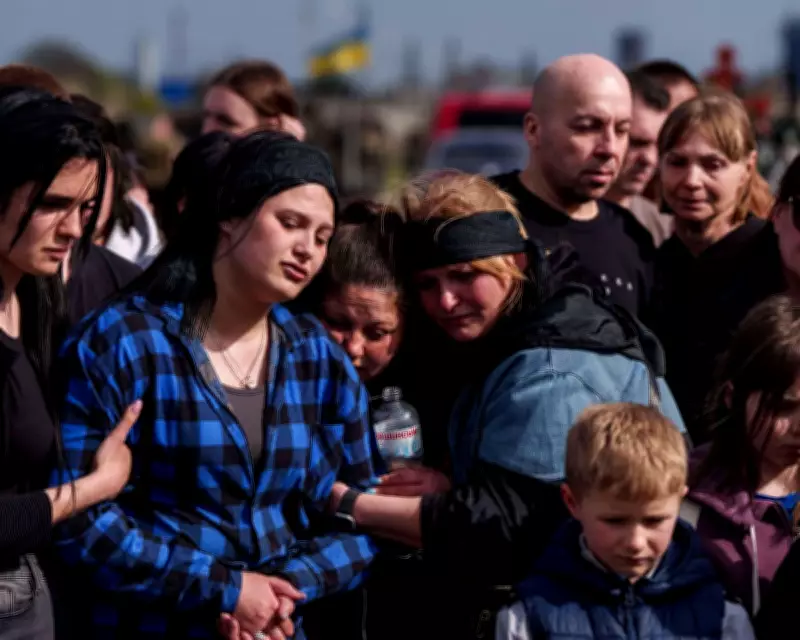
Ukrainian authorities reported that Russia executed a massive coordinated attack using nearly 700 drones alongside dozens of ballistic and cruise missiles on Thursday. This bombardment, described as the worst aerial offensive in weeks, struck civilian areas extensively, killing at least 17 individuals and injuring more than 100 others. The assault targeted apartment buildings in the capital, Kyiv, and other regions, exacerbating the humanitarian crisis. Ukrainian officials have raised alarms that their stocks of advanced interceptor missiles are critically low, hampering defence capabilities against such large-scale attacks.

International Condemnation and Political Reactions
Former US President Donald Trump publicly condemned the Russian strikes, telling reporters at the White House that the attack was "terrible." His remarks came as European leaders expressed concerns over Washington's commitment to transatlantic alliances under potential future administrations. Concurrently, German Vice Chancellor Lars Klingbeil, speaking in Washington alongside finance ministers from Ukraine and Norway, asserted that a Russian victory in the Middle East conflict is not in the interest of the United States or its allies. Klingbeil highlighted that Russia's economy is gaining strength from the Middle East turmoil, particularly through energy sector advantages, which in turn sustains its war efforts in Ukraine.
European Defence and Alliance Solidarity
Amidst these developments, the heads of the European Union and NATO convened to discuss urgent measures to enhance Europe's arms production capacity. European Commission President Ursula von der Leyen, after meeting with NATO chief Mark Rutte, stressed the necessity for increased investment and accelerated production to bolster military readiness. European nations are actively working to strengthen their defence capabilities in response to Russia's aggression and the political uncertainties posed by figures like Donald Trump, who has previously questioned US alliance commitments.
The spring meetings in Washington were largely dominated by discussions on the Middle East conflict, yet ministers from Norway, Germany, and Ukraine underscored the imperative of not neglecting support for Ukraine. Klingbeil reiterated the importance of demonstrating solidarity with Ukraine, ensuring that the focus on other global crises does not diminish the international community's resolve to assist Kyiv in its defence against Russian invasion.