
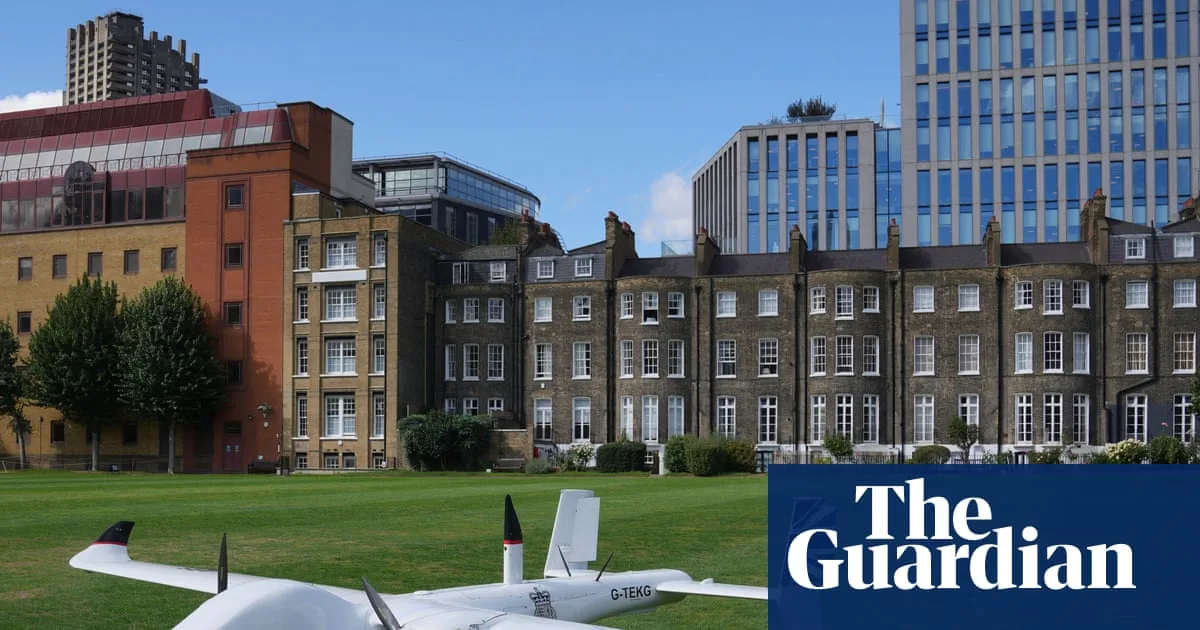
Europe is scrambling to spend billions on low-cost weapons such as drones, driven by the war in Ukraine and uncertainty over US commitment to Nato under President Donald Trump. In a workshop in England’s East Midlands, British startup Skycutter uses 3D printers to make fuselages for interceptor drones, with parts assembled by hand. The same process happens hundreds of thousands of times a month in partner Ukrainian factories.
The swarms of cheap, autonomous drones deployed in Ukraine have transformed combat. Troops behind the frontline must move constantly to avoid aerial attacks, travelling along netted tunnels and landscapes crisscrossed by fibre optic cables used to steer drones past radio jamming. Cities are terrorised by guided missiles that are cheaper and more widely used than previous models.
The EU has promised to spend €800bn on defence over four years, while the UK has pledged to increase its budget. Much of this money is going to homegrown companies, as Europe focuses on defence sovereignty — the ability to make and use weaponry without relying on the US. A crop of well-funded startups are gaining momentum, making unproven promises that they can outperform traditional manufacturers and Silicon Valley rivals.
Gen Sir Roly Walker, the UK’s chief of the general staff, said last year he wanted forces’ equipment to be 20% “survivable”, 40% “attritable”, and 40% “consumable”. The growing feeling across Europe is that “we should be able to stand up on our own two feet”, according to one person at a fast-growing weapons startup. “Sovereignty is about control. If you buy things off the shelf from elsewhere you are always ceding some control.”
That applies to parts and materials as well. The UK is consulting on how much needs to come from Britain for a product to be sovereign. Manufacturers cannot necessarily rely on parts from countries such as China, which could become adversaries. “A lot of supply chain diversification dreams have evaporated,” says Kusti Salm, former Estonian defence mandarin turned CEO of anti-drone missile startup Frankenburg.
European defence tech unicorns include Helsing, backed by Spotify founder Daniel Ek, and German drone makers Quantum Systems and Stark Defence. Stark and Helsing recently won orders from Germany’s military for attack drones, while all but Quantum are investing in UK factories. Tekever, a Portuguese drone maker, reached a billion-dollar valuation last year and has new factories in Swindon, UK, and Cahors, France.




