
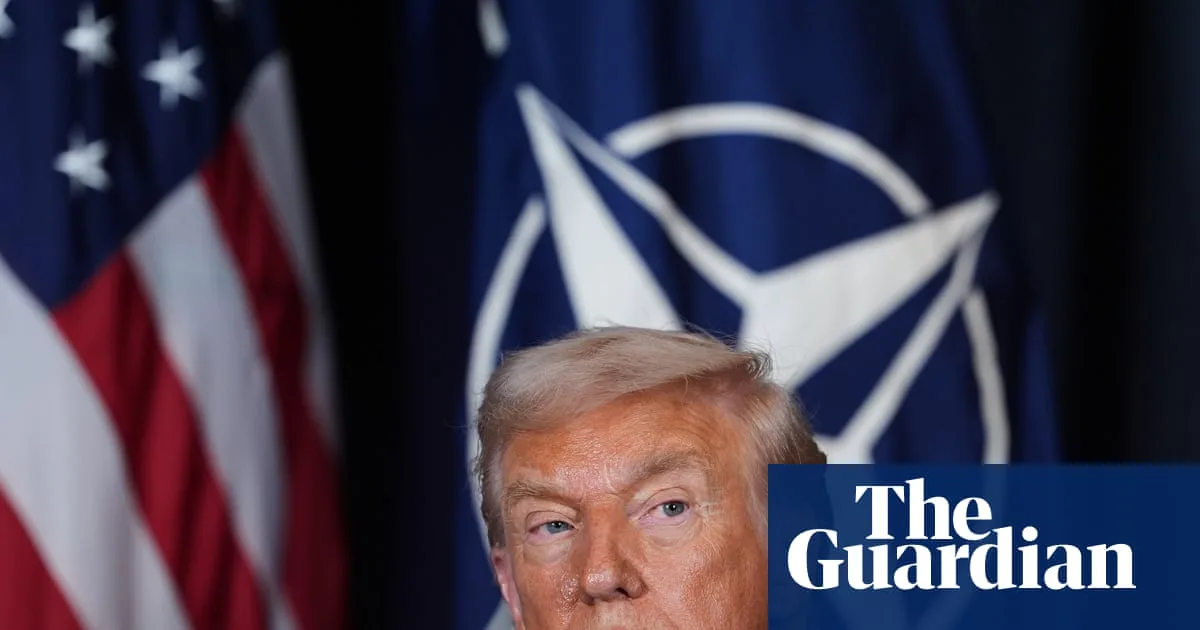
Brussels officials will draw up a plan on how to use the EU’s mutual assistance clause in the event of a foreign attack, as Donald Trump’s criticism of NATO intensifies. EU leaders have agreed that the European Commission will prepare a blueprint on how the bloc will respond if Article 42.7 of the EU treaty is triggered, according to Cyprus President Nikos Christodoulides, who is hosting the talks.
The discussions took place as reports emerged that the US was exploring suspending Spain from NATO. Trump, a long-time critic of the alliance, has stepped up his invective, saying this month he was considering withdrawing the US from NATO, pushing the alliance into its worst crisis. Spain’s Prime Minister Pedro Sánchez, a vocal critic of the war in Iran, reaffirmed Spain’s loyalty to NATO while criticising “the failure of brute force in the Middle East”.
Article 42.7 obliges member states to provide “aid and assistance by all the means in their power” if a fellow country is attacked. European Council President António Costa said they were “designing the handbook on how to use this mutual assistance clause”. He cited a test case in Cyprus, where a drone strike on a British base led to Greece, France, Italy, Spain and the Netherlands mobilising military equipment to help Cyprus defend itself.
France is the only country to have triggered Article 42.7, after the 2015 Paris attacks, when it called on other member states to reinforce its overseas commitments. The lack of detail in the treaty was once seen as a strength, but member states now feel uncertain about how it would work. Christodoulides said the blueprint would address which countries respond first and what needs arise, providing “an operational plan to put in action”.
Cyprus, which is not a NATO member, wants the EU to take the clause more seriously after the drone attack. However, some EU members are cautious about undermining NATO’s Article 5. An EU official said there was a need for shared understanding, adding: “NATO remains the bedrock of collective defence. But the EU has tools – such as sanctions, financial assistance and humanitarian aid – which could come into play in an Article 42.7 situation.”
In a sign of unease, Polish Prime Minister Donald Tusk expressed doubts about Washington’s commitment to NATO, saying Europe’s biggest question was whether the US would be “ready to be as loyal as it is described in our treaties”. Meanwhile, Sánchez played down reports that the Pentagon was considering suspending NATO allies deemed insufficiently supportive of the US offensive against Iran.




