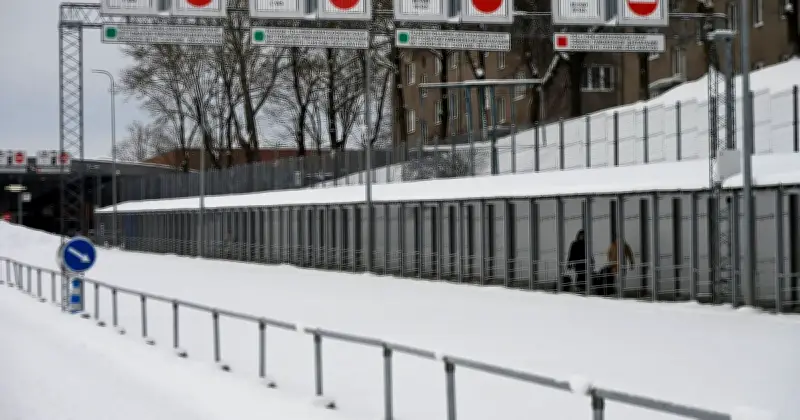
Estonia has confirmed it will shut its border with Russia from December 1, following a suspected attack on a drone technology company that it blames on Moscow. The move has drawn a furious response from Russia, which accused the Baltic state of “Russophobia.”
Border closure announced after suspected sabotage
Prime Minister Kristen Michal said closing the border would reduce the threat to people in Estonia and send a clear message that attacks on the country’s defence industry and defence capabilities are unacceptable. He noted that Russian intelligence services exploit border crossings to exert influence over people and that Estonia must be prepared to reduce the risks it faces if hybrid operations continue.
No timeline for reopening the border has been confirmed. Russian Foreign Ministry spokesperson Maria Zakharova responded by accusing Estonia of “Russophobia,” telling state news agency TASS: “We’ll check all this for veracity. But if these are their real plans, then they’re part of another bout of aggressive and unbridled Russophobia.”
Attack on drone manufacturer
Estonia’s Foreign Minister Margus Tsahkna accused Moscow of ordering an attempted sabotage attack on defence company Threod Systems on Saturday. The country’s security service said the attempted attack had “the aim of causing an explosion and setting the building on fire.”
In a statement, the security service said: “We have quickly detained the suspects. We advise against even considering such job offers from Russia. The consequences are serious.”
Broader context of hybrid attacks
Russia has denied responsibility for hybrid attacks on NATO members. It has been accused of a number of sabotage and hybrid attacks against alliance members in retaliation for their support for Ukraine, including drones shot down in or near members’ airspace and travel disruption such as delays to Dutch rail traffic after pipes and cables were laid on tracks across the country in September.
The news comes after UK Defence Secretary Wes Streeting warned that Britain must be ready for war in 1,000 days, saying last month that the country’s adversaries could be ready to attack in 2030. A group of peers also warned that Andy Burnham’s Government must go “further and faster” to prepare the UK for conflict, urging regulators to strip away “overly prescriptive” rules and change the “buyer-seller” relationship with companies.
Chancellor John Healey committed the Government to spending 3% of economic output on defence by 2030 in his October Budget and said next year’s spending review would plot a course to reach the target.