
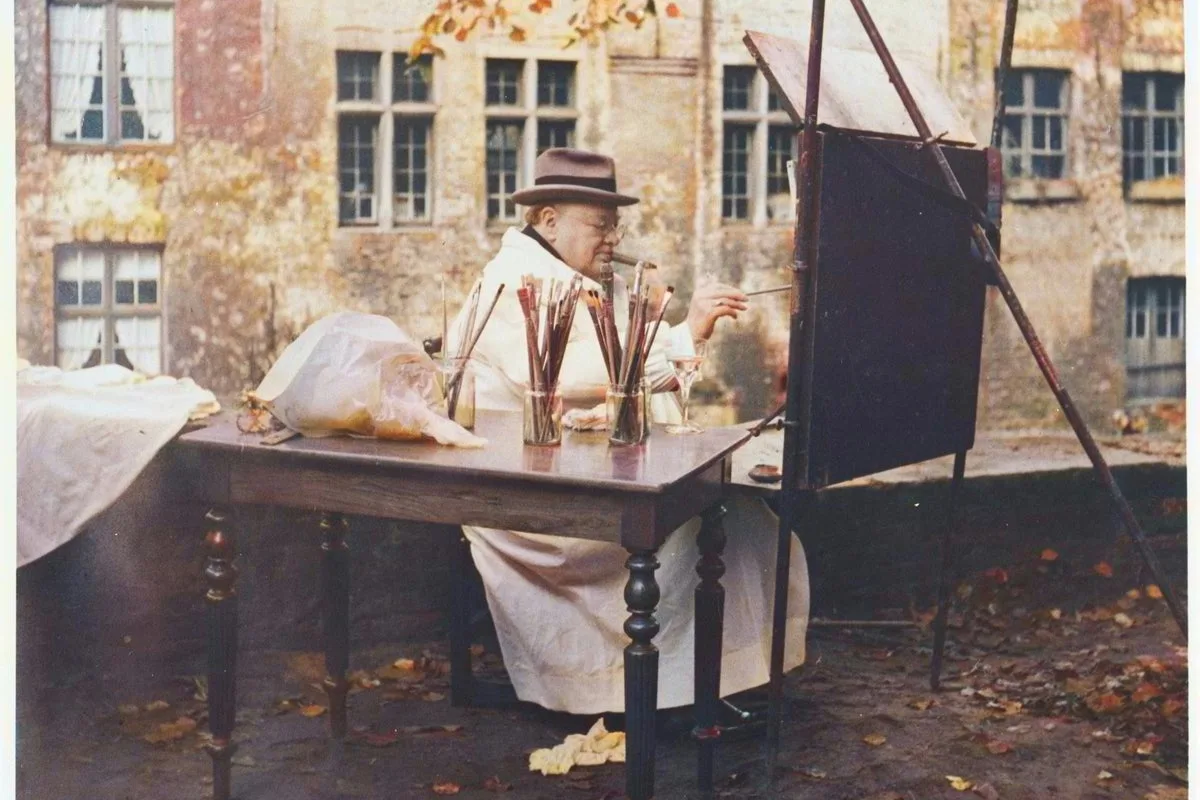
A new exhibition at the Wallace Collection in London explores Winston Churchill's artistic practice, highlighting how painting served as both a personal balm and a tool of soft power during his political career. The show, which runs until [date not provided], features 60 works from the approximately 600 Churchill is known to have painted, including a rare self-portrait from 1915.
Churchill took up painting at age 40 in 1915, encouraged by his sister-in-law during political exile after the Gallipoli campaign. He was instructed by portraitist Sir John Lavery and later sought guidance from William Nicholson and Walter Sickert. His early works include interiors at Blenheim Palace and landscapes at Chartwell, his country home, before he moved to more vivid scenes from Italy, France and Morocco.
One notable painting, The Tower of the Koutoubia Mosque, was created during the Second World War and gifted to US President Franklin D. Roosevelt to commemorate the Casablanca Conference. It later sold at Christie's in 2021 for £8.28 million, a record for a Churchill artwork. Churchill regarded his works as 'daubs' and submitted them pseudonymously to galleries.
Xavier Bray, director of the Wallace Collection and co-curator, conceived the exhibition after visiting Churchill's studio at Chartwell during Covid. He notes that while Churchill was conservative in his tastes, he admired post-Impressionists like Cézanne and owned a Monet. Picasso, upon seeing Churchill's painting La Dragonnière in 1948, remarked that Churchill could have made a living as an artist had he not been occupied saving Europe from fascism.
Art dealer Philip Mould says the exhibition provides a much-needed overview of Churchill as a serious artist, not just a celebrity amateur. The show draws works from Chartwell, private collections and the Eisenhower Presidential Library.




