
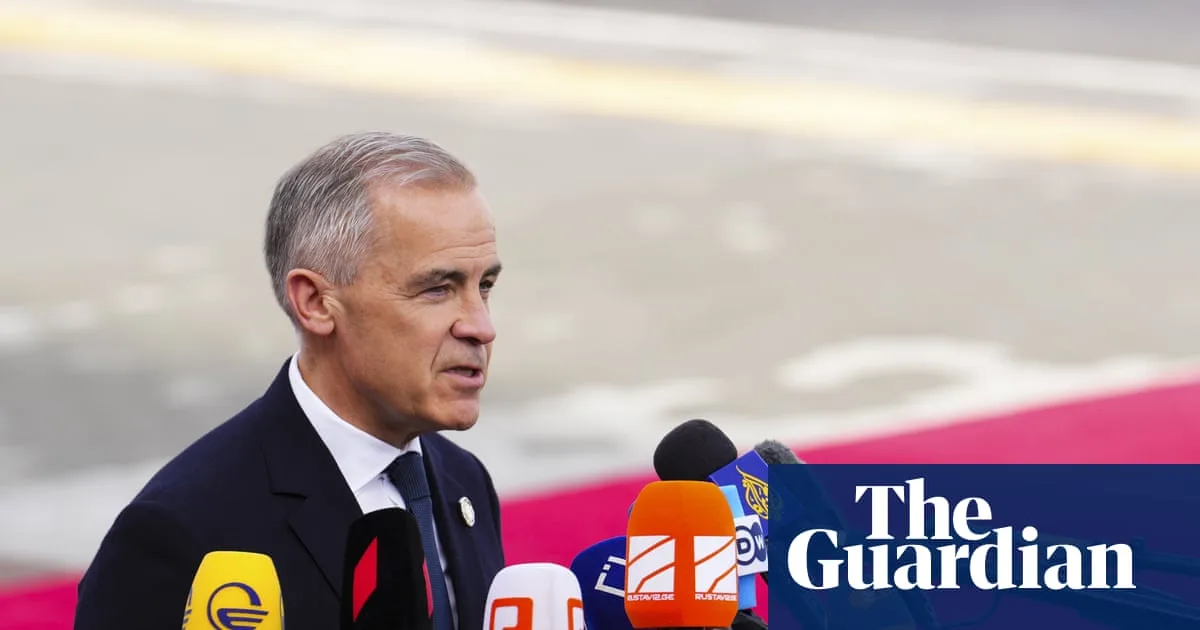
Mark Carney, the Canadian prime minister, has declared that Europe can serve as the foundation for rebuilding the international order, rejecting a future of a “transactional, insular and brutal world”. Speaking at the European Political Community (EPC) meeting in Yerevan, Armenia, Carney became the first non-European leader to address the gathering, which convened amid heightened tensions in the Strait of Hormuz and renewed doubts over US commitment to NATO.
“It is my strong personal view that the international order will be rebuilt, but it will be rebuilt out of Europe,” Carney said. He emphasised that Europe must demonstrate “the strength of our values in defending a rules-based international order, but also the value of our strength”. The Canadian leader noted that the world is undergoing a “rupture across several dimensions”, with integration being weaponised by some and rules failing to constrain hegemons.
The EPC meeting, the eighth since its inception, was held in Yerevan to signal Europe’s determination to prevent Armenia from being drawn back into Russia’s orbit. The summit took place against a backdrop of fresh concern over US commitment to NATO, following President Donald Trump’s decision to withdraw more than 5,000 troops from Germany. This move has confirmed European fears about the reliability of the transatlantic alliance.
British Prime Minister Keir Starmer acknowledged that “some of the alliances that we have come to rely on are not in the place where we would want them to be” and that “there is more tension in the alliances than there should be”. He added that leaders’ responses to these tensions would “define what goes on for many years, arguably for a generation”. French President Emmanuel Macron stated that “Europeans are taking their destiny into their own hands, increasing their defence and security spending, and building their own common solutions”.
Ukrainian President Volodymyr Zelenskyy warned that Russia would face a crucial moment this summer, which he described as “a moment to expand the war or move to diplomacy”. He urged that sanctions packages not be lifted if Russia does not choose to end the war, and called for a diplomatic format where Europeans must be at the table in any talks. EU foreign policy chief Kaja Kallas said the timing of the US troop withdrawal announcement from Germany was “a surprise” and underscored the need to “strengthen the European pillar in NATO”.
NATO Secretary-General Mark Rutte acknowledged “some disappointment on the US side” over Europe’s reluctance to support the Iran war, but said Europeans had “heard the message” and were now providing logistical support and pre-positioning assets for the next phase. German Chancellor Friedrich Merz, who skipped the Yerevan summit, stated he was “not giving up on the transatlantic relationship” nor on working with President Trump.




