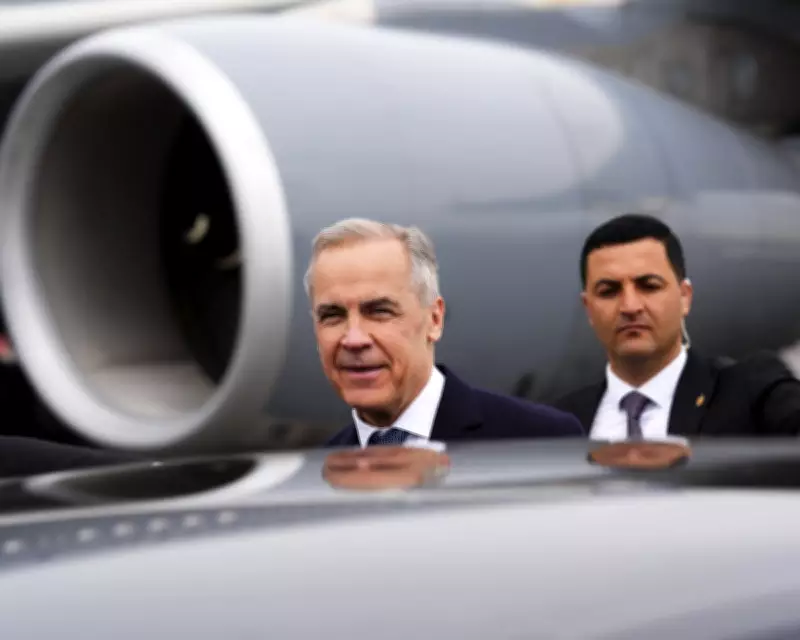
Canada is set to become the first non-European country to attend a meeting of the European Political Community (EPC) when Prime Minister Mark Carney joins Monday's summit of the 48-plus nation grouping in Yerevan, Armenia.
Carney's Diplomatic Push
Carney has expressed determination to build a new network of trade and diplomatic alliances following the loss of US markets under Donald Trump. His presence also signifies Western support for Armenia as it seeks to distance itself from Russia, particularly at a time when Washington's approach to Moscow's opponents, such as Ukraine, remains ambiguous. Canadian diplomats have dismissed suggestions that Ottawa might seek EU membership.
Key Discussion Topics
Trump's plan to withdraw more than 5,000 troops from Germany over the next year and the economic impact of a prolonged US-Iran conflict on Western economies are expected to be major subjects of discussion in Yerevan. Armenia shares a border with Iran but, unlike neighbouring Azerbaijan, has not alleged that Iranian missiles have landed on its territory.

Armenia's European Integration
Yerevan was chosen to host the EPC – an institution championed by French President Emmanuel Macron, which also includes the UK – to allow Armenia to showcase its strengthening ties with Europe and continue its slow decoupling from Russia, its former backer. Armenian Prime Minister Nikol Pashinyan has pursued a policy of diversification, gradually drawing his country into the European orbit. His Civil Contract party faces parliamentary elections in June and seeks a decisive victory to continue peace efforts with Azerbaijan. Pashinyan faces three opposition parties that are more sympathetic to Russia.
Thomas de Waal, a senior fellow at Carnegie Europe specialising in the Caucasus region, commented: "European leaders will have to walk a fine line in Yerevan. While holding what appears to be a pre-election rally for Pashinyan, they must also engage in a broader conversation about building a more robust and less polarised Armenia. The country itself deserves full European attention. It is on the verge of a painful but transformative peace agreement with Baku that would reopen its two long borders with Azerbaijan and Turkey, closed since the 1990s. Armenia also has a historic opportunity to reduce its overdependence on Moscow as the war in Ukraine continues to distract and drain Russia."
EU-Armenia Bilateral Summit
The day after hosting the EPC, Yerevan hopes that the first bilateral summit between Armenia and the EU on Tuesday will result in additional EU funding to promote democracy and visa liberalisation. When EU Enlargement Commissioner Marta Kos visited the country in March, she stated that "Armenia and the EU have never been closer." The country of 3 million people signed a comprehensive partnership agreement with the EU in 2017 and last year adopted a law formally declaring its intention to apply for EU membership, taking a different political path from neighbouring Georgia.
Armenia remains a member of the Russian-led Eurasian Economic Union and the Collective Security Treaty Organisation (CSTO), though it froze its CSTO membership in 2024. Russian President Vladimir Putin said in April that Armenia could not be a member of both the EU and CSTO, calling it "simply impossible by definition."
Macron's Role
Macron has been a leading advocate for closer European-Armenian ties, and his attendance at the Yerevan summit is being treated with state-visit-level importance. He is also expected to attend a concert in Gyumri, Armenia's second-largest city.
EPC Background
The EPC, established in 2022, brings together full EU members and a large constellation of non-EU countries, including the UK, Turkey, Norway, Switzerland, Iceland, Serbia, and other Baltic nations. The group has no formal secretariat and often avoids lengthy communiques in favour of bilateral leader-to-leader discussions. Initially met with scepticism, the EPC has proven useful as European leaders continue to attend summits.
With Trump's support, Armenia and Azerbaijan initialled a peace agreement in Washington last August. The Azerbaijani side has stated it will fully sign the agreement once Armenia changes its constitution, claiming it contains territorial claims against Azerbaijan – a charge Armenian authorities have repeatedly denied.