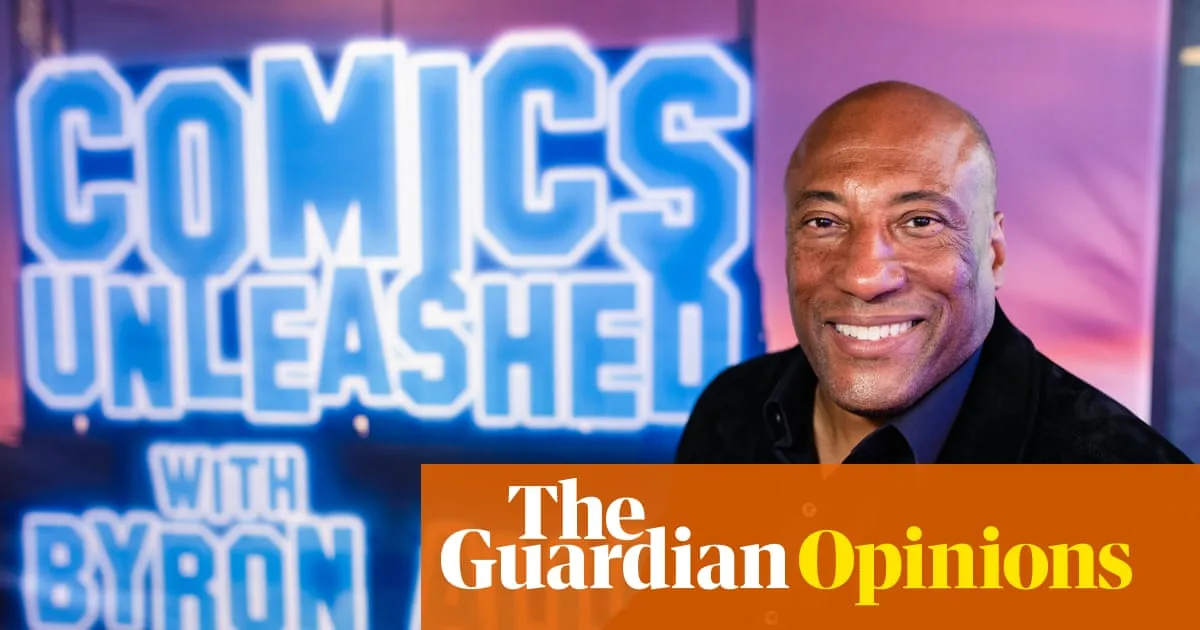
The applause, dear God, the applause. It hits like a jet engine at takeoff when Comics Unleashed detonates on to the screen just before midnight. A soulless barrage of whoops, cheers and terror clapping, it swallows the show’s disembodied announcer and upstages a modest studio audience that appears to have been rounded up from pamphlet-clutching LA tourists. The host himself, 65-year-old Byron Allen, limply shuffles to reclaim the frame as cameras whip around him. But there is no monologue. Comics Unleashed has no writers, no comic sensibility, no discernible point of view.
A day after Stephen Colbert signed off from The Late Show – the comedy institution abruptly euthanized to grease the skids for a plutocrat-coded media merger even as it dominated the ratings – Allen inherited the slot with Comics Unleashed, which feels less like a late-night show than an infomercial for one. Viewers conditioned to expect sharp monologues, celebrity interviews and live-wire unpredictability should try Kimmel instead – or, better yet, wait for John Oliver. Comics Unleashed is not a show you tweet about in the moment, discuss the next morning or DVR with anticipation. It exists one evolutionary rung above a looped fireplace video.
Anyone who has stayed up late since David Letterman was hurling watermelons off the roof of the Ed Sullivan Theater already knew what was coming. Comics Unleashed has long been the creature of syndication that jolts you awake after Paul Shaffer or Craig Ferguson had gently rocked you into a stupor, breaking in between ads for car dealerships and ambulance chasers. For the better part of this century, it has remained a stubborn late-night fixture because Allen – a hack comic who parlayed repackaged media assets into a billion-dollar fortune – has been willing to compete with the makers of the ThighMaster and the George Foreman Grill for bargain-bin network airtime.
Under the CBS arrangement, Allen keeps most of the advertising revenue while effectively renting the slot from the network. In interviews ahead of Unleashed’s 11.35 pm debut, Allen boasted that CBS executives had offered virtually no creative notes. That tracks. The show is essentially unchanged from when it debuted in 2006. “There’s nothing like it on TV right now where you have five comedians sitting around with one purpose: making people laugh,” Allen told the Guardian last week. It quickly becomes clear why.
Save for the screen saver vibes coming from a fish tank behind Allen, watching the show’s first week on CBS was not nostalgic in any comforting sense. It felt more like stumbling across an old ice machine in a dark hotel hallway, still running somehow despite the fatal-sounding clatters and groans. There’s an unmistakable superficiality to Comics Unleashed. The generic prefab set is lit like a furniture showroom. The canned video filling the B-roll intros looks scraped from Shutterstock, and the framed photos of Jon Lovitz and Sinbad feel ripped from a Comedy Cellar wall. A DJ perches among the audience, radiating the kind of forced enthusiasm only Hollywood gig work can buy.
To kick off one episode, Allen sports a bright red shacket over gray slacks and a jumper – a notable escalation in his usual off-the-rack business-casual motif. All week, war in Iran, a papal broadside against AI and a New York Knicks playoff run dominate the news cycle, but Allen touches none of it, mindful of dating the show. The result is a depressing sign of where TV is heading: a cheap, writerless, apolitical clip show that fills the void left by a beloved institution.