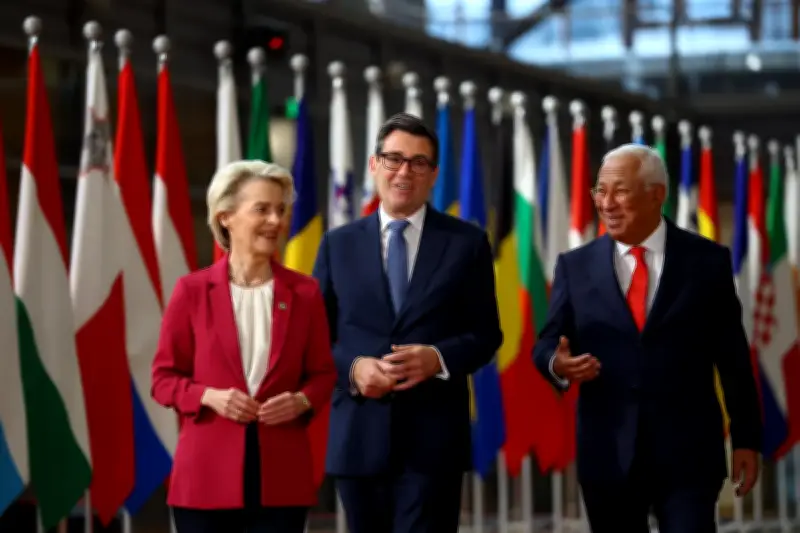
Prime Minister Andy Burnham has agreed a "landmark" package of deals with the European Union in Brussels, which European Commission chief Ursula von der Leyen described as a "turning point" in post-Brexit relations between the UK and the bloc.
The agreements cover food and agriculture exports, emissions trading, and a youth experience scheme that could allow up to 100,000 young Europeans to temporarily work in the UK, with Britons able to do the same on the continent. The Prime Minister also said the UK would participate in the EU's action plan to tackle small boat crossings in the English Channel, calling it a "very significant step forward".
Summit marks 'rejuvenating the friendship'
Mr Burnham was accompanied by Chancellor John Healey and other Cabinet members at the EU-UK summit in Brussels on Friday. Ms von der Leyen said the meeting was a sign of "good old friends that are rejuvenating the friendship".
Mr Burnham told EU chiefs: "I think we are working together in a world that is changing around us to come back closer and, in doing so, make ourselves stronger, both our economies and our security. It's a pleasure to be with you today to make this landmark agreement."
The outcomes of the summit "will benefit every single person" in the UK and EU, he said. He added that the deal on food imports and exports "holds out the real prospect that the cost of the weekly shop will begin to come down", and that the UK's participation in the Channel action plan would help address the "very legitimate concerns" people have about illegal immigration.
Economic benefits and youth mobility
The UK Government claims the food and agriculture deal will add up to £5.1 billion a year to the economy, cutting red tape by removing the need for certificates and border checks for products crossing between the UK and EU. Linking the emissions trading regime, which will protect British exporters from facing a carbon tax when supplying customers in the EU, could add a £3.8 billion annual boost, officials claimed.
Referring to the youth mobility agreement, Mr Burnham said Brexit in 2016 "limited the horizons of our young people in quite a significant way in terms of their opportunities in life". Ms von der Leyen welcomed the deal, saying the young people of the UK and EU would be "the best ambassadors for our friendship".
Tuition fees remain a stumbling block
Tensions remain, with a six-month deadline put on reaching an agreement over EU demands to cut tuition fees for students from member states studying at British universities. Officials in Brussels had indicated that implementation of the deal announced on Friday could be affected if the tuition fees issue is not resolved.
The UK insisted the deal is done and dates for when the agreements come into force would be set out in a joint statement with the EU and are not conditional on the fees issue. EU member states want to cut the fees faced by their students in the UK to the same level as domestic undergraduates, which would mean a cut from fees of up to £38,000 a year to £9,970 – something the UK has resisted because of the financial impact it would have on universities. An EU official said: "I think this is an important element, so let's hope that everything can go ahead."
Reactions from Reform UK and Conservatives
Reform UK leader Nigel Farage accused Mr Burnham of "betrayal", adding: "I'm afraid that the great Brexit debate has just started again. We don't need to be in political union of any kind at all to do business and have good relations with our neighbours. That's the betrayal that Burnham is committing today and he's trying to do it incrementally, but it's perfectly clear that this very, very soon becomes a debate about: do we rejoin or do we stay out?"
He acknowledged that for food exporters a deal on agricultural standards will make things "a little bit easier", but said it comes at the cost of giving up control over regulation. The Reform leader told BBC Radio 4's Today: "The Labour Party was elected saying they would not rejoin the single market. Well, today we're rejoining a chunk of it."
The food and agriculture deal, aimed at ending post-Brexit export checks, would see Britain align with the EU on trade rules on sanitary and phytosanitary (SPS) goods, such as food and plants, from March 2028. The Conservatives accused the Government of being prepared to "sell out" British farmers by becoming a rule taker. Shadow environment secretary Victoria Atkins said: "They are forcing farmers to follow rules over which we have no say, no vote, and no veto, that benefit highly subsidised foreign farmers, and taxpayers are going to end up paying for the privilege."
Mr Burnham intends to follow up from the summit by starting a national conversation around the UK's future relationship with the EU, something which could potentially include rejoining the bloc.