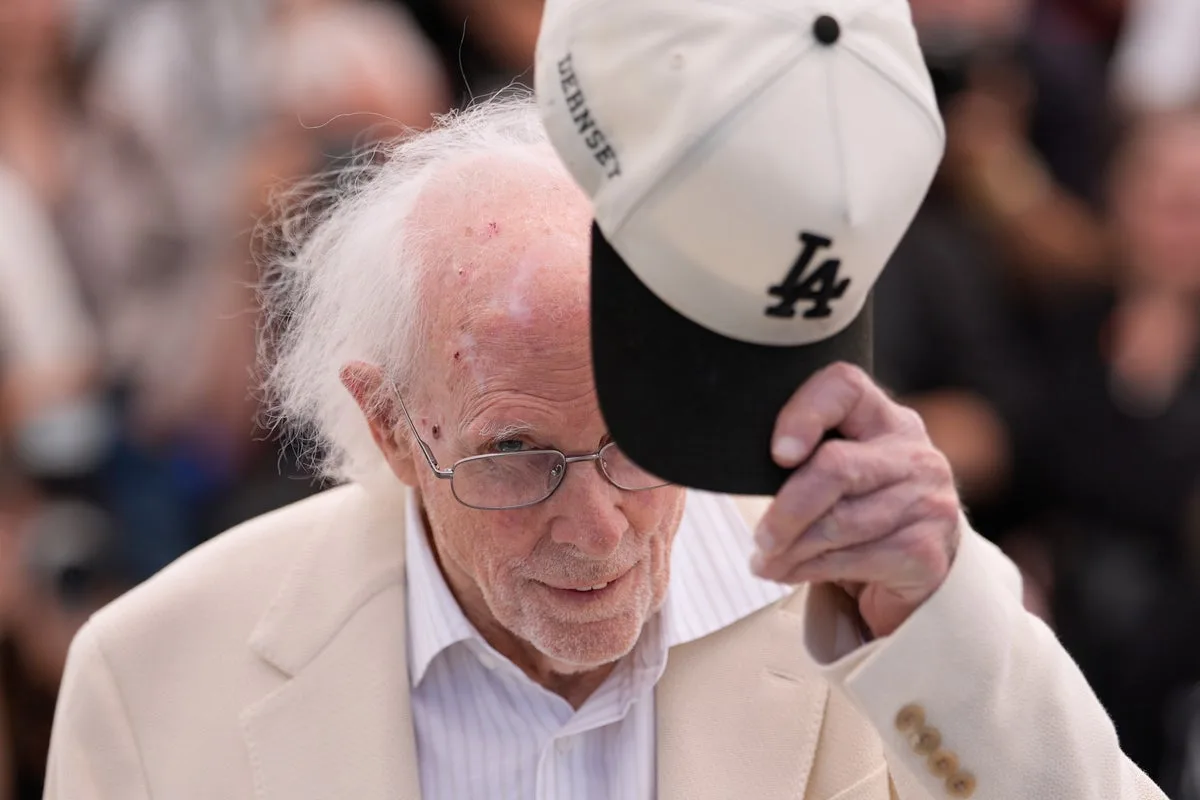
Bruce Dern, the veteran actor known for his intense and unpredictable performances, took a well-deserved bow at the Cannes Film Festival this week with the premiere of a new documentary chronicling his long and storied career. Titled Dernsie: The Amazing Life of Bruce Dern, the film delves into the journey of an actor who was never destined to be a leading man but instead became one of the most distinctive character actors in Hollywood.
From Fifth Cowboy to Festival Favorite
When Dern left the Actors Studio for Los Angeles, legendary figures Elia Kazan and Lee Strasberg warned him that he would not land leading roles. Instead, they told him he would be "the fifth cowboy to the right." Their advice was simple: "Just make sure you're the most honest, unique fifth cowboy right that anyone's ever seen." Dern took that advice to heart, building a career that now spans over 150 credits and more than six decades.
Now approaching his 90th birthday next month, Dern reflects on his career as a long-distance journey. An avid marathon runner who used to jog from his Malibu home to film sets, acting has always been an endurance sport for him. "I see a journey, a long uninterrupted journey," Dern said in an interview alongside his daughter, Laura Dern. "A bunch of folks got together and said: 'Bruce Dern could play.' That's all I wanted."
A Cannes Homecoming
Cannes holds many memories for Dern. He first attended the festival with Alfred Hitchcock for Marnie. In 2013, he won the Best Actor award at Cannes for his leading performance in Alexander Payne's Nebraska. Laura Dern, who has often been by her father's side, was present for this latest milestone. As a child, Hitchcock gave her a mini director's chair. For Nebraska, she spent a week riding in the trailing van with Payne. Currently in the south of France to shoot the fourth season of The White Lotus, she eagerly joined her father for his moment in the spotlight, helping him down the red carpet.
"What I loved about witnessing dad's career is when I was a little kid, people would come up to me and say, 'Boy, do I love to hate your dad,'" Laura recalled. "That was a common quote, which meant they had fallen in love with this character even though he shot John Wayne or the various things he was up to."
"Blew up the Super Bowl," her father added with a grin.
A Villain of Unforgettable Intensity
Dern has portrayed some of cinema's most memorable villains. He hit Barbara Stanwyck in The Big Valley, lynched Clint Eastwood in Hang 'Em High, and killed John Wayne in The Cowboys—an offense some never forgave him for. In 1977's Black Sunday, he played a disturbed Vietnam veteran pilot who attempts to blow up the Super Bowl with a blimp full of explosives. These performances, marked by live-wire intensity, made him an idol for filmmakers like Quentin Tarantino, who in the documentary calls Dern "one of the finest and most entertaining examples of great American acting."
The Challenge of Capturing Dern on Film
Dern's unpredictability makes him a captivating interview subject, but it also presents a challenge for documentarians. Mike Mendez, director of Dernsie, began by having breakfasts with Dern at IHOP, trying to recreate that natural conversation for the film. "I would try," Mendez sighed, "but as anybody who's ever spoken to him or interviewed him, he's like a wild bull. You can feed him a question and his mind is just going to go wherever it's going to go."
During the Cannes interview, Dern's free-flowing topics ranged from Hitchcock's treatment of Tippi Hedren, his friendship with Jack Nicholson ("He was ahead of us all"), what Stanwyck said to him after slapping him ("She said, 'I'm not going to even ask you if I hurt you'"), a jogging route to Santa Barbara, and a near word-for-word recital of the climactic scene of Nebraska.
The Origin of 'Dernsies'
A central theme of the documentary is the term "Dernsies," which refers to Dern's off-the-cuff improvisations that jolted scenes to life. He credits the term to Jack Nicholson, who noticed a finger snap Dern added during the making of Nicholson's 1971 film Drive, He Said. "He said, 'I want to say something. That little snap of the fingers that he just did? He's been doing that s--- for 10 years and no one ever gave him a chance to film that. That's a Dernsie,'" Dern recounted.
During a scene with Brad Pitt in Once Upon a Time ... in Hollywood, Dern improvised a line—"You did something today that really touched me. You came to see me"—that he says came from his feelings about being part of the film. "And afterward Brad had tears in his eyes and picked me up like a little baby and carried me around the set," Dern said, laughing. "I don't rehearse it. Once the switch is on, you're going. The Dernsies, I don't know what they're going to be. I take from everything that's going on around, even if it has nothing to do with it."
A Lifelong Artist
Dern remains a working actor with no plans to retire. His daughter Laura noted that both her parents—her mother, Diane Ladd, who died last year—shared the belief that they would act until they died. "We read so much about longevity," she said. "Now the studies are showing that a purpose-driven life, more than a Mediterranean diet, more than all the different things people debate, is in fact the greatest act of longevity. My parents both said to me that they would act until they go. My dad is determined to be a lifelong artist."
In addition to his Cannes Best Actor award for Nebraska, Dern has been nominated twice for an Academy Award. His filmography includes The Trip, The Great Gatsby, Coming Home, The 'Burbs, and The Hateful Eight. Not bad for "the fifth cowboy from the right."






