Bangladesh Foreign Minister Embarks on Crucial India Visit to Repair Strained Ties
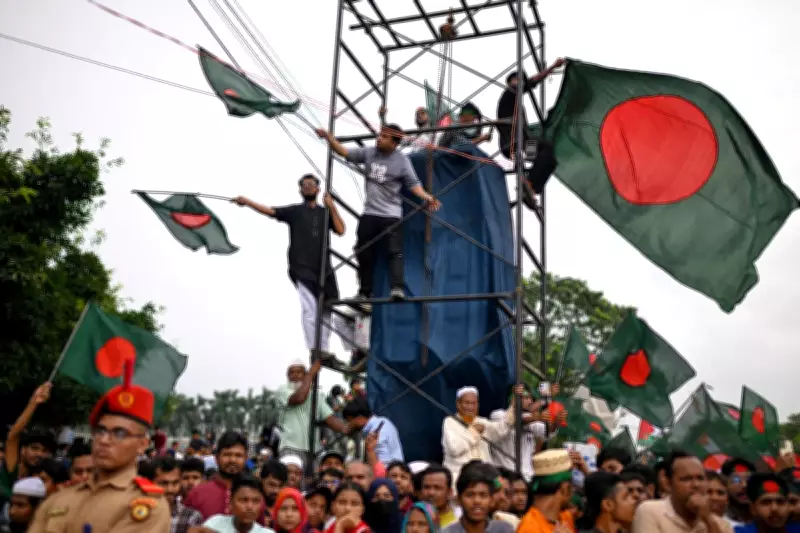
Bangladesh's foreign minister Khalilur Rahman has commenced a significant three-day diplomatic mission to India, widely viewed as a concerted effort to mend bilateral relations that have deteriorated to historic lows in recent years. The visit, scheduled from 7th to 10th April, represents the first ministerial-level engagement between the two South Asian neighbors since the tumultuous monsoon protests of 2024.
High-Level Meetings and Key Discussion Points
During his stay in Delhi, minister Rahman is scheduled to hold crucial talks with India's national security advisor Ajit Doval, followed by a meeting with his Indian counterpart, external affairs minister S Jaishankar, on Wednesday. The diplomatic agenda is comprehensive, focusing on several pressing issues that have strained the relationship between Dhaka and Delhi.
The ministers are expected to discuss:

- Energy cooperation amid ongoing Middle East conflicts affecting regional fuel supplies
- Long-standing river water sharing agreements between the two nations
- Normalization of visa services suspended following anti-government protests in Bangladesh
Historical Context and Political Background
This diplomatic outreach follows a period of significant tension that began during Bangladesh's interim government led by Nobel peace laureate Muhammad Yunus. Relations reached their nadir as anti-India rhetoric intensified, marked by repeated summons to the Indian high commissioner and sharp criticism of Delhi for hosting former prime minister Sheikh Hasina, who fled to India during the 2024 protests and has since resided in the capital.
Minister Rahman's appointment comes after his Bangladeshi Nationalist Party secured a landslide victory in February's general elections, the first since the widespread protests. Previously serving as national security advisor in the interim government, Rahman now leads foreign policy under prime minister Tarique Rahman's administration.
Areas of Contention and Recent Developments
The bilateral relationship faced multiple challenges during the interim period, including India's suspension of transshipment access for Bangladeshi exports through its territory and temporary closure of visa application centers across several cities, citing security concerns. Rising attacks on minority Hindu communities in Bangladesh further complicated diplomatic exchanges, with initial dismissals of these incidents as exaggerated or politically motivated.
This diplomatic vacuum allowed Pakistan, long marginalized by Dhaka, to increase its engagement with Bangladesh, raising security concerns for Indian officials. However, signs of a potential reset emerged when Indian prime minister Narendra Modi became among the first world leaders to congratulate Bangladesh's new prime minister Tarique Rahman following the election.
Cooperation Initiatives and Future Prospects
Recent months have witnessed gradual improvements in bilateral cooperation. Bangladesh participated in the ongoing IOS SAGAR navy exercise flagged off from Mumbai, demonstrating enhanced maritime security collaboration. India has offered to export an additional 40,000 tonnes of diesel to Bangladesh in April to alleviate severe fuel shortages exacerbated by Middle East conflicts, while Dhaka negotiates wheat imports to meet domestic demand.
Ahead of his visit, minister Rahman emphasized to Prothom Alo that discussions would focus on the "future of relations" between the nations, stating: "We want a normal relationship with India based on mutual respect, dignity, and interests." This sentiment aligns with the new government's "Bangladesh first" foreign policy that nevertheless prioritizes regional engagement.
Diplomatic Perspectives and Regional Vision
Indian high commissioner Pranay Verma recently expressed Delhi's willingness to rebuild ties with Bangladesh through a "forward-looking approach" during a meeting with prime minister Rahman. According to the Indian High Commission, their discussion focused on "people-centric cooperation in multiple domains aligned with the national development priorities of the two countries."

Humayun Kabir, the prime minister's foreign advisor who will accompany minister Rahman to India, elaborated on this approach: "Our bilateral relation should be focused on people-to-people ties so that it will not be focused on individuals. We want to ensure this relation avoids the mistakes of the past."
Kabir further clarified Bangladesh's regional strategy: "We're prioritising the region, not any country. All these three countries [China, India, and Pakistan] are important countries in our region. But we believe that a strong mandate has given us the opportunity to negotiate with any country from a position of strength."
He emphasized that Bangladesh's foreign policy would not be "country-dependent or any country-specific and it will be flexible," adding: "In our approach, there will be a regional vision, in terms of regional cooperation, regional leadership, on creating common ground and common positions. We believe, through the SAARC framework, that we can work with all the countries in our region for peaceful progress, stability, economic development, and security cooperation."