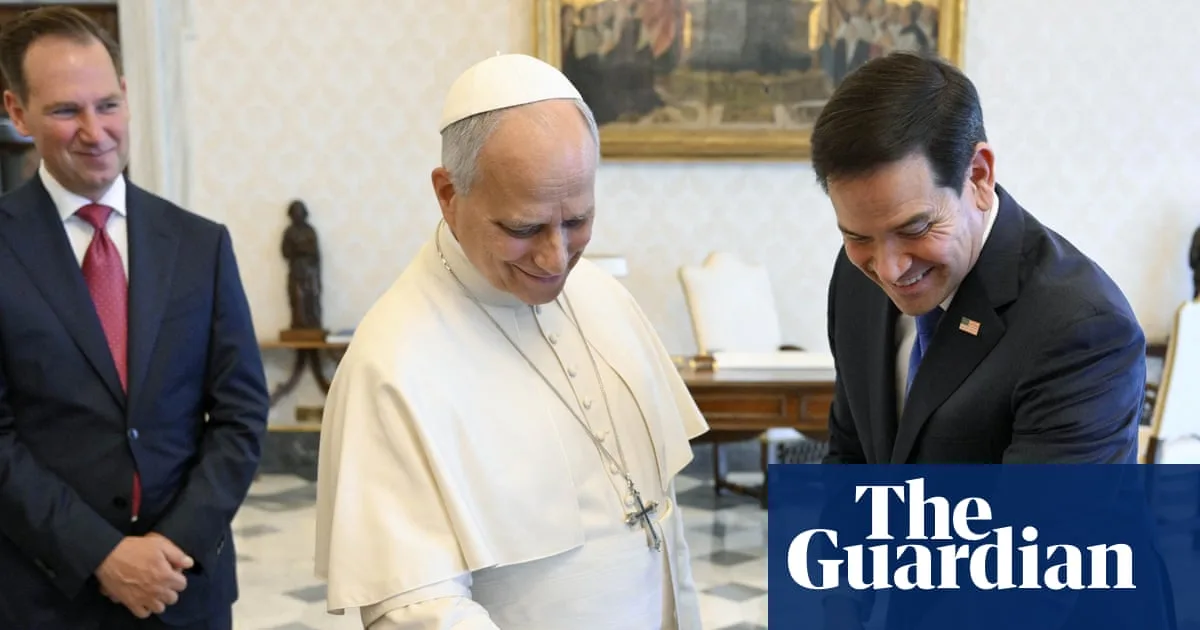
Pope Leo XIV: The American Pontiff Clashing With Trump Over Iran War and Immigration
American Pope Leo XIV Criticises Trump's Iran War and Immigration Policies

Pope Leo XIV: The American-Born Pontiff Who Became a Vocal Critic of Trump's Iran War

The first US-born pope, Leo XIV, has positioned himself as a significant and outspoken critic of the Trump administration's foreign policy and immigration stance, most notably regarding the conflict with Iran. His historic appointment last year has brought intense focus to his relationship with President Donald Trump, with whom he has publicly clashed on multiple occasions.

A Historic Pontiff from Chicago

Robert Prevost, 70, made history in May 2025 when he became the 267th pope, marking the first time in the Catholic Church's 2,000-year history that a US citizen was chosen to lead the global faith. Born in Chicago, Illinois, in 1955, Prevost grew up in the city's southern suburbs before studying canon law in Rome and working in Peru. His rise through the Church ranks saw him elected prior general of the worldwide Augustinian order and appointed to the senior rank of cardinal before succeeding Pope Francis.

Described as a "dignified middle of the road" leader compared to his progressive predecessor, Leo XIV has nonetheless taken strong positions on moral and political issues. Prior to his election, some questioned his candidacy due to his relative youth and inexperience, with speculation that cardinals might prefer a European candidate. However, his papacy has been defined by clear moral stances, including publicly opposing Vice President JD Vance's theological remarks about "ordo amoris," stating that "Jesus doesn't ask us to rank our love for others."

Wide Pickt banner — collaborative shopping lists app for Telegram, phone mockup with grocery list

Condemning Trump's Immigration Policies

Pope Leo has been particularly vocal in his criticism of the Trump administration's treatment of immigrants. In November 2025, he described the administration's approach to foreigners living in the United States as "extremely disrespectful." While acknowledging individual countries' rights to police their borders, he emphasized that many immigrants in the US are "living good lives" and deserve humane treatment with dignity.

"I urge people in the US to look for ways of treating people humanely, treating people with the dignity that they have," the pontiff stated, marking a significant departure from the diplomatic restraint typically exercised by Vatican leadership regarding specific national policies. This tension has reportedly led to discussions about whether Pope Leo might avoid visiting the United States while Trump remains in office, according to reports citing a contentious meeting between Catholic officials and the Pentagon.

Direct Criticism of Iran War Rhetoric

The pope's most pointed criticism has focused on the Trump administration's approach to the conflict with Iran. On Wednesday, April 8, 2026, Pope Leo welcomed the announcement of a two-week ceasefire in the Middle East with "great satisfaction," following his rare direct intervention to condemn Donald Trump's threats against Iran.

Just hours before the ceasefire announcement, the pontiff responded directly to Trump's threat that "a whole civilisation will die tonight" if Iran did not meet US demands, calling the statement "truly unacceptable." This direct response to a world leader represents an unusual step for papal diplomacy. "There was this threat against the entire people of Iran, and this is truly unacceptable," Pope Leo told reporters, adding that "there are certainly issues here of international law, but even more than that, it is a moral question for the good of the world's people."

In his weekly audience, the pope emphasized that "only through a return to negotiation can an end to the war be achieved," while also making an unusual appeal to citizens worldwide: "I would invite the citizens of all the countries involved to contact the authorities—political leaders, congressmen—to ask them to work for peace."

Moral Opposition to War and Religious Justification

Pope Leo has framed his opposition to the Iran conflict within Catholic moral teaching, suggesting the hostilities constitute an "unjust war" that contradicts the Church's pro-life principles. This stance has created a stark contrast with the Trump administration's use of Christian rhetoric to justify military actions.

Pickt after-article banner — collaborative shopping lists app with family illustration

President Trump has referred to the rescue of a downed US airman as an "Easter miracle" and suggested airstrikes have God's blessing, while Defense Secretary Pete Hegseth has cited scripture to justify the use of "overwhelming violence" against adversaries. In response, during his Palm Sunday address to tens of thousands in St. Peter's Square, Pope Leo cited biblical passages to argue that "God does not listen to the prayers of those who wage war, but rejects them, saying: 'Even though you make many prayers, I will not listen: your hands are full of blood.'"

At the end of March, the pope made another direct appeal to President Trump, urging him to find an "off-ramp" to end the war. As the first American pontiff navigating complex relations with his homeland's leadership, Pope Leo XIV continues to use his moral authority to challenge policies he views as contrary to Catholic teaching and human dignity, establishing himself as a significant voice in global diplomacy during a time of international tension.




