
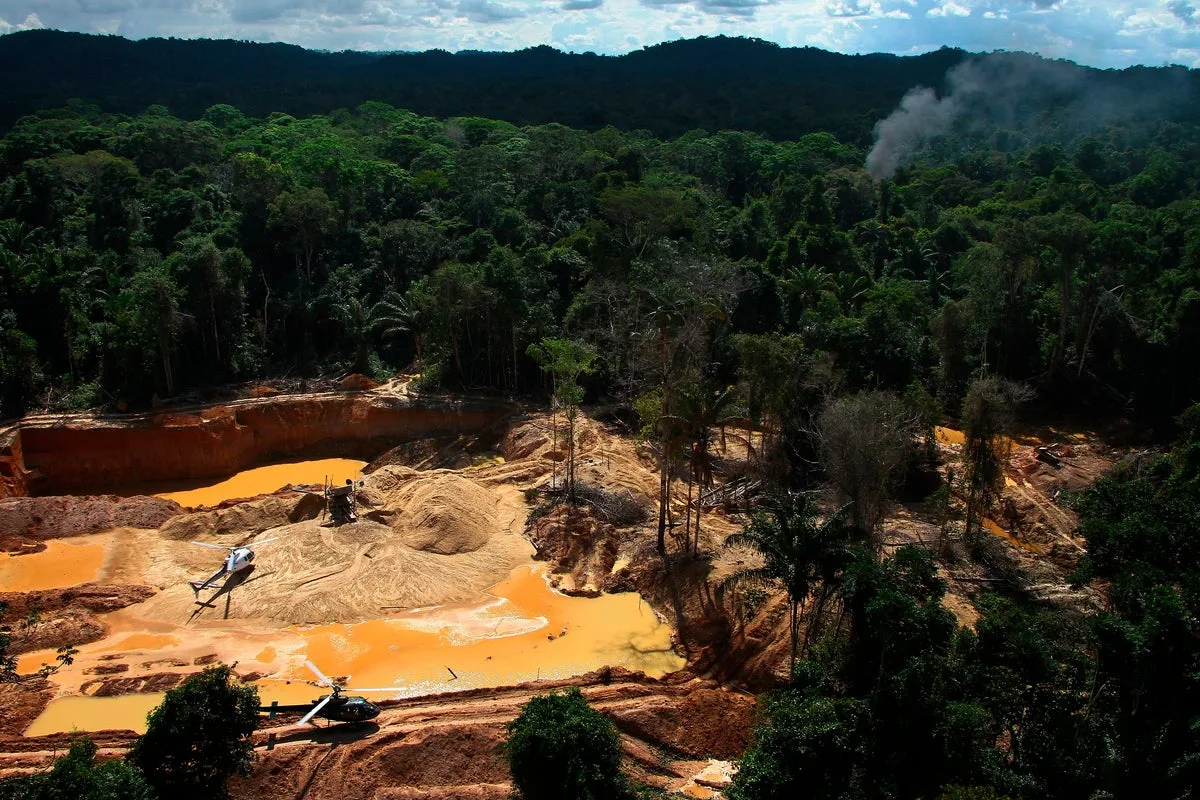
Indigenous organisations from across the Amazon and Latin America have sent a letter to the United Nations warning that organised crime—including illegal mining, drug trafficking and logging—is driving violence and accelerating environmental destruction in rainforest communities. The letter, addressed to UN member states and agencies, urges governments to avoid heavily militarised responses in Indigenous territories.
The signatories, including the Coordinator of Indigenous Organizations of the Amazon River Basin (COICA), say criminal networks are expanding across the Amazon and other Indigenous lands in Latin America, threatening communities, ecosystems and local governance. They argue that the expansion of organised crime is undermining Indigenous governance systems and threatening communities that have long acted as stewards of some of the world’s most biodiverse ecosystems.
The appeal comes as Indigenous communities increasingly find themselves caught between expanding criminal networks and state security operations. In recent years, illegal gold mining, logging and drug trafficking have spread deeper into remote rainforest regions in Brazil, Peru, Colombia and Ecuador, bringing violence, mercury contamination and deforestation. International rights groups and UN experts have raised concerns about rising attacks on Indigenous leaders and environmental defenders linked to disputes over land, natural resources and illicit economies.
Raphael Hoetmer, Western Amazon Program Director at Amazon Watch, said the letter reflects a growing sense of urgency. “More and more Indigenous Peoples are experiencing the violence and impacts of illicit economies in their territories, so it is higher on the agenda,” he told the Associated Press. “The expansion and control of organised crime and violent conflict is taking over more of the Amazon, becoming a risk to their ways of living and to the global climate.”
Jeremy Douglas, Deputy Director of Operations at the UN Office on Drugs and Crime (UNODC), noted that drug trafficking in the Amazon often connects with illegal mining, logging and land grabbing, creating a criminal ecosystem where environmental degradation disproportionately impacts local populations. “Pushing back requires territorial protection, prioritising environmental crimes, and cooperation against transnational organised crime networks,” he said. The UNODC said it had not yet seen the letter and that its response should not be interpreted as an endorsement.




