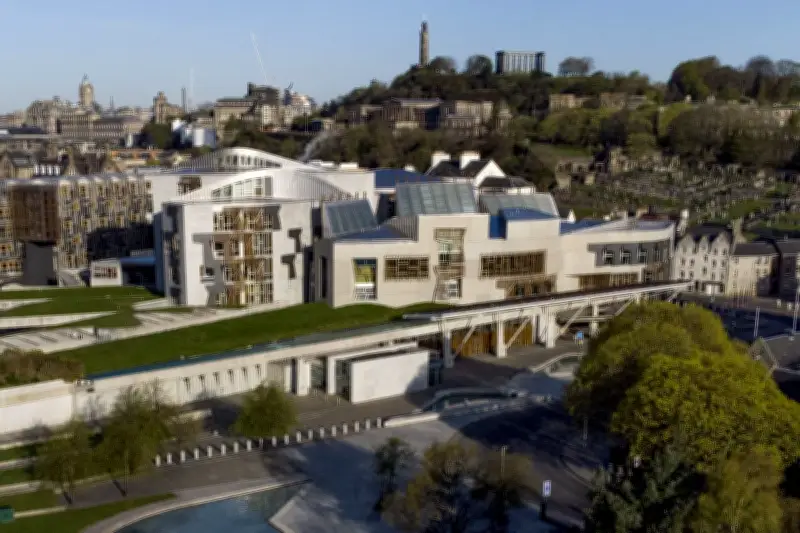
The Scottish Parliament has voted down Reform UK's motion calling for a ban on the burka and other full-face coverings in public places.
MSPs backed a government amendment by 92 votes to 15, with eight abstentions. The amendment stated that it was "not for Parliament to legislate for what women choose to wear" and that parliamentarians should "lead by example in rejecting the language and actions of those who seek to divide Scotland's communities in person and online".
Reform's proposal and the debate
Reform UK had called on the Scottish Government to consider restricting full-face coverings, including the niqab and burka worn by some Muslim women, arguing it could improve "public safety, individual liberty and community cohesion".
The debate proved highly controversial, with First Minister John Swinney accusing Reform of bringing racism into the Parliament. The motion was brought forward by Reform UK MSP Helen McDade, who said face coverings were already banned across Europe, including in France, Belgium, Denmark, Germany and Italy.
McDade said people across the country had seen videos of masked men in Glasgow causing "fear and mayhem", and added: "Even in circumstances where there is no criminality, many of us may feel fearful, surrounded by people whose faces we cannot see." She also spoke about her time campaigning in the Gorton and Denton by-election, where she said she had seen a number of women in burkas, calling the area a "ghetto" and adding: "If I were a lesbian holding my hands with my partner, I would not walk down there at dusk."
Accusations of racism and Islamophobia
MSPs from several parties rounded on Reform during the debate. Community safety minister Kirsten Oswald told McDade "it is none of your business what women wear" and accused Reform of "singling out" the dress of some Muslim women, noting that balaclavas were not mentioned in the motion.
Oswald said: "The motion tells us exactly what they are interested in, and that is telling women, specifically Muslim women, what to wear. Presiding officer, I want to be crystal clear here: this motion, this debate, which, after all, they already held here just a couple of weeks ago, is deliberately divisive, racist, Islamophobic and designed to foster hostility. It is an attack on Muslim women. It is a disgraceful way for an alleged political party to conduct themselves, and they should be ashamed of themselves."
She accused Reform UK Scotland of "inciting racial hatred" and of "using the protection of women and girls as a cover for racism".
Other MSPs' responses
Reform MSP Thomas Kerr reiterated his pledge to be a "fox in the henhouse" at Holyrood, saying: "I don't care if it's a balaclava or a burka, it should be banned", adding that "both of which had no place in modern Scotland".
Tory MSP Stephen Kerr said some Scots were afraid because of those covering their faces, and said police did not currently have enough powers to clamp down on people engaging in criminal activity while covering their face. He said his comments were focused on his own amendments, which focused on the link between face coverings and crime and did not mention niqabs or burkas.
Liberal Democrat MSP Yi-pei Chou Turvey accused Reform of bringing "tripe" to the Parliament in a bid to get publicity. Scottish Labour's Pauline McNeill said her party did not back banning the burka and accused Reform MSPs of "stirring up hostility". The Glasgow MSP said she backed police having powers over those who used face coverings to intimidate people, but said Muslim women were not part of that group, and hoped the debate could focus on the use of face coverings in crime along with the use of e-bikes.
The Scottish Greens branded the calls to ban the burka "narrow-minded", "hatemongering" and "racist". Maggie Chapman said the motion "specifically targets people of colour, women with a specific cultural background or religious belief" and noted it mentioned the burka and niqab, not other items such as masks, balaclavas or motorbike helmets. She said there was no evidence to suggest that religious face coverings were linked to crime, and added that in France, where such coverings were banned, evidence showed women who wear religious clothing had experienced an increase in verbal abuse, public harassment, and physical assault, "such as having their veils forcibly pulled off or being spat on, making women less safe".
Parliamentarians previously debated Reform's calls for face coverings to be banned in October, but that members' business debate, which does not get a vote, was cut short after Holyrood opted not to extend it.