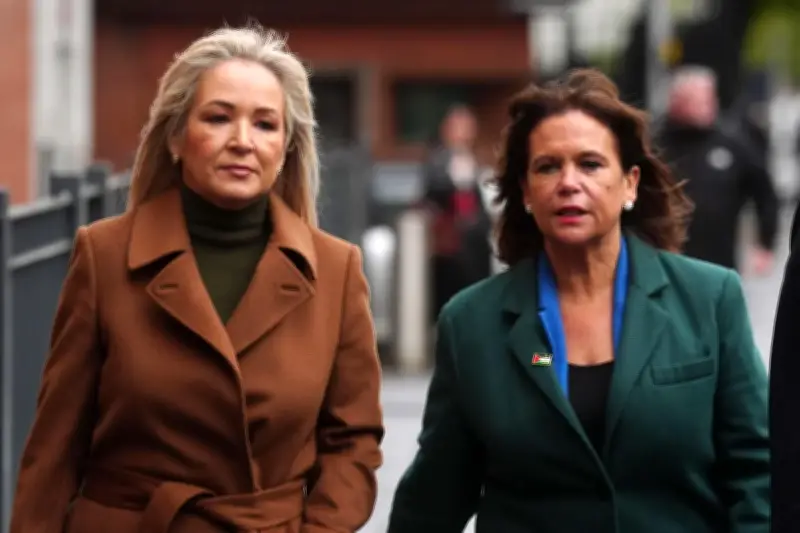
Northern Ireland's First Minister Michelle O'Neill has claimed that deputy First Minister Emma Little-Pengelly has "blocked" representation from the region at a major political event in Scotland.
Ms O'Neill said she had been due to attend the Economic Forum in Glasgow on Friday, at which she would have met with Scottish First Minister John Swinney and Welsh First Minister Rhun ap Iorwerth, as well as Prime Minister Andy Burnham.
The Press Association understands those leaders had been due to take part in a side meeting at the Glasgow event, and that Ms O'Neill and Ms Little-Pengelly were set to meet Mr Burnham to discuss the Stormont budget.
DUP internal pressures
Ms O'Neill posted a statement on Thursday as members of the DUP's main decision-making body had been meeting to consider the party's next steps amid the ongoing political fall-out from the Drumcree parading dispute.
The party officers convened while some senior DUP figures are at odds on how they should respond to Ms O'Neill and several of her party colleagues being investigated by police for participating in an allegedly unlawful protest last month.
Posting on the social media platform X, Ms O'Neill claimed the blocking is a "reactive stunt, driven by the DUP's own internal pressures and electoral problems".
"The deputy First Minister has decided to block representation from here at a major political event, which would include meeting with the First Ministers of Scotland and Wales, and the British Prime Minister," she said.
"The Economic Forum is taking place tomorrow in Glasgow, and this reckless and irresponsible approach of Emma Little-Pengelly means the people of the north will not be represented.
"This is a reactive stunt, driven by the DUP's own internal pressures and electoral problems."
First Minister's response
Ms O'Neill continued: "The DUP are unable to embrace equality, respect Irish identity and accept that a nationalist and republican now holds the office of First Minister.
"It is for the people to decide who represents them as first minister, not the DUP.
"I have contacted the British Secretary of State and made my position absolutely clear.
"As First Minister, I will continue to protect peace and progress, and to represent all of our people."
Ms O'Neill, who last week attended a police station for interview, has defended her presence at the protest on the Garvaghy Road in Portadown as the "right thing to do".
Political fallout
The protest was staged as part of efforts to prevent a contentious Orange Order parade proceeding down the predominantly nationalist road from nearby Drumcree Church.
Upper Bann MP Carla Lockhart has been the most vocal voice within the DUP calling on the leadership to withdraw deputy First Minister Emma Little-Pengelly from the Stormont Executive – a move that would automatically force Ms O'Neill from her post due to the joint nature of the powersharing structures in Northern Ireland.
Such a step would effectively collapse the devolved administration in Belfast as the Executive could no longer meet to make significant decisions.
Individual departmental ministers would, however, remain in post for up to six months and the Northern Ireland Assembly could continue to sit.
DUP leader Gavin Robinson has so far resisted pressure to pull Ms Little-Pengelly out, arguing that imploding the Executive would damage unionism.
Ms Lockhart resigned as a party officer last week over the difference of opinion with the leadership.
Others within the party have suggested action short of withdrawing the deputy First Minister, such as ending Ms Little-Pengelly's participation in further joint engagements with Ms O'Neill.
The furore is playing out amid the customary political manoeuvring that takes place at Stormont ahead of an Assembly election. The next poll is currently due to be held in May.
A decision by the Parades Commission adjudication body to allow the Orange Order to parade down the Garvaghy Road for the first time in almost 30 years prompted a two-week stand-off at the site of what was a notorious parading flashpoint during the Troubles.
The parade was ultimately unable to take place because of significant numbers of protesters on the Garvaghy Road, leading Northern Ireland Secretary Sir Chris Bryant to overturn the commission's decision and ban the procession. His decision was upheld by a High Court judge on Wednesday.
Under parading laws in Northern Ireland, protests must be notified to, and approved by, the Parades Commission.
Police investigating the unnotified Garvaghy Road protest, which was staged on the day the Drumcree parade was meant to proceed on September 27, have said invitations to attend interviews were sent to individuals "reasonably suspected of committing offences".