The Silent Playground of Marybank
Marybank, a pleasant village just south of Stornoway on the Isle of Lewis, represents a particular kind of Scottish community. This post-Great War settlement, a mere forty-minute stroll from the town centre, maintains a distinct character remarkably free from incomers and what locals might term "dippie-hippies." Prominent signage on the main road proudly declares the village's practical assets: a minor industrial estate, Lava's Garage, two currently shuttered salmon-processing plants, and the Lewis rubbish-tip. Over the past year, Marybank has enjoyed the benefits of a reinvigorated and thoughtful community council, which has actively improved the area through determined grass and gorse mowing and even erecting the village's first communal Christmas tree.
A Facility Without Players
Recently, while walking my determined terrier Rommel, I was led to a distant, high-wire fenced corner of Marybank. This space, erected two decades ago, is what schools describe as a 'multi-use games area' or MUGA. The tarmac is framed and colour-coded for various sports: tennis, five-a-side football, badminton. Just this morning, as Rommel sniffed eagerly around the goals, two shiny, netted basketball hoops were freshly installed. Yet, despite these excellent facilities, there exists one profoundly eyebrow-raising issue. I have never actually witnessed a child using this play-area. Not a single youngster thwacking a football or tennis ball. Not even for the quiet, illicit purposes one might recall from youth during Mrs Thatcher's first term—those whispered tales of secret rendezvous, shared cigarettes, and carefully crafted mix-tapes, their labels laboured over with imperfect calligraphy after weeks of illicit recording from Radio 1.
The Digital Displacement of Play
We must address this truth fearlessly. The mass of children in Scotland no longer seem to play outdoors as previous generations did. Today's youngsters appear largely to be huddling indoors, drooping over their digital devices, entering a state of near meltdown if the broadband fails and they are suddenly excommunicated from TikTok, Snapchat, and other social platforms. Notably, Facebook is now considered the domain of grandparents, about as fashionable as a knitted cardigan. This observation is not meant to shake a censorious head. In many regards, today's teenagers are admirable, especially when contrasted with those of us who came of age in the Eighties. Modern schools are much happier learning environments, with heavy emphasis on communication skills, healthy relationships, and respect for diversity. When visiting schools, I am repeatedly struck by the quiet social confidence of teenagers and their unassuming courtesy, though I often wonder why almost all of them wear black.

A Lost World of Outdoor Adventure
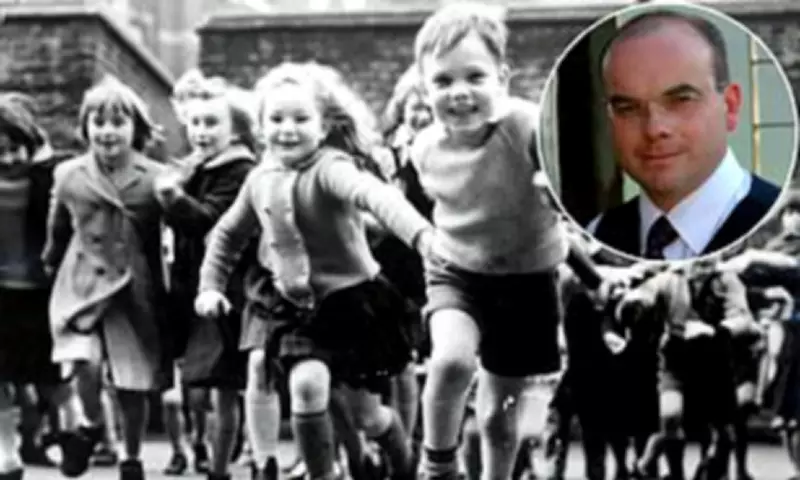
It was profoundly different half a century ago. Scotland in the mid-Sixties was awash with children, a peak of the baby-boom generation. The streets seethed with youthful energy, but it was also a Scotland where children were widely, and often openly, disliked. Strangers might snap at you on the street, shopkeepers would rebuke you for forgetting a "please" or "thank you," bus matrons would deftly place handbags to prevent you sitting beside them, and many teachers evidently loathed youngsters. Yet, we played incessantly. It was an age when the maternal command was often the Highland snap of "Away out with you now from under my feet." On Saturdays and during holidays, you spent the entire day roaming the neighbourhood, exploring the world from a safe space, meeting in shady woods for secret conclaves. When family finances were tight and toys were few, imagination flourished spectacularly. Untold Germans perished in our playgrounds to convincingly vocalised machine-gun fire and cries of "Uuurgh.." and "Gott im Himmel!"—unless we decided to fight the Japanese, when the howl became "Aieee…" We gloried in spectacular death-falls, a skill I retain, having recently survived two snowy slips without a bruise by instinctively going limp and rolling. Once, I crafted a widely admired Dalek from nothing more than a tennis ball, a cheese-grater, and some deftly deployed plasticine.

The Rich Culture of Girls' Play
The girls of that era—it was still a time when sexes often entered school by separate doors and kept to opposite ends of the playground—possessed a richer cultural tradition still, one that has sadly been lost for years. They had a vast repertoire of songs to orchestrate various pursuits: rhythmic play with balls and ropes, intricate hopping games, complex clapping sequences. These traditions descended through oral transmission, unfiltered by grown-ups, for many decades. I remember ditties like Alouette, Gentille Alouette, Alouette, Je Te Plumerai—almost certainly brought back to Glasgow by distant grandsires who survived the Great War—sung in perfect French by gap-toothed Scotstoun lasses not yet eight years old. That vibrant, self-contained world of childhood play has long vanished.
Navigating Generational Divides
Born in 1966, I was among the last Scots on the wrong side of a real generation gap. Our parents had grown up in a far more formal, smartly dressed, self-consciously respectable pre-television world, before the moral and social upheaval of the Sixties. They shuddered at pop music, men with long hair, most comics, neighbours who never attended church, and, in my mother's memorable phrase regarding Top of the Pops, "men who painted their bodies." Today, we negotiate another profound divide. People in their mid-twenties have never known a world without the internet, email, and social media. My generation, raised on science fiction where computers were cathedral-sized, could not have conceived of a device small enough to slip into a trouser pocket that also functions as a calculator, phone, and camera. Young friends, like the bright 23-year-old sports journalist Hamish MacRae, wonder how fossils of my generation ever managed to arrange a date. With great difficulty, to be honest, given that telephones were prohibitively expensive, invariably located in the hall, and odds-on that a little brother would be maliciously listening in on the extension. Somehow, we managed, just as the Apollo 11 space capsule muddled through with less computing power than today's typical dishwasher.
Youth Wasted on the Wrong People?
I rather enjoy that time of day, approaching four o'clock, as Rommel and I pad towards the woods for his second walk. The school bus swings into Marybank, decanting the latest teens in their immaculate black uniforms. They scatter at once for their homes, their devices, their social networks. As I watch this daily ritual, I feel increasingly that youth is wasted on the wrong people. The vibrant, imaginative, outdoor childhood of past generations has been replaced by a quieter, more digital, and arguably more isolated experience. The multi-use games area in Marybank stands as a silent monument to this transformation—a well-equipped playground awaiting players who may never arrive, while a new generation engages with the world through screens rather than streets and woods.