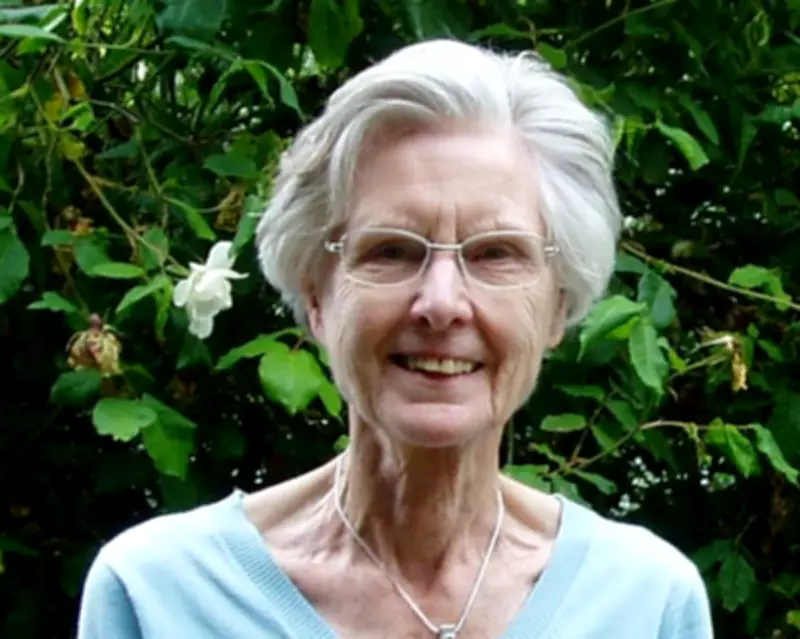
Wynne Harlen, a pioneering force in primary science education and assessment, has died at the age of 88. Her influential career spanned decades, profoundly shaping educational policy and classroom practices by championing the use of children's innate curiosity, imagination, and drive to explore and question the world around them.
Early Life and Academic Journey
Born in Swindon and raised in Cheltenham, Wynne was the daughter of Edith (nee Radcliffe) and Arthur Mitchell, who worked at Dowty Aviation. She attended Pate's Grammar School for Girls before pursuing physics at St Hilda's College, Oxford. During a summer vacation in Cheltenham, she met Frank Harlen, whom she married in 1958 shortly after graduation. The couple had two children: a son born in 1965 and a daughter, Juliet, in 1967.
Career and Research Contributions
In the 1960s, while teaching in schools and colleges, Wynne began researching how children learn science. This passion led her to undertake part-time PhD studies at the University of Bristol, balancing her academic pursuits with starting a family. She held research positions at the University of Reading from 1973 to 1977 and at King's College, University of London, from 1977 to 1984.

In 1985, she was appointed Sidney Jones Professor of Science Education at the University of Liverpool, followed by a move to Edinburgh in 1990 as Director of the Scottish Council for Research in Education. Wynne continued her work well into her 80s as a visiting professor at the University of Bristol, demonstrating an unwavering commitment to educational advancement.
Awards and International Impact
In 2008, Wynne received the prestigious international puRkwa award for science education from the French Academy of Sciences. She utilised the prize to fund a workshop that convened leading global experts to tackle the issue of overcrowded school curricula, which often left little room for inquiry-based learning.
The workshop's innovative solution was to reframe science not as a mere collection of facts and theories, but as a progression toward a few core "big ideas" that help students comprehend the world through engaging, relevant learning experiences. Wynne edited the subsequent report, published in 2010 as Principles and Big Ideas of Science Education, which has since influenced curricula worldwide.
Publications and Recognition
Throughout her career, Wynne authored several influential books, most notably The Teaching of Science in Primary Schools, first published in 1992 and now in its seventh edition. Her contributions were formally recognised in 1991 when she was appointed OBE for her services to education.
Personal Life and Legacy
Wynne found great joy in collaborating with educators across diverse countries and cultures, assisting them in developing school curricula and teacher training programmes. Many of these colleagues became lifelong friends, frequently visiting her home in Duns, Scottish Borders, where she was known as an enthusiastic and generous host.
Her personal interests included a lifelong love of classical music, nurtured from childhood when she saved pocket money for piano lessons and played timpani in the Oxford University orchestra. She regularly attended concerts and adored opera. An avid walker, she embraced hill climbing in Scotland, though a fear of heights often kept her from summits. In later years, she became a familiar figure in Duns, taking long daily walks often accompanied by several dogs.
Wynne was predeceased by her husband, Frank, who died in 1987. She is survived by her children, Juliet and her son, and her grandson, Alexander. Her legacy endures through her transformative work in science education, inspiring generations of teachers and students to embrace inquiry and curiosity.