Welsh Labour, the democratic world's most successful election-winning machine, has come first in Wales in every general election since 1922 and every devolved election since 1999. However, next month's Senedd election is expected to end this historic run.
Labour's collapse and voter realignment
Labour's decline has created a vacuum, with former Labour voters moving to opposite ends of the political spectrum. Plaid Cymru and Nigel Farage's Reform UK are running neck and neck in the latest poll, though coalition maths make it highly unlikely that Reform could form a government.
Laura McAllister, a professor of public policy at Cardiff University, described the possibility of Labour losing power after 27 years and the pro-independence Plaid entering government as a senior partner for the first time as 'huge'. She added that Welsh Labour and Wales itself are at a crossroads: 'I'm not sure people have computed yet how existential both those things simultaneously are going to be.'

Implications for UK politics
Losing Wales after a century would be another blow to Prime Minister Keir Starmer and the wider Labour party, likely amplifying calls for his resignation. Separatists in office in all three devolved nations for the first time—Plaid Cymru in the Senedd, the SNP in Holyrood, and Sinn Féin in Stormont—would mean a constitutional battle for whoever occupies No 10 Downing Street.
Welsh Labour, facing lacklustre receptions on the doorstep, is bracing for what a senior source described as a 'critical debate about what the party stands for' after the election. The source said: 'There will be those who try to defend 27 years in power, and attribute blame for a loss to the UK government or other factors. But you have to be humble in losing. You have to understand why you lost the public's trust and support and what needs to be done to stay relevant.'
Mixed record in office
Welsh Labour's record in office is mixed. Supporters insist the party protected public services from the impact of austerity, Brexit, and the Covid pandemic during 14 years of Conservative government in Westminster. But after 27 years of devolution, Wales has fallen behind other UK nations in several key metrics. About 20% of Welsh NHS patients wait more than a year for hospital treatment, compared with about 4% in England. Welsh children's reading, maths, and science skills fell to the lowest recorded OECD assessment levels of the four nations in 2024, and the proportion of people in very deep poverty rose from 33% in the 1990s to 47% in 2023.
Labour's campaign challenges
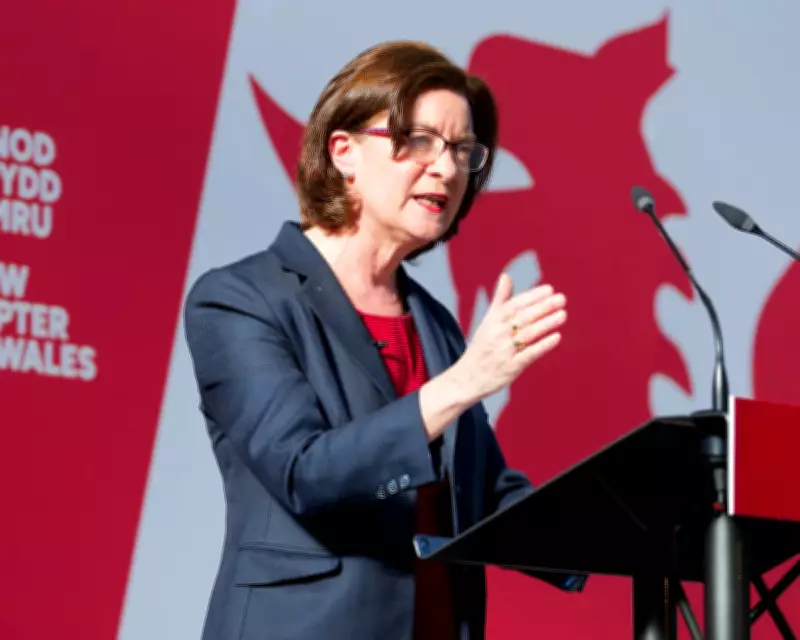
Labour faces the tricky task of offering both stability and change, with a campaign slogan of 'a new chapter'. First Minister Eluned Morgan said at the manifesto launch: 'I think we've got to be honest about where people are. You've all heard it on the doorstep... People are right to hope for more, and I share your impatience. Your longing for change is my own.'
The scandal-plagued premiership of Vaughan Gething, who was first minister for just four months in 2024, was highly damaging, dividing the party internally and repelling voters. Starmer's election was expected to strengthen Welsh Labour as a 'partnership in power', but his unpopularity appears to have weakened it instead. Starmer's name is not mentioned in the party's manifesto.
A Welsh Labour source said: 'Starmer's government has done more for Wales already than the Tories did in 14 years. But there's so much general anger at everything on the doorstep... Public expectation is harder than anything opposition can throw at you.'
Electoral system and polling
The latest YouGov polls suggest Labour will finish third with 13% of the vote, translating into just 12 seats in a parliament growing from 60 to 96 members under a new electoral system. The new system creates 16 super-constituencies, each electing six members, making results hard to predict.
McAllister noted: 'There's an argument that the Welsh public going from Labour to Plaid and Conservative to Reform is more of a realignment than a big switch. So there's some hope for Labour there: how sticky is that switch? If Plaid don't do well, don't deliver, voters could swing back.'

One of Welsh Labour's anticipated election woes is of the party's own making. In 2022, the special purpose committee on Senedd reform offered several more proportional voting methods for 2026. Labour chose the closed-list D'Hondt method, which favours bigger parties and gives party leaders control over candidate lists. Professor Richard Wyn Jones of Cardiff University's Wales Governance Centre said: 'There's a huge irony that it was Labour's choice to have this system. If they'd gone for STV or the other options on offer, they would have done better. It appears no one in the Welsh parliamentary Labour party ever imagined they could be a small party.'
Coalition prospects
Plaid Cymru may be the only party able to form a government, as Reform could win the most seats but the Welsh nationalists and Labour have ruled out coalition with Farage's party. The latest YouGov poll puts Plaid Cymru on 36 seats, down seven, making a scenario where Plaid needs Labour as a coalition partner more likely. However, McAllister said there is 'no value' for Labour in becoming a junior partner: 'What would they gain? I also think the nationalist rhetoric, and propping up a nationalist government, would be too hard to bear, being seen as Plaid's helpers rather than the other way around.'
Historical context and identity
For many in the party, the glory days of the late 1990s, when New Labour opened the door to devolution, work began on the Senedd building, and First Minister Rhodri Morgan led Wales into a new millennium, feel like a long time ago. Rhodri Morgan's rebranding of Labour in Wales as Welsh Labour cemented the idea of a distinct, more progressive party, stopped soft-nationalist voters from embracing Plaid Cymru, and ingrained devolution as the new normal.
After nearly 30 years, however, Rhodri Morgan's 'clear red water'—reinvented by Eluned Morgan as the 'red Welsh way'—appeals less to voters who take devolution for granted and increasingly identify as more Welsh than British. A third senior Labour source said: 'I don't think it has to be binary, are you Welsh or are you British. Labour delivered devolution and Labour got Wales the powers it has today. I know there's a big chunk of people toying with the idea of voting for Plaid Cymru but there are also still people out there that know Labour is loyal to Wales.'