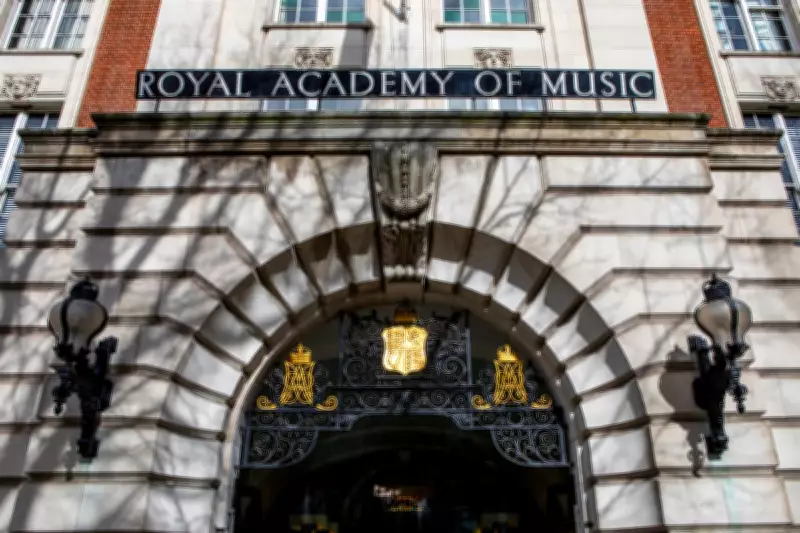
Royal Academy of Music Unveils Exclusive Funding for State-Educated Students
The Royal Academy of Music, Britain's oldest conservatoire, has announced a groundbreaking new funding initiative designed specifically to support state-educated students pursuing advanced musical training. The scheme, which will finance a foundation year study course, explicitly excludes all privately educated candidates, including those who attended independent schools through bursary programmes.
Targeted Support for Disadvantaged Musicians
According to academy officials, the programme aims to "provide a targeted pathway to conservatoire training for talented young musicians who have previously faced significant obstacles to advanced musical training." The initiative represents part of the institution's broader commitment to widening access to world-class music education.
Principal Jonathan Freeman-Attwood emphasised that the scheme, launching in July, is designed to help "those who desperately need and deserve it." He explained: "The academy has been growing its widening participation work with increasing energy, investment and output in the last decade. A focused foundation year gives us the chance to do what we always dreamt: to identify talented and committed young musicians for whom a shortage of access to teaching and opportunity has left them on the cusp of what is needed for pre-professional programmes."

Recruitment Focus and Geographic Diversity
The Royal Academy of Music plans to undertake a focused recruitment effort targeting talented state-educated musicians aged 18 to 20 who have experienced financial or other barriers to opportunity. Notably, the institution has committed that at least 50 percent of participants will be recruited from outside London, ensuring geographic diversity across the programme.
Private School Backlash and Criticism
The exclusive nature of the funding scheme has provoked significant criticism from private school representatives. Philip Britton, chair of the Heads' Conference representing independent schools, told The Times: "There are plenty of less well-off people in independent schools and plenty of privileged people in state schools."
He continued his criticism, stating: "[It is] time to cut across this idea independent school pupils can be discriminated against as a group. All sorts of people feel it is fine to join the lazy bandwagon." This perspective highlights the ongoing debate about educational privilege and access to elite training programmes.
Historical Context and Notable Alumni
The Royal Academy of Music, founded in 1822, counts numerous world-renowned musicians among its alumni, including Annie Lennox and Sir Elton John. However, many of Britain's most successful contemporary musicians received private education, creating a complex landscape for music education access.
Pop artist FKA Twigs attended private school on a scholarship, describing herself as a "bursary kid" before studying at the prestigious Brit School. Similarly, singer-songwriter Ella Eyre attended Somerset's Millfield School on a swimming scholarship before her Brit School education. Other privately educated musicians include Charli XCX, Ed Sheeran, and Lily Allen.
Broader Implications for Music Education
The new funding scheme represents a significant intervention in the ongoing conversation about access to elite arts education in the United Kingdom. By specifically targeting state-educated students who face financial and opportunity barriers, the Royal Academy of Music aims to create more equitable pathways to professional music careers.
The controversy surrounding the programme's exclusion of privately educated students reflects deeper societal debates about educational privilege, meritocracy, and the role of elite institutions in addressing systemic inequalities within the arts sector.