Oxford Academic Identifies Ten Distinct 'Thinker Types' to Explain Human Behaviour
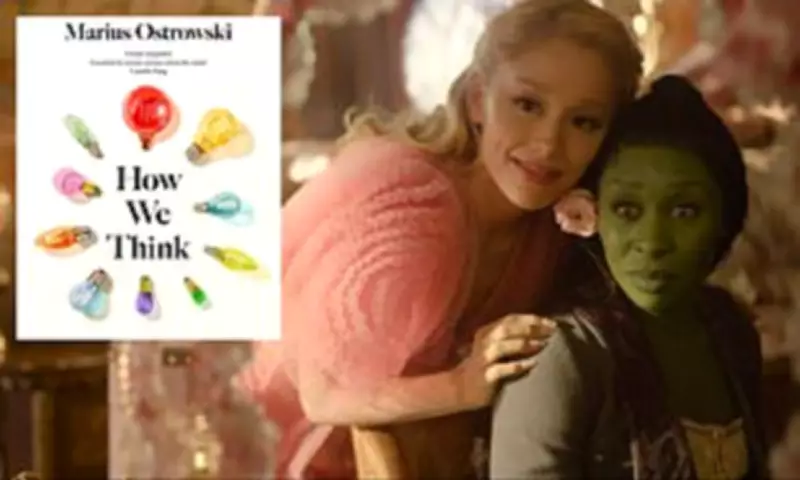
Why does Elphaba, the misunderstood future Wicked Witch of the West in the film Wicked, take everything so deeply to heart, while her friend Glinda appears to breeze effortlessly through life? Could the explanation lie in Elphaba being categorised as an Agoniser, while Glinda is, by stark contrast, a Happy Camper?
Furthermore, does the relentless succession of violent conflicts in Game Of Thrones only become truly comprehensible once you realise that Daenerys Targaryen embodies a Hothead, Jon Snow personifies a Gloomster, and Varys operates as a Cool Cat? And what accounts for Elizabeth Bennet's prolonged failure to recognise that Mr Darcy's subtle humour fundamentally marks him out as a Jokester?
Moving Beyond Myers-Briggs: A New Framework for Understanding Thought
These are the intriguing questions posed by Oxford academic Marius Ostrowski, a social theorist who posits that a significant proportion of the world's interpersonal problems and conflicts stem from a simple, yet profound, fact: we are perpetually surrounded by individuals whom we struggle to understand, primarily because their fundamental thought processes differ radically from our own.

To address this pervasive issue, Ostrowski has embarked on an ambitious project to systematically define and delineate the core 'thinking types' that characterise human cognition. His objective is to empower people to recognise their own dominant thought patterns, thereby illuminating why a partner's behaviour can be infuriating, a boss's reasoning seems utterly unfathomable, and friends occasionally act in ways that feel completely incomprehensible.
Ostrowski's pioneering work consciously moves beyond the well-established terrain of popular personality profile tests, such as the Myers-Briggs Type Indicator or the Type A/B classification systems, which have become familiar fixtures in many professional recruitment and job application processes.
The Ten Core Thinker Types: From Happy Campers to Worrywarts
Instead, the scholar has meticulously constructed a more nuanced and penetrating analytical formula. This innovative framework delves deeper by comprehensively accounting for four critical dimensions: the specific emotions we routinely experience, the nature of the information we actively gather, the inherent predispositions that shape our judgements, and the distinctive ways in which we reason and reach conclusions.
The culmination of this extensive research is the identification of ten fundamental 'thinker types': the Happy Camper, the Jokester, the Gloomster, the Agoniser, the Hothead, the Cool Cat, the Keen Bean, the Worrywart, the Quibbler, and finally, the Reveller.
Ostrowski is emphatic in stressing that this typology does not inherently label any type as 'good' or 'bad'. However, he wryly observes that if, upon reading the detailed descriptions, you identify yourself as a Happy Camper, a Reveller, or a Cool Cat, you are statistically far more likely to feel positive about that categorisation than if you find yourself aligned with the Gloomster or the Worrywart archetypes. Perhaps, he suggests, that very reaction is illustrative of the point.
The Mind Behind the Theory: A Profile of Marius Ostrowski
One might speculate that Ostrowski would define his own cognitive style as that of a Keen Bean. His intellectual credentials are formidable; he achieved a remarkable ten A-levels before embarking on his academic career. Beyond his scholarly work, he is an accomplished concert pianist and is fluent in five languages.
The most negative personal detail he volunteers is his self-described status as a 'long-suffering supporter of Portsmouth Football Club'. He also demonstrates a considerable talent for clear and accessible writing, with the extensive, rigorous academic research underpinning his theories largely consolidated into the book's epilogue, keeping the main narrative engaging and direct.

Analysis and Critique of the New Typology
If there is a minor critique to be made, it is that some readers might desire a more visibly scientific presentation of the evidence within the core chapters of the work. Of the book's thirteen chapters, ten are devoted to exhaustively describing each individual thinker type, which, by necessity, can impart a slightly repetitive feel to the structure.
Additionally, the deliberately whimsical, Wodehousian nomenclature for the types—such as labelling the principled Mr Darcy a 'Jokester'—may slightly jar with some readers' sensibilities. Furthermore, Ostrowski's consistent use of the first-person plural (e.g., 'We Revellers are unapologetic go-getters') can, ironically, leave readers who do not identify with a particular type feeling somewhat excluded from the narrative.
Or perhaps, as Ostrowski himself might insightfully retort, such a critical perspective simply reveals that, at heart, this reviewer is quintessentially a Quibbler.