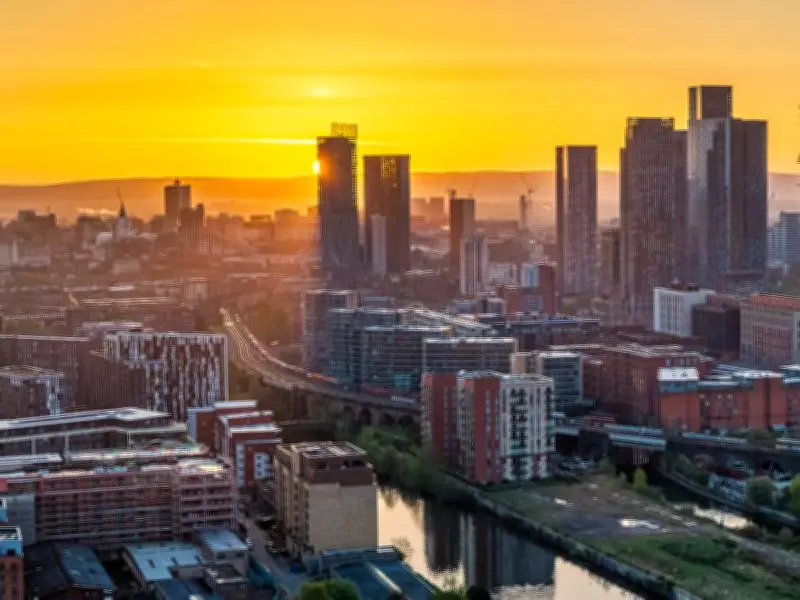
Experts and academics at a debate hosted by Alliance Manchester Business School and the Productivity Institute said cities seeking to emulate Manchester's success must adopt a hard-nosed approach and avoid building "cathedrals in the desert". The event focused on what "Manchesterism" could mean for economic growth and productivity, with a clear consensus that devolution is a tool to be used effectively rather than an end in itself.
Manchester as a 'Turnaround City'
Professor Philip McCann, Sir Terry Leahy chair in urban and regional economics at AMBS, described Manchester as a classic "turnaround city". He listed several cities once seen as "basket cases" that have since transformed, including Dortmund and Duisburg in Germany, Lille in France, Bilbao in Spain, Pittsburgh in the USA, and Newcastle in New South Wales.
McCann argued that devolution is a journey rather than a process, asking: "Have we finished? No. But it's the journey that counts." He criticised the UK's tendency to centralise government in London, calling the "waxing and waning" of devolution plans "an enormous governance failure". He questioned why central government manages local bus routes, saying it "doesn't make any sense" and is "a trap the UK ended up with by default and by accident". He noted that the UK is "the only state in the industrialised world that has become more decentralised in the past 40 years", but said Manchester had successfully broken that mould.
Key Lessons for Success
McCann highlighted several lessons from successful turnaround cities, including revitalising grand Victorian and Edwardian buildings that were often derelict by the 1970s but have since become desirable residential and commercial properties. He said city regions needed comprehensive strategies rather than "piecemeal ad hoc approaches", built on existing strengths rather than "cathedrals in the desert" white elephant projects. Manchester's strengths, he noted, included its airport and its technology and life sciences sectors.
Strong local leadership, exemplified by Manchester's long record of stability under figures like Sir Howard Bernstein, is vital, along with stable and long-term funding streams. McCann said: "You set it up, you lock it in, the investors are happy" because they know there is a long-term plan. Leaders also needed to collaborate with businesses, residents and other groups: "No one expects together everything they want, but people expect to be part of the story."
Devolution Not a 'Magic Bullet'
Henri Murison, chief executive at the Northern Powerhouse Partnership, said devolution was not a magic bullet for improving productivity or boosting local economies. Success comes not from the powers or funding themselves, he said, but "the way you use them". Manchester had succeeded thanks to its leaders' willingness to work with governments of all colours and to make tough decisions. "Just having a mayor and localised structures doesn't mean people make better decisions," he said.
Murison said devolved cities and regions needed to make disciplined cases for investment, presented as strongly to central government as to potential overseas investors. He noted a past tendency for some cities to use the "politics of grievance" to demand investment rather than making a true business case. Manchester, he said, had long demonstrated it took growth seriously and could take decisions well.
Making the Business Case
Professor Nigel Driffield of Warwick Business School agreed that cities needed to make clear, fact-based cases to investors. He said simply saying "Come here because it's nice" or citing a great football team doesn't work – places need to make a "hard nosed business case". That should include evidence of a skilled local workforce or a strategy to develop one. Recalling the failed DeLorean car factory in Northern Ireland in the 1970s, he said: "I am old enough to remember DeLorean."
Driffield said some business leaders had been frustrated by the lack of action following meetings with devolved governments, but urged businesses not to give up on devolution and to support leaders in making it work. He described mayors as "building the aeroplane on flight" by making small amounts of devolution work while making the case for more powers. Even if a mayoral event felt "like a talking shop", he stressed, people should go back and get involved. He joked that if more areas such as innovation and skills were devolved, you could "go and shout at your mayor then these things could get fixed" rather than getting lost asking central government.
Professor Melanie Jones of Cardiff Business School said recent attention on Manchester had been for "political reasons" as much as for hard evidence that the Manchester model could boost productivity. She added that the "consistency and long term vision" of Manchester was something other devolved areas could learn from. However, she said other areas needed to decide their own strengths and goals rather than mirroring Manchester: "We're not all Manchester, we're not all going to have an airport or great universities", but other areas could be famous for other things.
Addressing Inequality
During the Q&A session, panellists discussed growing inequality in cities like Manchester, where regeneration is concentrated in centres rather than outer boroughs. McCann noted that most successful cities had to focus on their central cores, and that inequality can rise as cities get richer. He said: "You do want to lift all boats but that's a very uneven process in every city in every area of the world. The most successful places become more uneven, that's the reality."
Murison said transport investment could help cities grow by allowing people to commute from greater distances. He said: "You don't need growth in every postcode. You need residents in every postcode to be able to get to where the growth is."