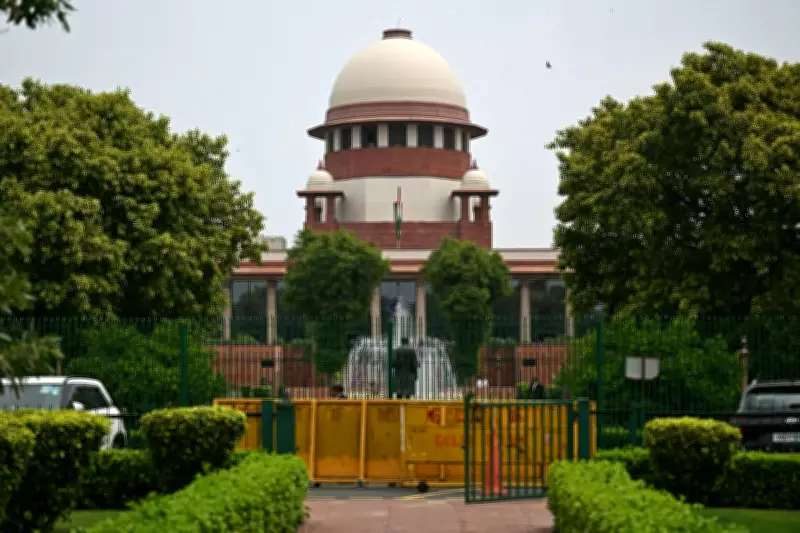
India's Supreme Court Orders Immediate Ban on Controversial Textbook
India's highest judicial authority has taken decisive action against a school textbook that included content deemed damaging to the nation's judiciary. The Supreme Court issued a sweeping ban on Thursday, prohibiting the publication, distribution, and digital sharing of an 8th grade social science textbook containing a chapter about corruption within the judicial system.
Court Expresses Shock at Educational Content
During a hearing in the capital Delhi, a bench led by Chief Justice Surya Kant described itself as "nearly shocked" upon discovering the textbook's contents. The court specifically objected to sections discussing judicial corruption, complaints against judges, and the process for removing judges through parliamentary action. The bench, which included Justices Joymalya Bagchi and Vipul M Pancholi, characterized the publication as a "deep-rooted, well-orchestrated conspiracy" designed to malign India's judicial institutions.
Textbook Details and Official Response
The controversial textbook was published by the National Council of Educational Research and Training (NCERT), India's premier academic body responsible for developing curriculum across subjects. Intended for students above 9th grade, the book reportedly included excerpts from a former Chief Justice's speech and discussed topics such as lack of transparency within the judiciary.

Solicitor General Tushar Mehta raised additional concerns about another chapter titled "justice delayed is justice denied," which he claimed contained inaccurate figures about court backlogs. "We cannot teach our children that justice is denied in the country," Mehta emphasized during the proceedings.
Court's Concerns About Institutional Authority
The Supreme Court bench expressed grave concerns about what it perceived as a "calculated move to undermine the institutional authority and demean dignity of the institution." The judges warned that allowing such content to circulate unchecked would erode public faith in the judiciary, particularly among impressionable young students. They noted that textbooks reach not only schoolchildren but also their parents and wider society, amplifying their potential impact.
The court specifically objected to how the textbook presented information about complaints against judges, suggesting it created the false impression that no action had been taken regarding such complaints. Additionally, the bench criticized what it called the out-of-context use of comments by former Chief Justice BR Gavai, arguing they were presented to imply judicial acknowledgment of corruption.
Immediate Actions and Consequences
In response to these concerns, the Supreme Court issued a show-cause notice to the Ministry of Education's secretary and the NCERT director, demanding explanations for why they should not face action under the Contempt of Courts Act. The court ordered immediate seizure of all physical copies and prohibited any instruction based on the textbook's content.
"It shall be the personal responsibility of NCERT Director and the principal of every school where the book has reached to effectuate immediate seizure and sealing of all copies of the book in their premises and submit a compliance report," the court declared in its order. The blanket ban extends to re-printing and digital dissemination, with the court warning that any sharing of the content would be taken seriously.
Broader Implications and Next Steps
The Supreme Court stated that, based on preliminary examination, the textbook's publication constituted serious misconduct that could fall under criminal contempt of court if proven to be a deliberate attempt to scandalize the judiciary. The court has directed NCERT to submit the names of individuals involved in preparing the banned chapter, indicating potential further action against those responsible.
This unprecedented intervention by India's highest court highlights the sensitive nature of educational content regarding judicial institutions and establishes a significant precedent for how such materials are evaluated and regulated within the country's education system.