Into the Heart of Europe's Oldest Forest
A guided walk in the primeval wildwood of Perućica, where wolves, chamois and the elusive brown bear roam. Our guide, Dejan Elez, a Bosnian Serb law graduate turned ranger and mountain guide, is a born storyteller. 'I know this bear. He knows me. We've met several times,' he says, pointing to a damaged sign covered in claw scratches. 'Bears are the sharks of the land, with the keenest sense of smell. They are highly intelligent. I'm deeply persuaded that they know who is a friend and who is a foe.'
A Forest Untouched for Millennia
Scientists estimate that Perućica, spreading across the slopes of a canyon in Republika Srpska, has grown without human interference for 20,000 years. Along with Białowieża in Poland and Belarus, it is considered the last true remnant of the primeval wildwood that once covered Europe. However, Dejan says Perućica is much better preserved. It has never been inhabited, and rough terrain has saved its trees from logging. Its 1,434 hectares are now under strict protection, and no one can enter without a guide. Unesco recognises its importance.
Descending into the Ancient Forest
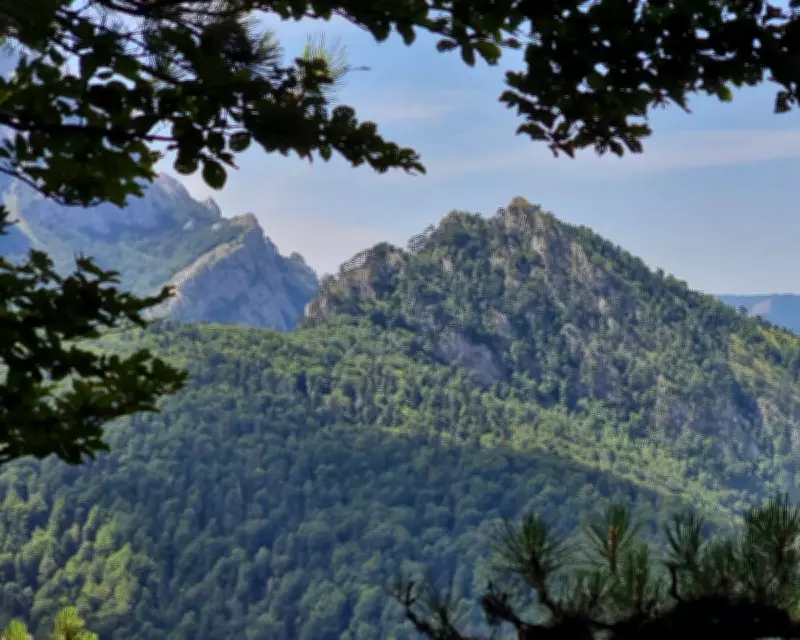
From a rocky ridge viewpoint, dense greenery spreads below, clinging to sheer canyon walls above a river fed by Skakavac, a 75-metre waterfall. Originally, we had hoped to climb Maglić, Bosnia's highest peak, but early spring snow made conditions perilous. Today we are going down. Dejan leads the way along a winding trail through groves of beech, fir, spruce, pine and maple. He admits he does not know all the tree names, but he reads the forest like a book. Circular patches where humus has been grubbed away are made by chamois foraging roots. Roe deer leave precise, deep holes. Scratch marks on a wet log reveal canine activity—fox or wolf—and wider, deeper scratches from a passing brown bear. Nearby, a larger hole shows where a bear raided a honeybee hive.

Biodiversity and Resilience
Every few minutes of descent brings a different realm as the temperate rainforest grows taller and more tangled. Deadwood lies everywhere, paradoxically a sign of health. Lichen, moss and fungus drip from branches. The astonishing biodiversity protects Perućica from epidemics like spruce bark beetle infestation, which has devastated other old-growth forests. With about 170 species of tree and shrub and more than 1,000 plants, it's little wonder our guide doesn't know them all.
A Refugium During the Ice Age
During the last ice age, Perućica escaped the freeze, acting as a refugium where many species were preserved. From here, trees expanded northwards when it thawed. The forest's name, Dejan believes, is connected with Perun, the pre-Christian Slavic god of lightning. It feels like wandering in a temple.
Encountering Wildlife
We eat sandwiches on a grassy ledge overlooking the waterfall. Chamois droppings are everywhere; we don't see the herd, nor the wildcats, lynx or wolves that also call the forest home. But the knowledge that they are here brings reverence. Maglić disappears behind white cloud, and it begins to rain.
Threats and Conservation
With his legal background, Dejan is clear-eyed about threats. The ancient forest may be safe, but hunters come to the wider national park, and rangers are sometimes bribed. Encroachment at the park's borders is increasing. 'It's not that people shouldn't come here,' he says. 'What matters is how they come, as respectful guests.' He stoops to brush aside leaves, identifying flecks of bone that passed through a wolf's digestive tract, and wolf excrement filled with chamois hair. 'This was left on the trail deliberately to tell us it's their territory. Everything has meaning.'
Leaving the Forest
After almost five hours, we emerge on the gravel road. The absence of tangled life is shocking. Both of us feel changed by our glimpse into Europe's wild past. Dejan announces: 'You two gentlemen have been exposed to a universe of micro-organisms you will never find in England. This forest gets inside you.' Perućica clings to us as we return to Sarajevo, a two-and-a-half-hour drive north, as the trees once did when the ice age ended.