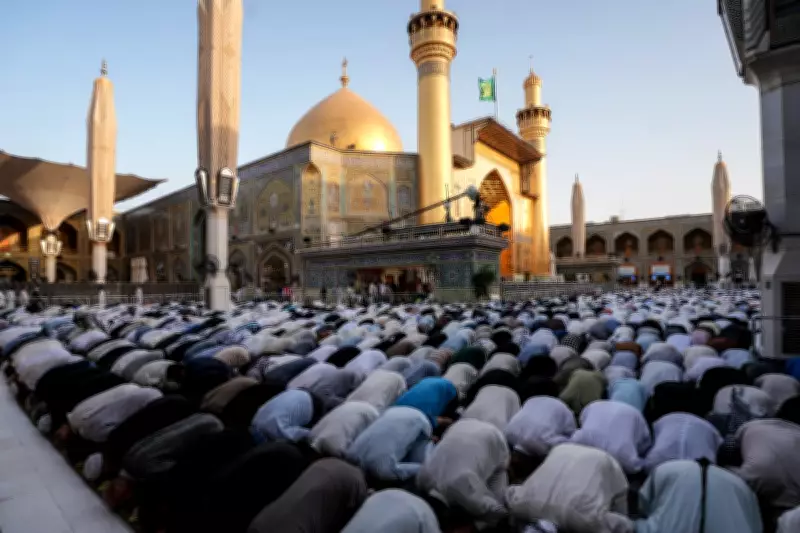
Each year, Saudi Arabia welcomes a multitude of Muslim pilgrims for the Hajj, a central pillar of Islam. During this sacred pilgrimage, devotees unite in acts of worship and religious rituals, fulfilling a profound duty. The Hajj offers a deeply spiritual experience, providing an opportunity for participants to seek divine forgiveness and cleanse themselves of past transgressions. During the month of Hajj, Muslims also celebrate Eid al-Adha, a separate event from Eid al-Fitr that marks the prophet Ibrahim's test of faith.
What is Eid al-Adha?
Eid al-Adha, or the 'Feast of Sacrifice,' is the Islamic holiday that begins on the 10th day of the Islamic lunar month of Dhul-Hijja, during the Hajj. This joyous occasion, celebrated by Muslims around the world, commemorates Ibrahim's willingness to sacrifice his son as an act of submission to God. During the festive holiday, Muslims slaughter sheep or cattle and distribute some of the meat to the poor, symbolising charity and devotion.
When is Eid al-Adha in 2026?
This year, Eid al-Adha commenced on the evening of Tuesday, 26th May 2026, with its main day falling on Wednesday, 27th May. The three-day festival will continue until Friday, 29th May. The holy month of Dhul Hijjah began on Monday, 18th May 2026, with Hajj taking place from Monday, 25th May 2026, and the Day of Arafah on Tuesday, 26th May 2026.

How to wish someone a 'happy Eid'
To greet someone celebrating Eid al-Adha, one can say 'Eid Mubarak,' which translates to 'Blessed Eid,' or simply 'Happy Eid.' These greetings convey goodwill and shared joy during the festive period.
What is the Hajj?
The Hajj is the annual Islamic pilgrimage to Mecca in Saudi Arabia, involving a series of religious rituals. It is required once in a lifetime of every Muslim who can afford it and is physically able to make the journey. Some Muslims choose to perform the Hajj more than once. It is one of the five pillars of Islam, alongside the profession of faith, prayer, almsgiving, and fasting.
When is the Hajj?
The Hajj occurs once a year during the lunar month of Dhul-Hijja, the 12th and final month of the Islamic calendar. This year, the Hajj started on June 4. When the Hajj falls during the summer months, the intense heat can be especially challenging. Last year, amid extreme high temperatures, more than 1,300 people died during the Hajj, according to Saudi authorities. The country's health minister stated that the vast majority of fatalities were unauthorised pilgrims who walked long distances under the sun.
What is the significance of the Hajj?
For pilgrims, performing the Hajj fulfils a religious obligation and is also a deeply spiritual experience. It is seen as a chance to seek God's forgiveness for past sins, to grow closer to God, and to walk in the footsteps of prophets. Communally, the Hajj unites Muslims of diverse races, ethnicities, languages, and economic classes from around the world in performing religious rituals and acts of worshipping God at the same time and place. This leaves many feeling a sense of unity, connection, humility, and equality. Pilgrims also bring their own personal appeals, wishes, and experiences, often carrying prayer requests from family and friends. Some spend years hoping and praying to one day perform the Hajj, saving up money and waiting for a permit to embark on the trip. Preparations may include packing essentials for the physically demanding journey, seeking advice from those who have performed the pilgrimage before, attending lectures, or consulting educational material on how to properly perform the Hajj rituals.

What are the rituals of the Hajj?
Pilgrims make the intention to perform the Hajj and enter a state of 'ihram,' which involves abiding by certain rules and prohibitions. For instance, men are not to wear regular sewn or stitched clothes that encircle the body, such as shirts, during ihram. Instead, simple ihram cloth garments are worn; scholars say the purpose is to discard luxuries and vanity, shed worldly status symbols, and immerse the pilgrim in humility and devotion to God. A spiritual highlight of the Hajj for many is standing on the plain of Arafat, where pilgrims praise God, plead for forgiveness, and make supplications, often with tears streaming down their faces. Other rituals include performing 'tawaf,' which involves circumambulating the Kaaba in Mecca counterclockwise seven times. The Kaaba, a cube-shaped structure, is the focal point toward which Muslims face during their daily prayers from anywhere in the world. Pilgrims also retrace the path of Hagar (Hajar), the wife of Prophet Ibrahim, who Muslims believe ran between two hills seven times searching for water for her son.