Dame Averil Cameron: A Pioneering Historian Who Transformed Byzantine Scholarship
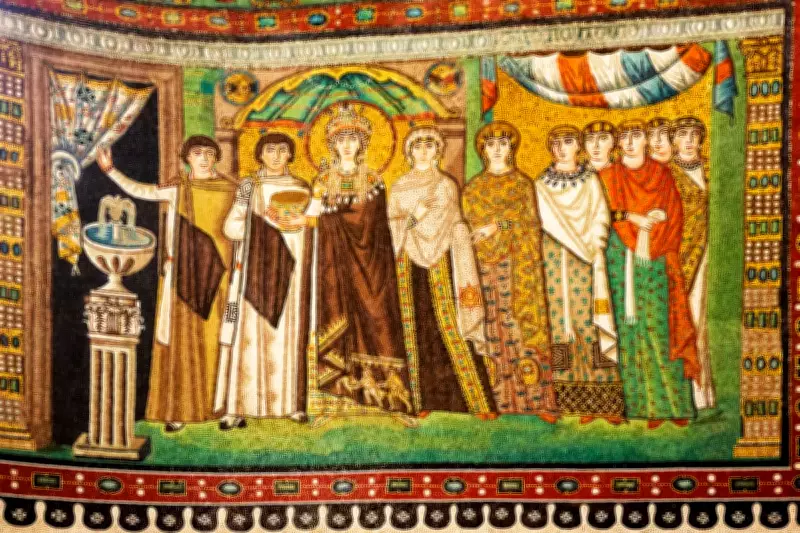
The Byzantine empress Theodora and her attendants, depicted in a renowned mosaic at the Basilica San Vitale in Ravenna, Italy, symbolise the rich, often misunderstood legacy of the Byzantine Empire. Much of what we know about figures like Theodora stems from the writings of Procopius, a subject extensively analysed by Dame Averil Cameron in her groundbreaking work. Her obituary highlights a career that fundamentally altered perceptions of a civilisation long dismissed as stagnant and irrelevant.
Challenging Historical Stereotypes
For centuries, the Byzantine Empire was maligned as a society mired in pointless bureaucracy, excessive religiosity, and inevitable decline, a view popularised by the 18th-century historian Edward Gibbon. His portrayal of the Byzantines as weak, superstitious, and effeminate cemented a damaging stereotype that persisted into modern times. Averil Cameron, more than any other scholar, dismantled this prejudice through her meticulous research.
She revealed the Byzantines as vibrant, dynamic, and innovative, operating within a melting pot of ideas, languages, and cultural influences. Her scholarship, beginning with Constantine's dedication of Constantinople in AD 330, opened up a largely unexplored historical territory for new generations. Early books on Byzantine writers like Procopius, Agathias, and Corippus brought sixth-century Constantinople to life, excavating societal complexities long before Byzantine studies emerged as a formal field.

Innovative Methodologies and Enduring Impact
Cameron's approach was distinctive, applying modern critical theories and integrating disciplines such as art history, archaeology, and religious studies. This made her contributions from the 1970s and 80s strikingly relevant and influential today. She posed fundamental questions still under debate: Was Byzantium truly an empire? Was its society uniformly Orthodox? Her work treated the transition from the Roman to Byzantine empires not as a fall but as a continuous, evolving narrative, pioneering global historical perspectives before they became mainstream.
In her 1991 work, Christianity and the Rhetoric of Empire, she argued that Christianity's success in the Roman Empire stemmed from its ability to create an imaginative universe through texts, rebranding reality rather than emerging inevitably. This insight reshaped understanding of early Christian historiography and the so-called "fall of Rome."
A Trailblazing Career and Personal Resilience
Born in Leek, North Staffordshire, to working-class parents, Cameron's academic journey began with encouragement from her headteacher, leading her to Oxford's Somerville College. After graduating in classics, she married fellow classicist Alan Cameron in 1962, moving to Glasgow to pursue a PhD on Agathias under supervision by historian Arnaldo Momigliano.
Despite gender biases that often sidelined women in academia, she secured an assistant lectureship at King's College London, where she became the first woman to hold the chair of ancient history and head the classics department in 1978. There, she appointed Mary Beard to her first academic role. Cameron co-founded the Society for the Promotion of Byzantine Studies in 1983 and established the Centre for Hellenic Studies at King's in 1989.
Her personal life involved significant challenges, including raising two children as a single parent after separating from Alan in the late 1970s. She ignored advice to leave her newborn behind during a fellowship in New York, teaching shortly after giving birth when maternity leave was nonexistent. Later, as warden of Keble College, Oxford—the first woman to lead the traditionally all-male institution—she navigated administrative duties while continuing her research.
Legacy and Recognition
Averil Cameron's accolades include being appointed CBE in 1999 and DBE in 2006, and in 2020, she became only the second woman to receive the British Academy Kenyon Medal. After retiring in 2010, she chaired the Oxford Centre for Byzantine Research until 2023, mentoring and publishing until ill health intervened. Her memoir, Transitions: A Historian's Memoir, published in 2024, and her archived donations to the Bodleian Library preserve her legacy.

She is survived by her children, Daniel and Sophie, and her grandson, Silas. Dame Averil Millicent Cameron, born 8 February 1940, died 7 April 2026, leaves behind a transformed field of Byzantine studies, inspiring historians to see the past with renewed clarity and innovation.