
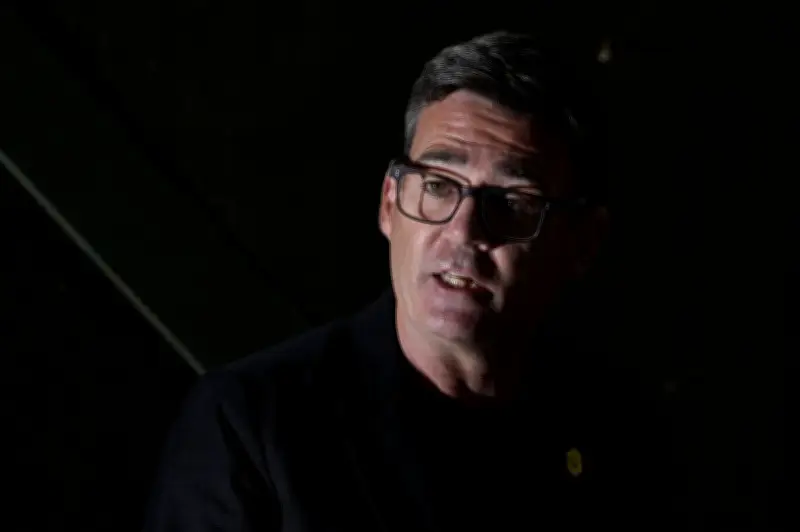
Andy Burnham has announced a decade-long plan to transform Britain by transferring power out of Whitehall and giving regions control over essential utilities, transport, and housing. In his first major speech since Sir Keir Starmer announced he would leave Downing Street, the prospective prime minister promised to set a "new direction" for the UK, with an outpost of 10 Downing Street based in Manchester to drive his plans to "rewire" the British state.
Burnham's Vision for a Rewired Britain
Speaking at the People's History Museum in Manchester, Burnham said the Westminster system was "broken" and "as a result, the country isn't where it should be." He added, "It is stuck in a rut, and clearly we can't go on like this." Burnham, who could become prime minister on July 20 if he is the only contender to replace Starmer as Labour leader, outlined key proposals including the creation of a No 10 North operation that would serve as the "nerve centre of a rewired Britain," redistributing power and resources across the UK. The operation would oversee the "biggest council house building programme since the post war period" and enable regions to take "greater public control of essential services" including water, energy, and transport.
Promises of Stability and Hope
Burnham emphasized that his measures would be based on "the stability that comes from sound public finances" and "the discipline of our current fiscal rules" to reassure markets that he would not hike borrowing and taxes. However, he acknowledged that taxpayer-funded support would be needed to address cost-of-living pressures. "Ours is a 10-year mission to raise people's living standards," he said. "I know people can't wait forever for change. I heard on doorsteps in Makerfield how people need a bit extra now to help with rising costs. I will do my very best to deliver it, and whilst not taking risks with the public finances, will seek to give Britain some breathing space as soon as I can." He added, "People need to be able to look forward to a night out or a holiday with the kids. People need hope."
Support for Reindustrialisation and Public Procurement
Burnham promised to support reindustrialisation across the UK's regions, stating that Whitehall would be ordered to back British firms bidding for public contracts, even if it costs taxpayers more. "For too long, UK public procurement policy has been based on chasing cut-price deals around the world rather than helping our own British-based suppliers become more stable and competitive," he said. Under pressure to seek his own mandate at a general election, Burnham insisted his plans were consistent with the manifesto Labour campaigned on in 2024, despite being "the biggest change in our lifetimes to the way the country is run."
Political Reactions and Scrutiny
Burnham, dressed in a dark t-shirt and jacket rather than a suit and tie, did not take questions from journalists after his speech, leading to accusations of dodging scrutiny. Tory leader Kemi Badenoch criticized him, saying, "He needs to come to Parliament, tell us what he wants to do and face some questions from MPs, the people elected to hold the Government to account. Giving speeches in Manchester and not taking any questions is simply not good enough." Confederation of British Industry chief executive Rain Newton-Smith said businesses could support Burnham if he followed the "positive, dynamic and collaborative approach that has helped public and private sectors drive growth in Manchester" at a national level, but warned that "proposals for greater intervention in markets such as transport and utilities must avoid deterring investment."
Path to Prime Minister
Unless he faces a rival for the Labour leadership, Burnham will become prime minister on July 20, when Parliament will be on its summer break. He said he would reach out to other parties to create a "greater sense of unity" in place of the "fragmented, disjointed" political environment he found on his return to Parliament.




